
Backyard Naturalist: Have you been paying attention? Take the backyard nature quiz
Pop quiz! Backyard Naturalist Michael Pappone has written about so much of Weston’s nature, and now he wants to put your knowledge to the test.
Have you been following the action-packed happenings of our natural world in the Weston Observer? Take this quiz to see how well you know your backyard!
Question 1
American Goldfinches are the last of our resident bird species to breed. Their nesting is keyed to the abundance of what food source?
- a. Insects
- b. Berries from fruiting shrubs
- c. Seeds of native plants
- d. Flower nectar
Publication date: Oct. 24, 2025
Question 2
Otis, the Canadian long-eared owl, arrived unexpectedly in Boston. Otis had—
- a. Stowed away on a cruise ship
- b. Crossed the border in a Christmas tree shipment
- c. Been blown in on a Nor’easter
- d. Followed the scent of its mate
Publication date: Nov. 28, 2025
Question 3
Our national bird’s biggest threat in New England is:
- a. Great blue herons
- b. Ospreys
- c. Rat poison (SGARs)
- d. Hunters
Publication date: Aug. 7
Question 4
Weston’s snapping turtle is found in virtually every aquatic environment in the eastern United States. When did the snapping turtle’s long success story begin?
- a. 50,000 years ago
- b. 200,000 years ago
- c. 1.5 million years ago
- d. 50 million years ago
- e. 90 million years ago
Publication date: June 26
Question 5
As a very hungry caterpillar, I feasted on the leaves of black cherry trees native to Weston, went through five instar phases, spun a cocoon and eclosed nine months later as the nation’s largest moth (and prettiest, if I do say so myself!). So, after emerging as a giant cecropia, what food do you think I’ll fly off to find?
- a. Woolen clothes
- b. More cherry leaves
- c. Butterfly bush nectar
- d. None of the above
Publication date: July 31
Question 6
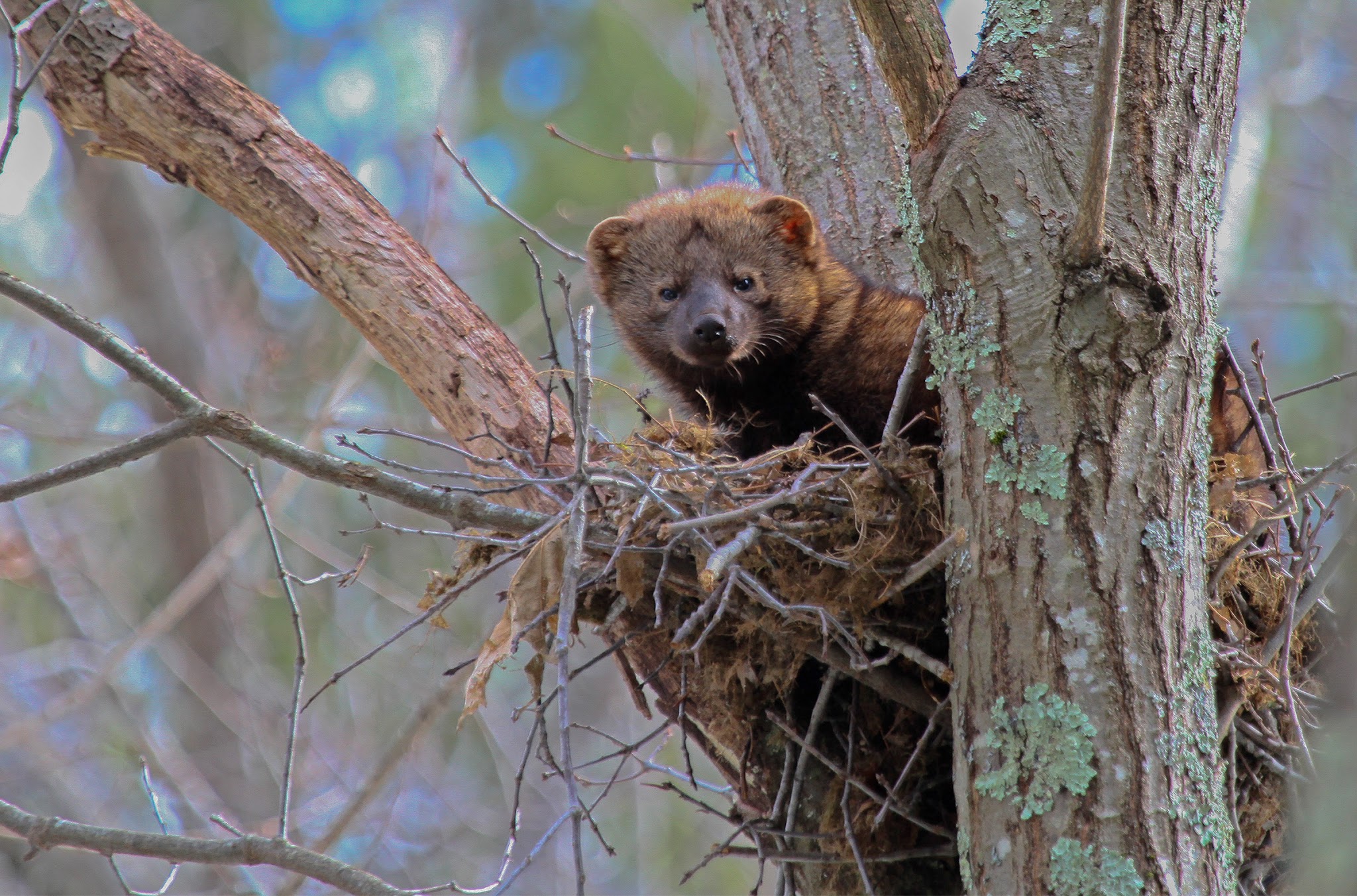
The fisher cat is making a comeback throughout the New England woods. Which of these statements about the fisher is true?
- a. Loves fish
- b. Related to the bobcat
- c. Member of the weasel family
- d. It can rotate its rear feet 180°
- e. Howl sounds like a strangled animal
Publication date: Dec. 19, 2025
Question 7
Weston hosts an abundance of avifauna–migrants, residents, and seasonal breeding birs–over the course of the year. In spring it’s not unreasonable to hope that an early morning Land’s Sake Farm walk will yield a satisfying tally of a variety of different species. How many did we find in mid-May?
- a. 14
- b. 20
- c. 36
- d. 65
Publication date: May 29
Question 8
Weston’s most “Jurassic Park-like” bird is the great blue heron that maintains an active heronry on the Weston Station Pond. How long does it take the chicks to break free from their shells?
- a. 5 minutes
- b. 25 minutes
- c. 24 hours
- d. 48 hours
Publication date: May 8
Question 9
Hummingbirds are a species that fascinate even the most jaded among us. Which of these statements about this remarkable creature are true?
- a. Hummingbirds can fly upside down
- b. An adult hummingbird weighs about as much as a nickel
- c. Hummingbirds survive exclusively on flower nectar–and the syrup we mix for them
- d. Hummingbirds’ hearts beat 1,250 times per minute
- e. The ruby-throated hummingbird is the only one of its 340 cousins across the New World to breed in the eastern United States.
Publication date: Sept. 26, 2025
Question 10
The red fox is one of Weston’s most successful hunters (and, indeed, is the world’s most widespread canid) Which of these qualities characterize the fox?
- a. Retractable claws
- b. Crepuscular feeding
- c. Uses the earth’s magnetic field to catch prey
- d. Hunts in packs
- e. All of the above
Publication date: Dec. 5, 2025
Question 11
Here’s your extra credit question. While the bird was featured in a past column, the question requires knowledge beyond the column’s contents.
The black-capped chickadee is the state bird of Massachusetts. To raise its brood the parents need to catch how many caterpillars?
- a. 5,000
- b. 3,000
- c. 15,000–20,000
- d. 6,000–9,000
- e. 2,000
Publication date: Feb. 27
Answers
Q1 C
Q2 A
Q3 C
Q4 E
Q5 D
Q6 C, D
Q7 C
Q8 D
Q9 A,B,D,E
Q10 A,B,C
Q11 D
Author

Related Articles
Backyard Naturalist: Tree swallows herald fall’s arrival
Such is the life of a tree swallow: filled with beauty, alive with frenetic activity and fraught with endless uncertainty. Carpe diem.

Ideas in the Making at the AIC: Watercolor: flowing color and infinite possibilities
Water meets pigment, pigment meets paper, and magic happens on the page. That’s the quiet alchemy of watercolor — a medium simple in its ingredients and boundless in its results.

History Corner: Light in the Colonial dark: The Magic lantern and Declaration Day
When visitors arrive at the JST for Declaration Day festivities on Sunday, Sept. 13, they will experience a form of entertainment that predates film, photography, and the Tavern itself: the magic lantern show.