
Backyard Naturalist: Hummingbirds are still humming in September
Hummingbirds are still humming in late September.
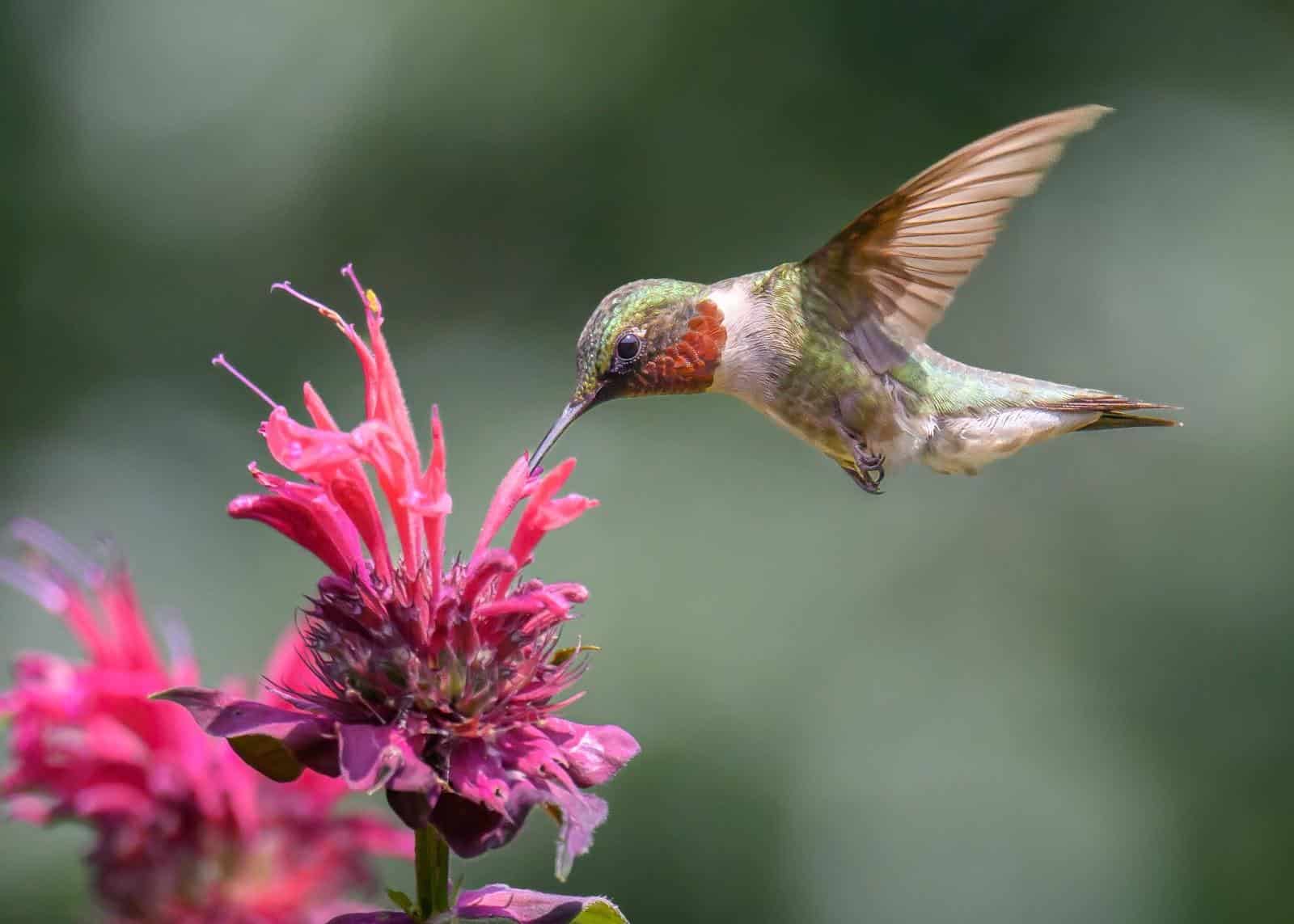
The bee balm has lost most of its petals; the towering white phlox no longer shares its bouquet. The hydrangeas have morphed from their primary colors to muted shades of pink and violet. But there is one constant in the garden: the shimmering ruby-throated hummingbirds!
They’re tanking up big time on the nectar feeders outside the kitchen windows, on what’s left of the garden blooms and feasting on the tiny bugs they can grab from their perches on the butterfly bush.
Soon our summer breeding birds will be back on their migration routes, with the hummingbirds joining the crowd under cover of night to find their way back to southern Mexico and Central America.
Weighing less than a nickel, they will lose a substantial portion of their mass flying 500-nonstop miles over the Gulf of Mexico. Remarkably, these creatures exhibit a pronounced degree of route fidelity, according to the scientists who band them and follow their annual flights. In fact, they not only choose the same route year after year, but they have been observed to fly on the same day of the year. The hope is that they’ll successfully make the return flight next spring and grace our gardens by early May.
Hummingbirds are unique to the Western Hemisphere, where well over 300 species have been identified. Our ruby-throated hummingbird (archilochus colubris) is the only hummingbird species that breeds in the eastern United States, though. To see other two-dozen American species, plan to get west of the Rockies.
Males are unmistakable: their iridescent green backs shimmer in the sun, and their throats blaze with a flash of ruby red. Like blue jays, their color comes not from pigments but from a feather structure that amplifies certain wavelengths of light and reflects them directly in front of the bird. Females lack the ‘gorget’ that contains the flashy feathers the males use to announce their intention to defend territory. But she’ll fiercely defend her nest from jays, snakes, hawks and crows.
Hummers need a balanced diet of protein and carbohydrates. And that requires a medley of feeding techniques to build their bodies, nourish their young and keep them airborne. We’re used to seeing them in hover mode, poised at the feeder or probing a trumpet-shaped flower petal during its “trap-lining” route for nectar. That checks the carbs box. And it requires them to beat their wings 80 times a second, powered by a racing heartbeat: 1,250 beats per minute, as they pivot their wings in the sockets, trace figure eight patterns that look like a blur to us, and seamlessly shift from neutral to reverse to a super-charged exit. Watch closely, and you might witness a high-speed chase as two males compete for territory or try to impress a nearby female with a dramatic U-shaped courtship dive. Oh, and these birds can even fly upside down. Now let’s find some protein. Hummers ‘hawk’ from perches to snatch tiny bugs in mid-air, and glean caterpillars, eggs and other insects from tree bark and leaves.
Like most birds, hummers are nest builders. After mating, the female takes over every task associated with bringing the next generation into the flock. She employs the skills of a masterful engineer and builder in assembling a combination of plant fibers, spider silk and bits of lichen to fashion a cup barely the size of a walnut shell. Inside, she lays two eggs no bigger than jellybeans. Once hatched, the chicks grow quickly, fledging the nest in about three weeks. I recall one summer when I happened to actually locate the well-camouflaged structure on an outstretched white pine limb in my yard and was thrilled to spy on it with a 60-power telescope. Who knew hummers could look so HUGE?
Let’s hope they successfully meet the challenges of weather, predation by cats (please keep Tabby indoors, folks), window collisions and pesticides to make the return trip next May. Start now so that you can offer them a warm Weston welcome by having the garden ready with some pollinator plant species, super-clean nectar feeders and a pesticide-free landscape.
Author

Related Articles
Backyard Naturalist: Tree swallows herald fall’s arrival
Such is the life of a tree swallow: filled with beauty, alive with frenetic activity and fraught with endless uncertainty. Carpe diem.

Ideas in the Making at the AIC: Watercolor: flowing color and infinite possibilities
Water meets pigment, pigment meets paper, and magic happens on the page. That’s the quiet alchemy of watercolor — a medium simple in its ingredients and boundless in its results.

History Corner: Light in the Colonial dark: The Magic lantern and Declaration Day
When visitors arrive at the JST for Declaration Day festivities on Sunday, Sept. 13, they will experience a form of entertainment that predates film, photography, and the Tavern itself: the magic lantern show.