Backyard Naturalist: Let’s get down in the weeds with our wild canaries
Michael Pappone explores the world of the American goldfinch in this week’s Backyard Naturalist.
All but one of the coneflower (aka echinacea) blossoms have long ago gone to seed. The last one shines like a big pink daystar in the midst of the garden’s faded glory. The rest of the garden is a study in intentional messiness. I’ve saved the seedheads and the hollow plant stems for my wildlife friends. Here’s hoping you haven’t neatened your own garden too much, because one of my favorite birds is happiest when things are a bit messy–especially if that mess involves spent blossoms with lots of seeds.
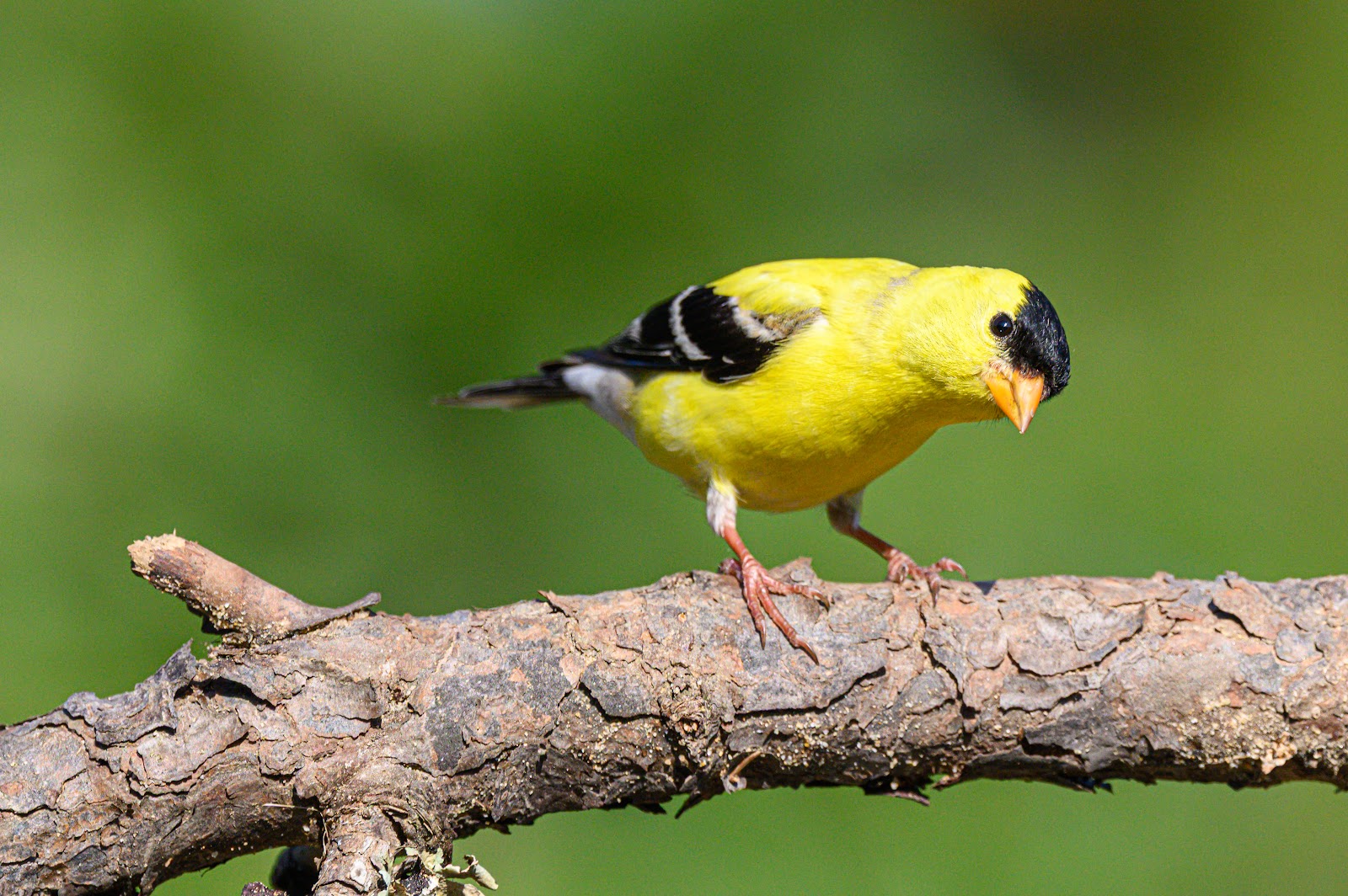
Meet the American goldfinch.
This bright ray of summer sun thrives in weedy fields and gardens. If you haven’t seen one harvesting your conebill seeds, maybe you’ve seen it at a feeder feasting on nyjer (thistle) seeds–or heard it vocally celebrating ‘potato chip, potato chip’ as it bounces through the sky. Our little feathered golden light of optimism depends almost exclusively on seeds throughout its life cycle, making it literally a shining example of a granivorous bird. Those seeds produce the carotenoid pigments that give these birds’ feathers and beak their vibrant colors, and provide with virtually all of their nutritional needs. Yes, it may also enjoy the occasional protein-rich insect snack during the breeding season.
Our wild canary’s dependence on seeds of thistles, coneflowers and the like means it really can’t bulk up early in the season like worm-eating robins and insectivorous warblers. And unlike our chickadees, titmice, jays and nuthatches, they have not cached away a variety of foodstuffs. Consequently, the American goldfinch must delay its nest-building until well into July, hatching its single brood in mid-August when food is most abundant. By then, many of our breeding migrants have raised maybe a second brood and already made their migration reservations.
This is a species that you can find in all of the lower 48 states – and is especially abundant in places like Weston, where we have plenty of weedy, grassy fields for foraging, shrubs at the edges for their nests and evergreen conifers for roosting.
Lazy gardening helps!
The finch’s nest is a marvel of female engineering ingenuity. Start by using spider silk to lash plant material to a shrub’s twigs; add rootlets and plant fibers shaped around her body, and finish it off with a cushioned interior of the fluffy parts of thistle-seed, milkweed and cattails, and you have a perfect place for a few eggs. I like to leave as much edible and nesting plant material as possible around during the breeding season. That means cutting back on both the weeding and the deadheading of their favorite plants. What a great excuse to claim bragging rights for an intentionally untidy garden!
Back to those eggs: Baby finches pop out of their eggshells weighing all of one single gram. Just nine days later they can weigh 10 grams. Imagine your eight-pound newborn swelling to 80 pounds in a week and a half. By the end of two weeks the fledglings are flying, and a week later they’re on their own.
Molting marvels
Like all birds, the American goldfinch changes its feathers every year (molts). But the goldfinch is unique in two ways: it not only changes its feathers twice a year, but also its look dramatically between seasons. In early spring you’ll see the male goldfinch at his showiest. The second molt in the late summer helps camouflage during the off-season. The female has a drabber appearance in both molts. Which leads us to a vocabulary builder you can use to amaze your not-yet bird-nerd status friends. American goldfinches are not only sexually dimorphous (the males’ looks differ from those of the females) but display sexual dichromatism (they change their wardrobes between breeding and non-breeding seasons).
If you want to invite this bird to brighten your garden, tempt it to linger longer with lots of coneflower seeds in the late summer and early fall. And try putting out the nyjer seed feeder in the winter.
Author