
Backyard Naturalist: The miracle of metamorphosis, or a very hungry caterpillar
Backyard Naturalist Michael Pappone explores the caterpillar metamorphosis process in this week’s column.
Lucky you! You started life in a safe, warm, protected, nutrient-rich environment. You rewarded your host by screaming your lungs out and demanding milk.
My beginnings were far humbler. In June I started my journey as a Cecropia as a tiny reddish-brown blob on the underside of some leaf or another – cherry tree, maple, birch – I forget. If some spider didn’t come along and eat me (as opposed to choosing one of my hundred or so siblings lined up on there), I might hatch into a tiny black caterpillar with little spiky tubercles protruding from my back. And if those spikes don’t successfully dissuade my avifauna neighbors from feeding me to their hungry brood, I’ll morph into my second of five instars in a few days – a lovely yellow caterpillar.
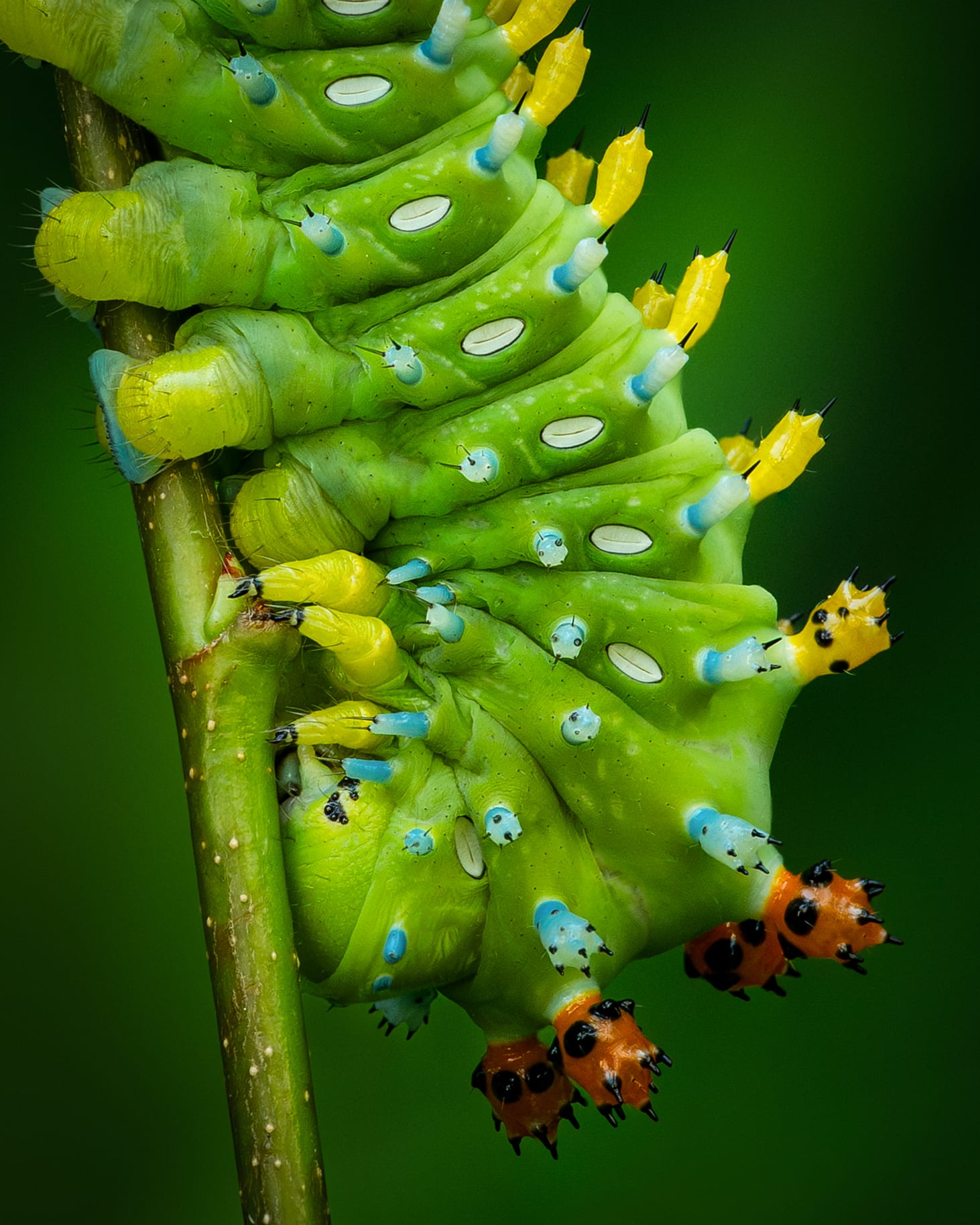
Not your favorite shade? Stick around for another week and I’ll have chomped my way through enough fresh, juicy cherry (or whatever) leaves to have shed that skin and emerged as a larger, grasshopper-green, creepy-crawly thing with nice, primary-colored tubercles – red, yellow, and sky-blue.
I wish I had a mirror!
I’ll reach a length of five inches and grow as fat as an old-fashioned Cuban cigar by the time I’m done chomping. That would be about now on your calendar. I’m exhausted and ready for a long nap.
But first I have to get comfortable.
I’ll choose a safe twig, spin a loose outer layer (after all I’m in the silk moth family), then “paint” it with a hardening liquid, and add some insulation. Oops – I almost forgot the most important part: a tight inner tube and an escape valve.
From August until Memorial Day of the following year (yes, nine months – just like you!) I’ll change my caterpillar parts for wings, antennae, scaly furry-looking legs. My design features that will make me the envy of nearly all the world’s 16,000 moth species. I’ll eclose from my little sleeping bag after a couple of warm weather spells if a gray squirrel hasn’t already eaten me.
And – tada! – you’ll see a creature as big as a human hand, ready to fly and find a mate. As a female, I’ll be emitting some powerful pheromones. My suitors will be males, who can use their specialized antennae to sense my situation from distances of up to a mile. We’ll join forces in a mating event that consumes an entire day. Then I’ll be off to find a place to deposit a hundred or so reddish-brown eggs on the underside of a leaf. Sound familiar?
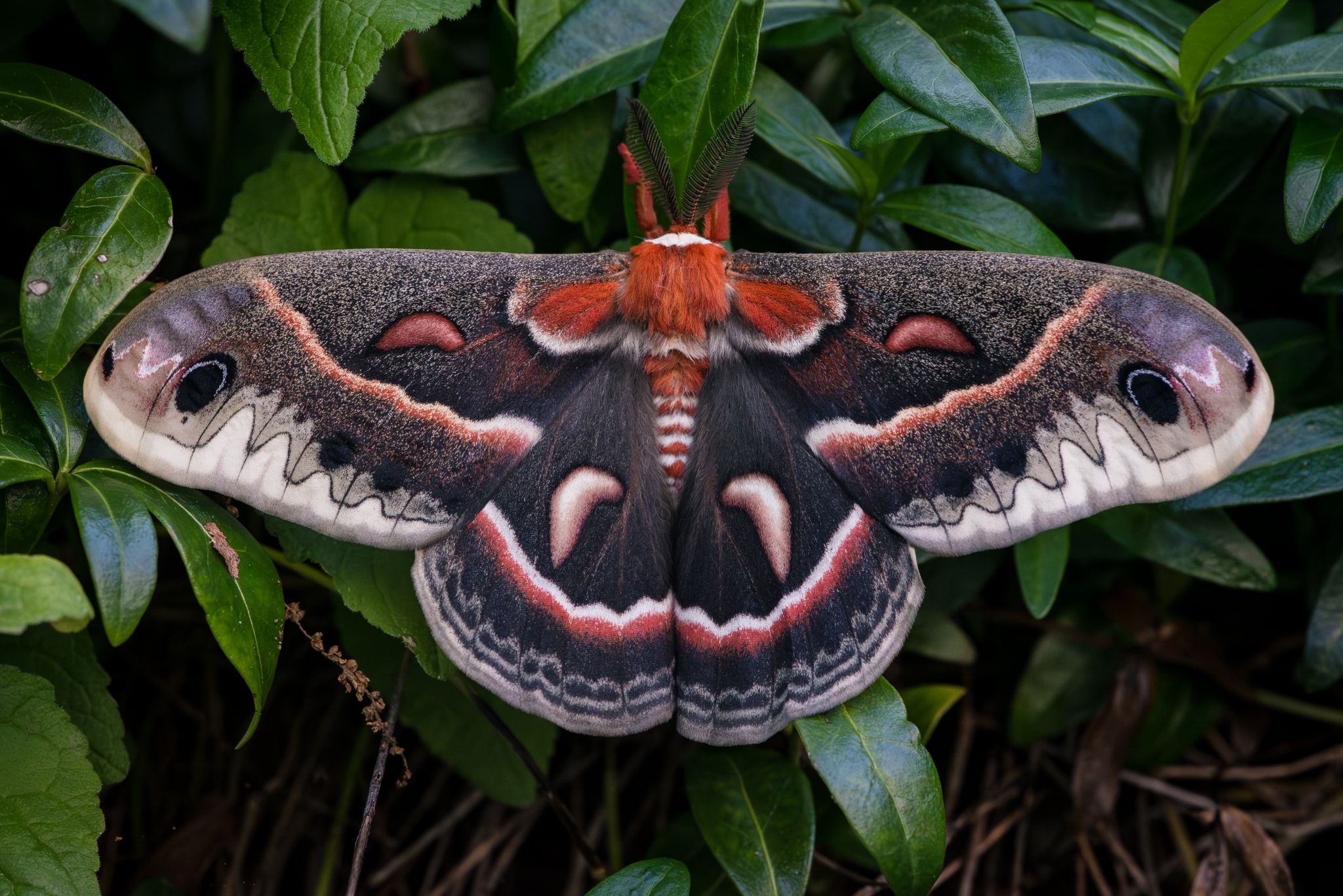
What did we moths enjoy for lunch along the way? Nothing! We have no digestive systems at all. Our caterpillar selves provided all the nutrients we needed for our short several-day lives as giant, gorgeous moths.
Sic transit gloria mundi!
Author

Related Articles
Backyard Naturalist: Tree swallows herald fall’s arrival
Such is the life of a tree swallow: filled with beauty, alive with frenetic activity and fraught with endless uncertainty. Carpe diem.

Ideas in the Making at the AIC: Watercolor: flowing color and infinite possibilities
Water meets pigment, pigment meets paper, and magic happens on the page. That’s the quiet alchemy of watercolor — a medium simple in its ingredients and boundless in its results.

History Corner: Light in the Colonial dark: The Magic lantern and Declaration Day
When visitors arrive at the JST for Declaration Day festivities on Sunday, Sept. 13, they will experience a form of entertainment that predates film, photography, and the Tavern itself: the magic lantern show.