
Backyard Naturalist: Beavers: Nature’s Swiss Army knife of tools
As recently as 10,000 years ago, beavers as large as bears thrived across the continent. Now extinct, these creatures shared a common ancestor with your neighborhood beaver.
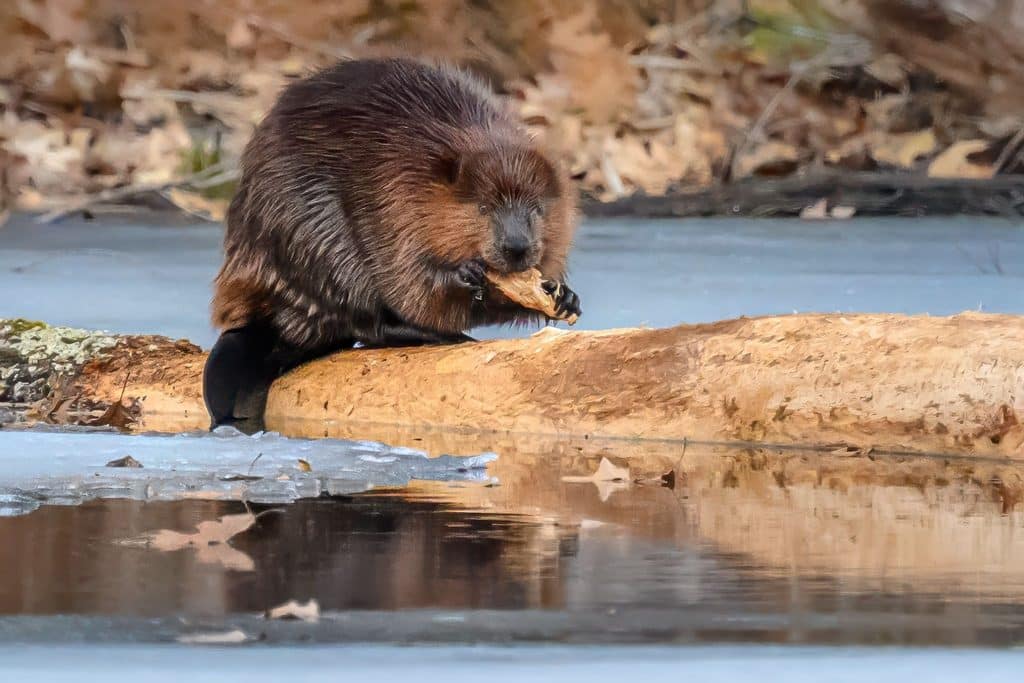
As recently as 10,000 years ago, beavers as large as bears thrived across the continent. Now extinct, these creatures shared a common ancestor with your neighborhood beaver.
Prior to the arrival of the European colonists, North America was home to an estimated 60 million to 400 million of these fascinating rodents. Overhunting and trapping for the fur trade came close to exterminating Castor canadensis in the later part of the 19th century. Indeed, the promise of fortunes to be made in the trading of beaver pelts helped propel westward expansion across the American territories. Beaver numbers have now rebounded to an estimated six million to 12 million, with lodges in all parts of the Commonwealth except Cape Cod and the Islands.
The beaver is a veritable Swiss Army knife of engineering tools. Humans are the only other animals who share the beaver’s penchant for using tools to alter the landscape to create the environment they desire to live in.
Beavers are the largest of our rodents, at weights ranging from 35 to more than 100 pounds. Let’s start with the teeth: beavers have extraordinarily long incisors, which are orange in color from the presence of iron in their enamel. They have delicate fingerlike forepaws, ideal for manipulating logs, branches, mud and stones into dams and lodges. The webbed hindfeet could almost be mistaken for those of a goose. Not much good for walking, but they make awesome paddles to propel the animal through the diverse hydraulic habitats it favors.
And last – but certainly not least – there’s that tail. A veritable paddle of an appendage, it comes in sizes ranging from just over a foot to 20 inches. The tail provides stability when the beaver stands up to gnaw a tree into a log. It helps propel as well as steer the beaver’s course in the waterway. It acts as a storage container for fat during the winter months. It also senses the changes in the flow of water, warning the colony when its dam might have sprung a leak. And finally, the beaver’s tail serves as a communication device when slapped on the water’s surface to signal approaching danger.
Oh, and let’s not forget the fur. Beavers have ridiculously thick waterproof coats. The thicker, longer strands hide the dense waterproof underfur. Together, these fibers are packed onto the hide at a count of 77,000 to 148,000 hairs per square inch. A human may be lucky enough to have that many hairs on their entire head.
Despite the incredible bone-crunching strength of the animal’s jaw, it does not seek out prey of any kind. Living as it does in lodges on secluded ponds, approachable only from underwater entrances, the beaver fears few other animals. Those teeth enable this strict vegetarian to eat the soft tissue beneath the bark of many trees: aspens, birch, willow and alder, to name a few.
The beaver’s role as a keystone species (any organism that is critical to the survival of an extended biological community) is undisputed. Their dams recreate wetlands that serve as homes to such diverse species as great blue herons, frogs, fish, turtles, otters, mink and wood ducks. Even when a pond’s resources no longer sustain a beaver colony, the abandoned dam will enable what was once a pond to grow back as a wet meadow, then support a succession of underbrush, and eventually mature trees.
Of course, living alongside beavers is not always smooth sailing. When beavers’ activities disrupt our lives by flooding out septic systems or basements, residents can provide the board of health with a declaration and seek an out-of-season permit to trap and remove a colony. However, a little forethought can prevent such a situation from arising in the first place. The preferred device for promoting harmony between humankind and beavers is the “beaver deceiver,” which syphons excess water from a pipe protected with a cage, and emptying it out below the dam.
“…(T)here is an element of the sacred in the beaver, if only in its deep weirdness.” Leila Philip, BeaverLand (2022)
Author

Related Articles
History Corner: No ghosts but lots of history in Weston cemeteries
While October is the time for spooky stories, Historical Society President Pam Fox has never encountered a ghost around town.