
Backyard Naturalist: Traveling for a fresh perspective on Weston woods
What does “your backyard” encompass? To get a new view on his own, Backyard Naturalist Michael Pappone traveled to Mexico.
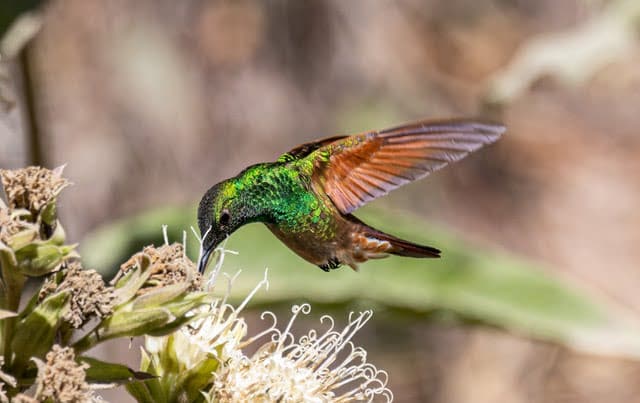
What does your “backyard” encompass?
Does it stop at the edge of your peripheral flower beds, or your property line? Does it include more expansively your favorite nearby nature trails, the rail trail, Land’s Sake Farm or the Town Pool? No matter how you choose your concept of “backyard,” don’t you sometimes like to enjoy it from a new perspective?
My backyard lay waiting for me under a deepening blanket of snow recently while I vaulted off to a new vantage point. To be sure, this new point offers a look at wildlife species that do know my backyard – if only in migratory passing. But, by and large, the lure of a new vantage point in Mexico appealed to my neophilia.
To optimize the choice of venues, I make good use of a treasured in-country resource: Manuel Grosselet, who guided my birding adventure in Oaxaca. Manuel has made the acquaintance of 920 of Mexico’s 1,130 bird species. He knows where they thrive and when they’re home. Using the eBird website, he can help me get the best looks at the birds that interest me most – especially those that are endemic to Mexico. Birding tour companies, too, do great work, but I especially enjoy the intimacy of these bespoke trips where a familiar guide and a companion or so of one’s own choosing (my cousin, a retired UC Davis biology professor, was my choice) can share not only new discoveries but past memories of friends, family and nature encounters.
Manuel and I settle on an itinerary that will take us from venues ranging from the sultry, bustling sea-level Puerto Vallarta all the way up to 7,000 bone-chilling feet, where a few remote cabins cling to the edge of an acrophobia-inducing escarpment and will provide shelter for the night. Each of the venues Manuel’s scoped out reflects an appreciation of the ecological niches favored by various target species. Over the course of a single morning on a single mountain road, we will watch biodiversity unspool almost kaleidoscopically as we proceed to higher and higher elevations.
En route to the cabins, one brief unscheduled stop provides a dazzling spectacle of three dozen blue grosbeaks, appearances by a blazingly-red vermilion flycatcher, an eastern bluebird, three species of sparrows (including our own chipping sparrow), blue-gray gnatcatchers (another Weston transient), a hepatic tanager, least grebes and several American kestrels. We dine under the stars at the same spot we’ll use to start our morning walk – just as those same stars are winking out. Incredible luck affords us vertigo-inducing views of not one, but six, elusive eared quetzals as we perch on the edge of the escarpment. For the next four hours, hardly a moment goes by without our spotting another new species for the trip – or a proper look at a previously just-glimpsed species. And so it goes, from day to day, each new venue delighting us with avian treasures.
Once safely home, I reflect on the sweep of venues, new species, outdoor lunches and the local Weston birds I’ve now seen on their wintering grounds. Will any of them pass this way in May? When our own rose-breasted grosbeaks return to nest, I know I’ll be remembering their eye-popping cousins, both the yellow and the blue grosbeak species I’d met south of the border in Nayarit.
As for my own backyard, a Cooper’s hawk on the hunt and a pileated woodpecker vocalizing maniacally have already reminded me how fortunate we are to be able to return from our external vantage points to our homes in the Weston woods.
Author

Related Articles
Backyard Naturalist: Keep an eye out for bald eagles feeding in Weston
While they’re not actually bald at all, Backyard Naturalist Michael Pappone loves our national bird.
History Corner: George Washington really did sleep here!
George Washington once spent some time in Weston.