
Rooted in history: Weston’s Burgoyne elm
For centuries, the Burgoyne Elm stood vigil over Boston Post Road.
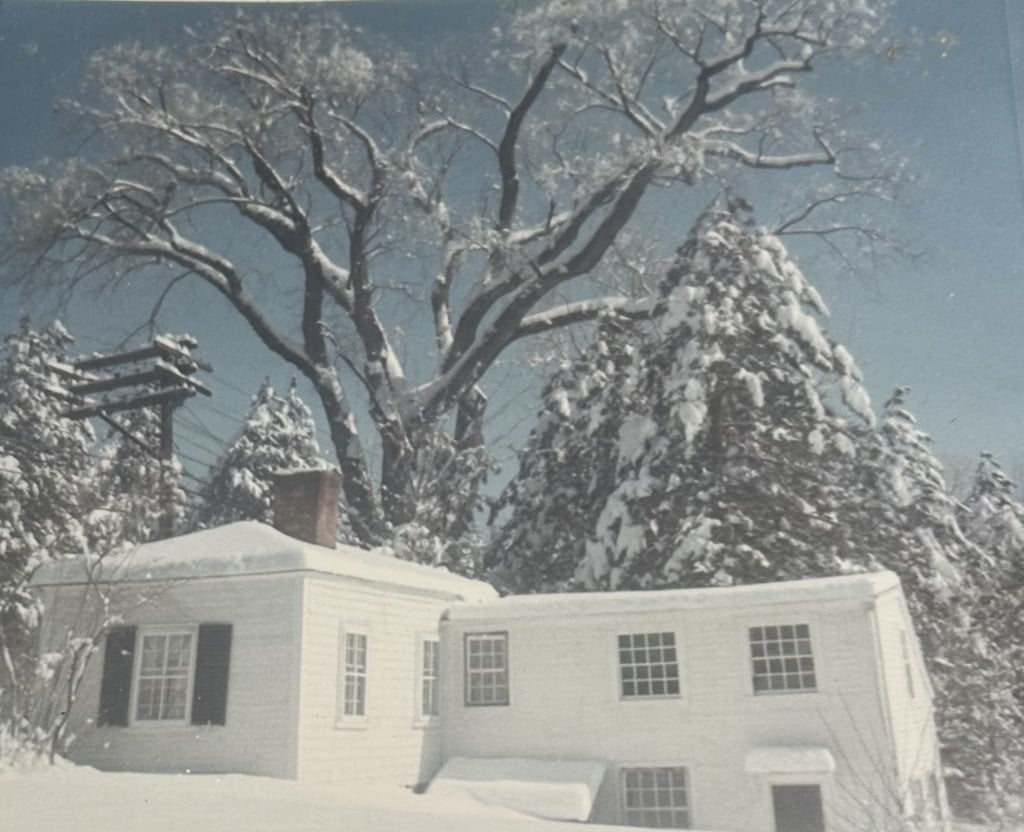
While most trees may be known by their fruit, in Weston, the quality of a tree can be measured by those who cared for it.
For nearly three centuries, Weston was home to the historic Burgoyne Elm. Near the end of the tree’s life, residents came together to try and preserve it in homage to the town’s past. Harold Travis, the founding president of the Weston Historical Society, wrote of the tree’s importance.
“We must preserve forever as much as we can of this venerable landmark under whose shadow for three centuries walked so many of our forebears who helped to make Weston ‘the exceptional New England town,’” he wrote in a note to the Historical Society.
The elm sprouted sometime around 1740. It grew up with early Weston, standing near where the Fiske Law Office now stands, on what would become Boston Post Road. The tree was nearing its 40s when Gen. John Burgoyne came to town.
In 1777, during the Revolutionary War, the British general passed through Weston on his way to Somerville from Saratoga, New York. The Continental Army had defeated Burgoyne and his men in Saratoga and were escorting them back to Massachusetts to ship them back to Europe. Both the American troops and their prisoners camped outside, some taking shelter beneath the branches of what became known as the Burgoyne Elm.
The tree grew to symbolize Weston history in the ensuing years. It was of such local significance that Donald Wyman, a Weston resident and horticulturist at the Arnold Arboretum, led attempts to grow new generations of the tree. According to Michael Dosmann, keeper of the living collections at the Arboretum, Wyman first attempted to graft four plants in March 1963 for Weston’s 250th anniversary. Henry Draper, superintendent of the arboretum’s Case Estates nurseries, also collected seeds from the elm to germinate.
In 1966, the tree’s health waned after it was attacked by elm leaf beetles, according to writings by then-tree warden John Duffy. Some branches of the almost 300-year-old tree were bare that spring. He treated the elm with 3,000 gallons of liquid fertilizer, which prompted new foliage to grow. Travis had left Weston for the summer when the tree was still unwell and was ecstatic over its recovery when he returned that August.
“I rushed to the sacred spot and found to my delight healthy and fresh green leaves on every one of those countless branches,” Travis wrote to Duffy. “Our richest treasure is saved again, and all Weston and New England owes you a hearty vote of appreciation!”
The elm was not in the clear. As reported in a Town Crier article at the time, Duffy said he worried that the tree may not be able to survive the shock of the beetle infestation. Beyond bugs, Dutch elm disease loomed as a potential threat over each of the 3,000 elms that existed in Weston at the time. Duffy said 30 elms on average had to be taken down every year.
In Duffy’s response to Travis, he wrote of future plans to take care of the tree. He wanted to remove some limbs to keep the tree safe during snowstorms.
“I plan, before the winter sets in, to have the tree thoroughly pruned and deep-root fertilized again and hope and pray that nature doesn’t take this tree from us,” he wrote.
The following January, Travis’ mind had already turned to memorials as the elm’s health worsened. He had workers cut a slab from one of the tree’s limbs as it was pruned.
“Our tree warden, Mr. David Pollock, is aware of this project and has indeed a piece of bark that came from the tree this morning showing how the vile beetle is slowly but surely taking this landmark from the scene,” Travis wrote. “It is ironical that such markings on the inner bark are quite artistic.”
Travis himself saved a piece of fungal growth that he thought had an aesthetic value.
By August, the tree succumbed to Dutch elm disease, according to the Town Crier. Pollock said the majority of the tree was cut down on the 15th because it posed a threat to passersby and power lines. The stump was left.
The lumber did not go to waste. Some of it was given out to Weston public schools for students to fashion into various items, including pen holders and a clock. Chris Larsen, the student who made the clock, won an award for his woodworking. The piece, along with a few others, now belongs to the Weston Historical Society.
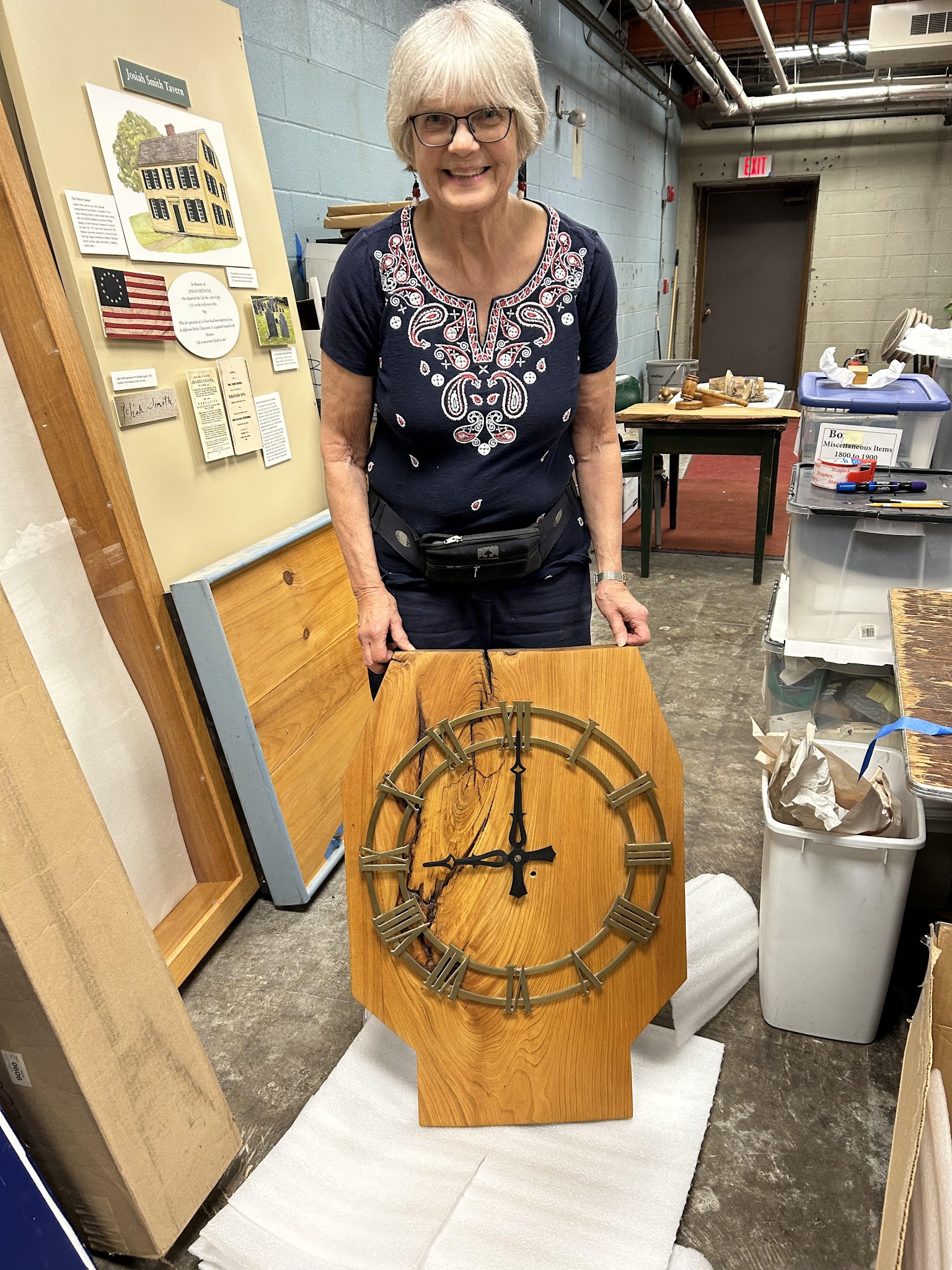
Despite the best efforts of Travis and others in town, much of the Burgoyne Elm is gone. Wyman’s attempts to create cultivars failed. Of the six trees recorded as the elm’s offspring, three had died by 1977.
Even some of Travis’ work has gone missing. Following the tree’s death, he worked with the Rotary Club to help preserve what was left of the stump. In 1975, a slab of the stump was removed for “posterity.” Travis did not record where it was stored. In his photo album dedicated to the Burgoyne Elm, the only clue he offered was “former home of the cellar savers.”
Current Weston Historical Society President Pam Fox said this might be in reference to the old fire station on North Avenue, since cellar savers was a derogatory term for firefighters who took so long to respond to fires that all that remained were cellars.
An examination of the old fire station by the Weston Observer did not turn up the slab–just old newspapers, a coal chute and graffiti.
None of the tree’s stump remains. A memorial to the Burgoyne Elm is still visible on Boston Post Road, reminding passersby of the tree that watched the shaping of the town.
Author

Related Articles
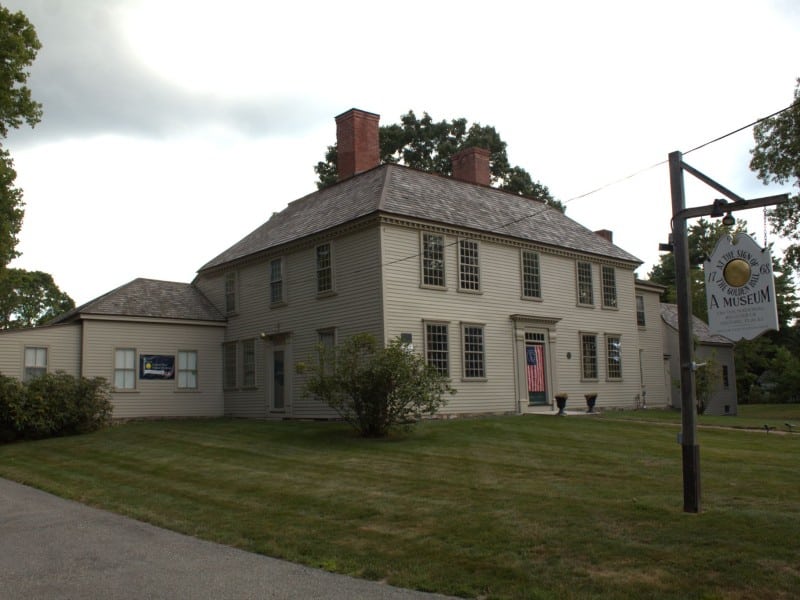
The other side of Revolutionary history on display at Golden Ball Tavern
The historic Golden Ball Tavern still invites visitors inside, although it is offering education instead of food and drink.
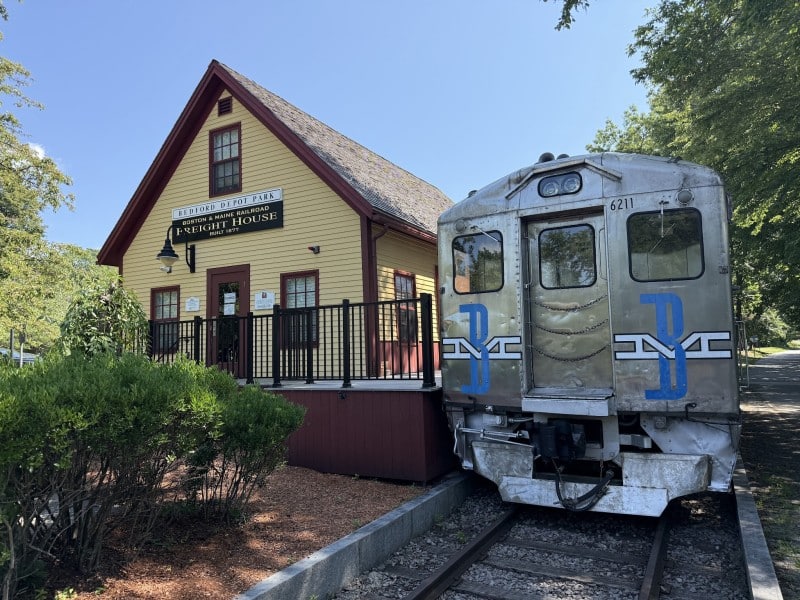
All aboard! Weston Depot is new chapter in railroad history
While the effort to restore the historic Weston Depot is a relatively new endeavor, the process behind it is on a similar track as restorations in other towns.

Photos: COA goat yoga leads to headbutts, warm hearts
The Council on Aging offered a slightly non-traditional yoga class last week, with participants working out in the company of baby goats.