
Leaks, waste and age: a look at the school facilities
The Observer toured the school building facilities with district staff, who highlighted system deficiencies.
For residents who walk into Weston Middle School or High School a couple of times each year for Town Meeting, a concert or a basketball game, the 59-year-old campus looks like it is holding up quite well.
A look at the internal systems, however, paints a different picture, according to the people who work in the building each day.
With residents likely to be asked to appropriate money for a study at the fall Special Town Meeting, the Observer joined School Building Committee Chair Ken Newberg, Superintendent Karen Zaleski, Town Director of Facilities John Marzec, High School Principal Sue Bairstow and interim Middle School Principal Kathleen Baker for a tour of the buildings on July 9.
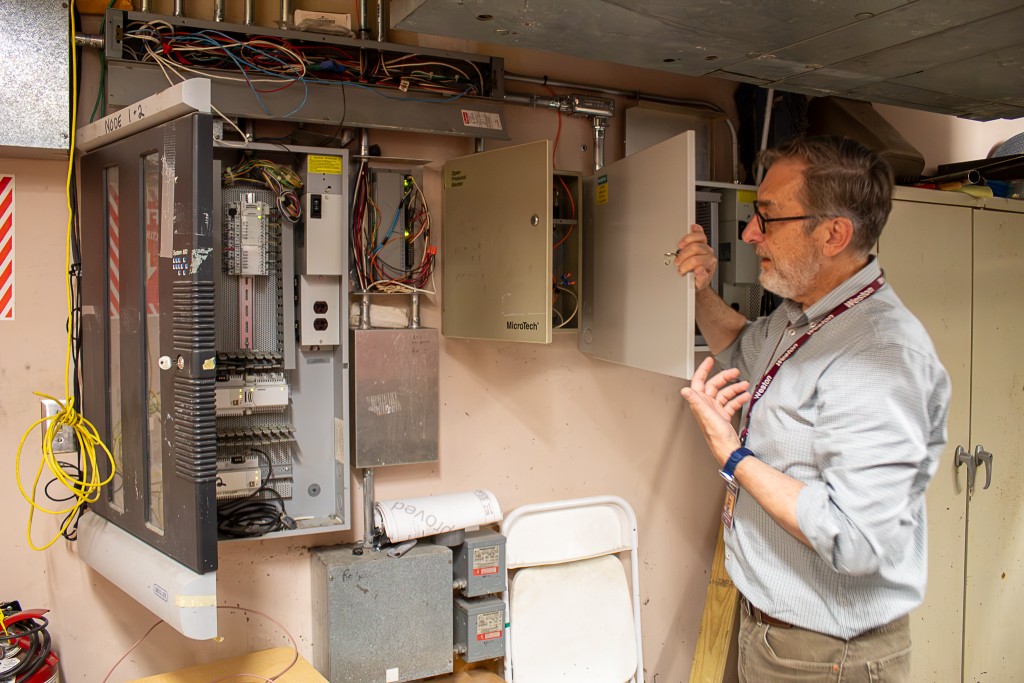
According to Newberg, many of the most pressing issues are locked behind electrical and maintenance closets.
“Our grounds and field staff have taken such good care of the facility, [so the deficiencies are] deceiving,” Newberg said.
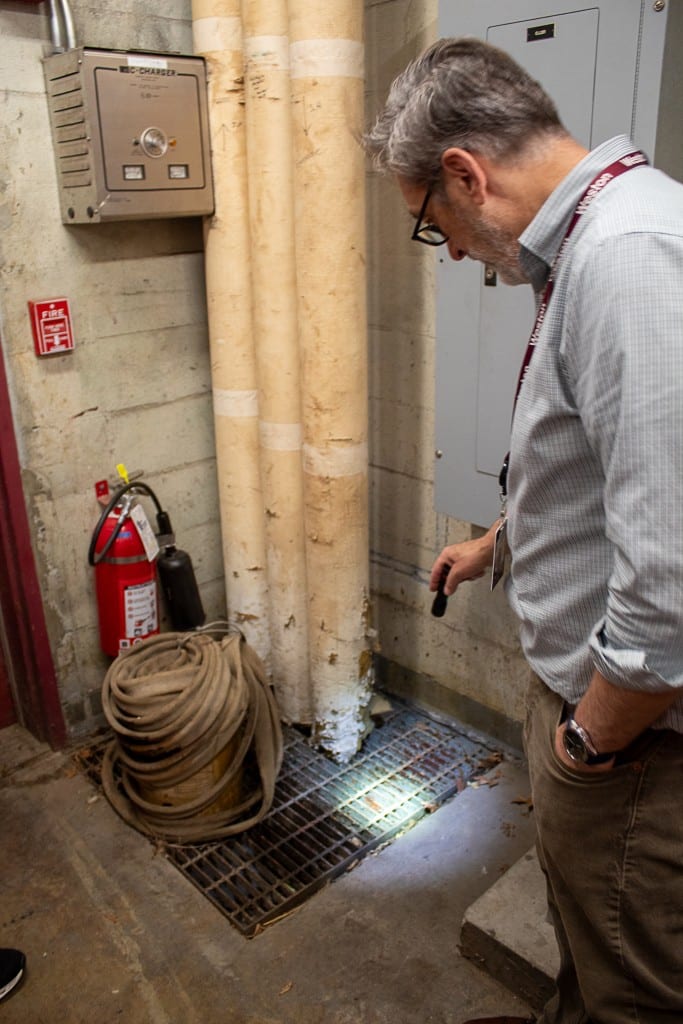
While floors, classrooms and many architectural elements of the buildings, which last underwent a major renovation in the ‘90s, remain in good condition, the interior systems – heating, ventilation, and air conditioning (HVAC), fire suppression/alarms, the pool pumps and more – are aging, inefficient and difficult to operate, according to Marzec.
Many of the systems are approaching 20 or more years of service, with some components dating back to the original construction. Marzec said their age makes it difficult to find replacement parts, if they still exist at all, with facilities staff having to go on eBay in hopes of finding pieces second-hand.
Each system also runs on its own controller that has a hard time communicating with one another, and operating them is often an all-or-nothing decision. The High School main entrance was warm on the day of the tour, yet an adjacent hallway was significantly cooler, with one office sitting at 62 degrees, which could not be adjusted or turned off despite the office sitting vacant for the summer.
Other systems, like heating, are so old they are noncompliant with Weston’s existing energy codes and are uninsulated, meaning a lot of energy waste.
“These are inefficient, poorly controlled and poorly performing,” Marzec said.
At the High School, Bairstow said the fire alarm panel in the main office will trip false alarms, or a security system will report an open door that isn’t actually open. While these might not disrupt the everyday learning, she noted staff has to take time to address them.
“It’s these things,” Bairstow said. “When the alarm goes off and we’re like, ‘We have to call the guy again.’”
The fire alarm and suppression system at the Middle School is worse off, as parts of the building are not covered by sprinklers.
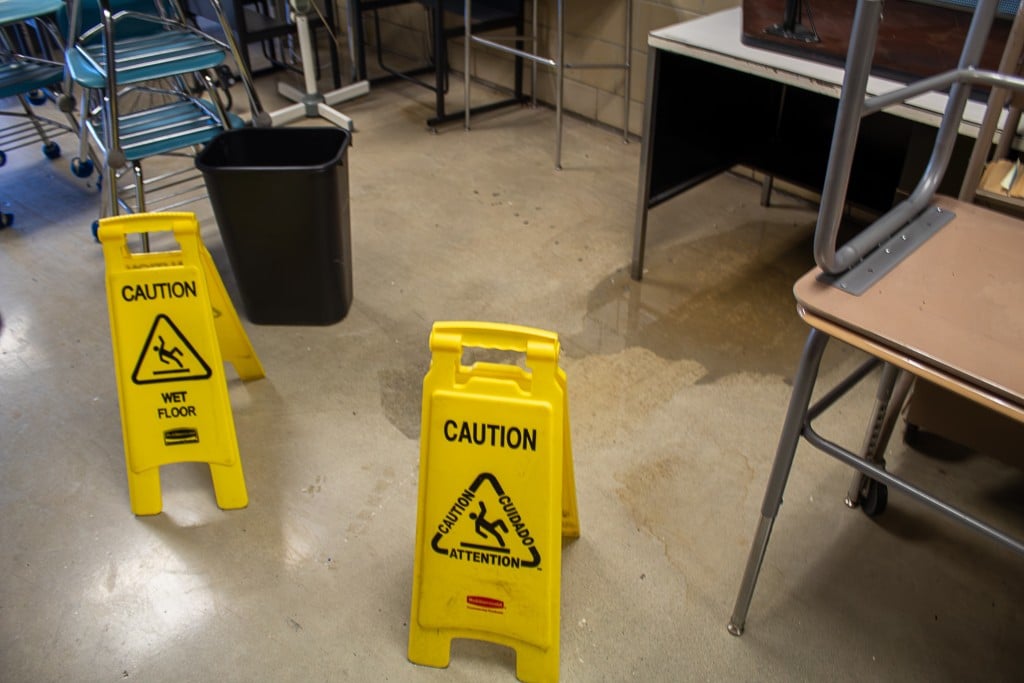
Other things, while not directly related to safety, are also issues. Water falls into a Middle School hallway when it rains and vent condensation drips onto a carpeted floor in the High School.
The auditorium also has several issues of its own. It is too small to host the entire high school student body, it can easily reach capacity during Town Meeting and other events, it lacks air conditioning and the lights flicker.
As the School Committee, district and town examine the possibility of constructing new buildings or renovating the existing facilities, Zaleski and Bairstow said numerous factors come into play: the cost, enrollment growth, accessibility for students with disabilities and a building’s role in enhancing the delivery of Weston’s education.
A total renovation of the buildings could cost up to $171 million, with systems making up the majority of those costs. Building cost estimates range from $329 million for the Massachusetts School Building Authority-compliant design (MSBA) to $441 million. None of these costs are set in stone. Enrollment in the MSBA’s eligibility period does not guarantee any funding, nor does it require Weston to go forward with the campus project.
The School Building Committee is expected to resume its work in late August and will likely present a funding article for a feasibility study to voters at the fall Special Town Meeting, tentatively scheduled for late November.
Author

Related Articles
School building feasibility study to cost $2.75M
Residents will be asked to commit $2.75 million to the Middle School and High School building project’s feasibility study at the November Special Town Meeting.

Boys XC eyes state title; girls look to rebuild squad
Longtime Weston High School Cross Country Coach John Monz said the focus of coaches and athletes depends on what color leaves on surrounding trees are.
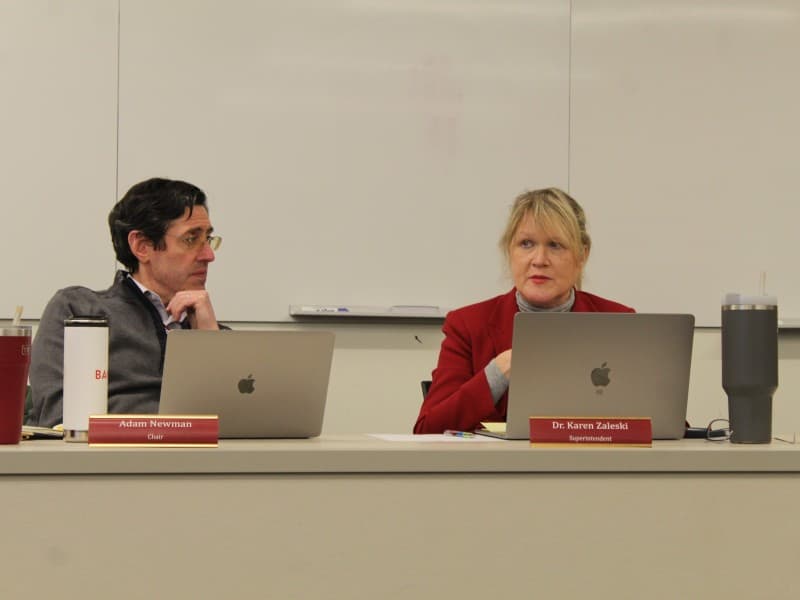
Superintendent Zaleski’s contract up for renewal
The School Committee in the coming weeks will negotiate contract terms with Superintendent Karen Zaleski, whose contract expires at the end of the fiscal year.