
Health survey shows mental health issues rising in Middle School
Social media and other digital media use are a key driver of students’ mental health struggles.
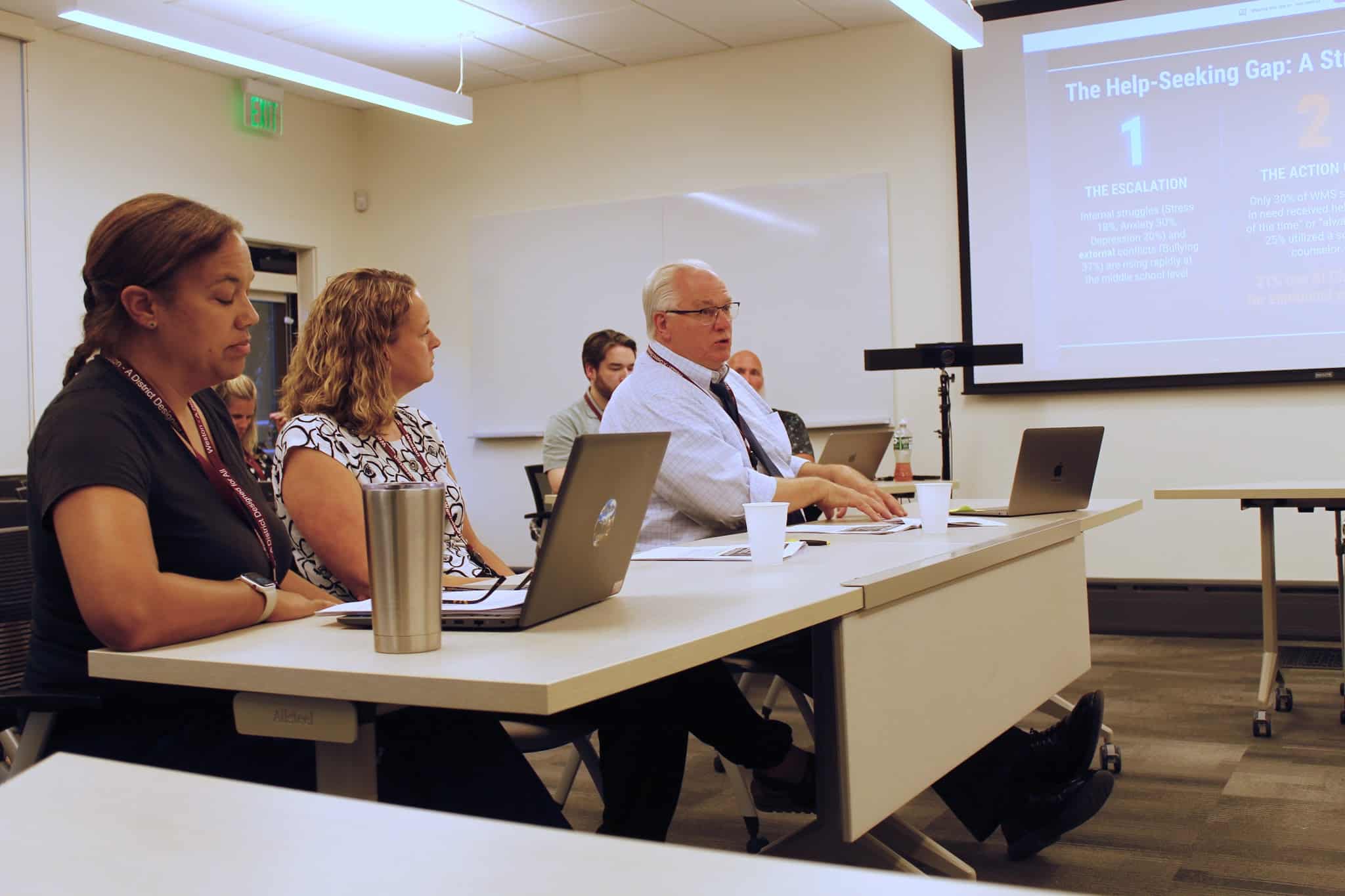
Social media and other digital media use are a key driver of increasing mental health struggles among Weston Middle School students, according to initial findings from the 2025 MetroWest Adolescent Health Survey.
While middle school students are struggling more with anxiety, Weston High School students, on average, are finding themselves in a better place emotionally compared to previous years, but they, too, report that digital media is affecting their concentration in school, sleep and mental health.
The early findings, reported to the School Committee on Monday, came from data collected last fall during the biannual health survey that monitors adolescent health and risk behaviors. Outgoing Director of Wellness Education Mitch Finnegan, Director of Health Services Jamy Gaynor and incoming Director of Wellness Education Danielle Cooper presented the results, and will continue to analyze data heading into the new school year.
Middle schoolers’ mental health was the main point of concern identified by the survey, as 18% of students reported feeling that life is “very stressful,” 30% were showing signs of clinical anxiety and 20% – or four to five students in every classroom – said they had experienced depressive symptoms in the last 12 months.
“Our students are reporting both higher levels of stress and anxiety than their MetroWest peers,” Gaynor said. Additionally, 36% of middle school students reported they had been bullied in the last year.
There were some positive trends, too, with 90% of students reporting they have parent or adult support outside of school. While many kids said they have a trusted adult, though, fewer than a third of students in need said they received help “most of the time.” In a worrying trend, Finnegan said 21% of students reported they are using artificial intelligence chatbots for emotional support.
“We have seen some fairly terrible stories about where that path might lead,” he said.
High school students’ mental health, on average, is improving, with fewer students reporting anxiety, depressive symptoms and suicidal ideation. Those improvements, however, are not distributed equally across the student body, with Black, Hispanic, LGBTQ and students with disabilities reporting mental health challenges at a higher rate.
Weston’s inaugural survey was conducted in 2021, right as pandemic restrictions eased. Finnegan said general improvements can likely be attributed to new curriculum introduced at Weston High School and targeted interventions that might help students who feel left out. These strategies, he added, can likely be deployed at the middle school to address its rising mental health crises.
“We have had a lot of resources directed at the high school to address mental health issues. We implemented a brand new mental health literacy curriculum.” Finnegan said. “Now we need to make sure we are scaling up and scaling down to the middle school.”
Both schools’ students reported similar barriers to seeking school-based mental health support: concerns about missing class or not having enough time, feeling like they should handle problems on their own, not wanting their peers to know they were seeking help, believing that counseling wouldn’t help them, being too embarrassed to talk about it, or believing that a counselor might not understand them.
A key driver in creating mental health struggles in both the middle school and the high school is the digital environment, in what the health staff called the “digital domino effect.”
A majority of students in both schools said cellphone use, specifically social media, worsens sleep habits, concentration in class, or their mental health. In high school, more than half of the student body spends three or more hours a day on their smartphone outside of school or work – jumping from 34% in 2023 to 57% now.
Nearly a third of high school students, 30%, reported getting a smartphone before sixth grade.
While the mental health issues stemming from smartphone use are challenging enough, Finnegan said the physical danger of distracted driving and the physiological sleep loss are especially dangerous.
“The modern driving risk is the smartphone, not the bottle,” Finnegan said, referencing that 38% of students report texting, emailing or watching videos while driving, which he noted is just as dangerous as impaired driving. More than two thirds of high schoolers said phone use degrades their sleep, and only 39% reported that they get the recommended eight or more hours of sleep each night.
“We see this as all tied together. We know sleep is a huge factor,” Finnegan said.
As the district moves forward and the health department further examines data, Finnegan and his team laid out three goals: manage the digital environment, target the equity gap and leverage existing adult support.
Author

Related Articles

Community the key to success for Wayland-Weston Rowing
Over the years, the town of Weston has become a breeding ground for individual and team success in the sport of rowing
Students, parents take to the roads for Bike to School Day
The wheels on the bus go round and round, and last week, bicycles, scooters and skateboards joined the ride to school.

Town Government 101: What’s in a feasibility study?
You hear about feasibility studies for a variety of projects around the community – fire and police stations, the school building project, to name a few – but perhaps you may not know what the document actually represents.