History Corner: Festivities and Declaration reading planned for September
This September, Weston will be celebrating the 250th anniversary of the day when our town first heard the Declaration of Independence: Sept. 8, 1776.
This September, Weston will be celebrating the 250th anniversary of the day when our town first heard the Declaration of Independence: Sept. 8, 1776.
Here’s how this first reading came about. The Continental Congress sent express riders throughout the colonies. The riders carried printed copies from Boston to each city and town in Massachusetts, with instructions that ministers read the Declaration on the first Sunday after it was received. At First Parish Church, this responsibility fell to Rev. Samuel Woodward (1727 – 1782), the second ordained minister and a much beloved pastor who served the parish for 31 years.
As part of the 250th celebrations, our town plans three readings. The first will take place on the anniversary date, Sept. 8, at a cocktail party at Weston Town Hall, for the benefit of the Weston Historical Society. Information about purchasing tickets can be found at http://www.westonhistory.org.
The second reading will take place on Sept. 13 at 12 noon in front of First Parish Church, following Sunday services. Standing in for Rev. Samuel Woodward will be Rev. Jeff Barz-Snell, minister of the parish.
The third reading will take place at 2 p.m. at the Josiah Smith Tavern, following a tavern stroll from the Golden Ball Tavern to the JST. The Golden Ball will host tours beginning at noon, and the stroll will kick off at 1 p.m. led by George Washington, Paul Revere, Abigail Adams, two horse drawn carriages, and more. The JST will have colonial games and entertainment, food, local crafts, carriage rides and a magic lantern show.
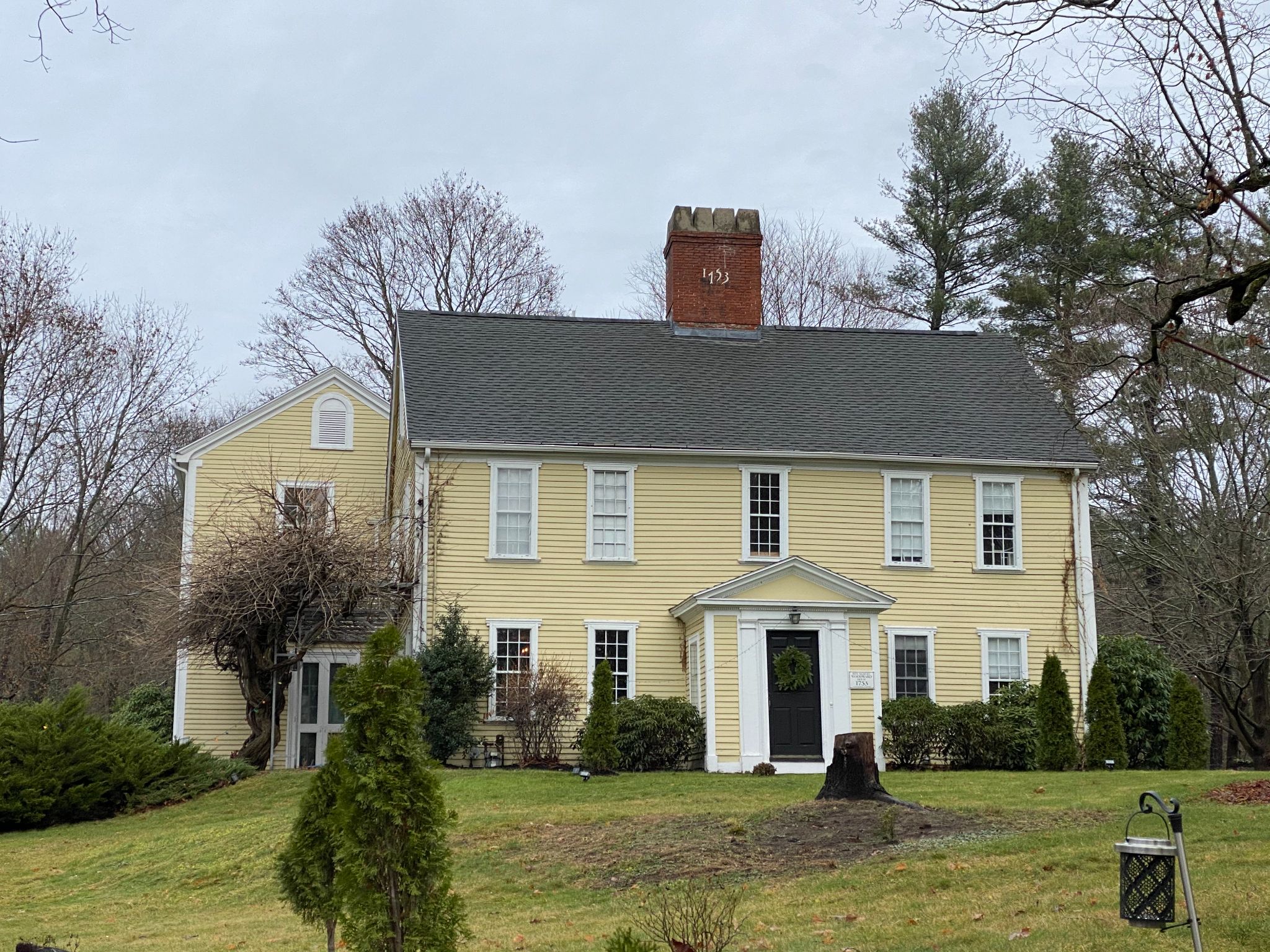
Rev. Samuel Woodward was born in Newton in 1727 and graduated from Harvard College, Class of 1748. In 1751, at age 24, he was chosen minister of Weston by unanimous vote and accepted — but only after the parish agreed to raise his salary. He purchased 30 acres of land on Concord Road, and in January 1753, married Abigail Williams, daughter of the minister in Waltham. Their home at 19 Concord Road remains today as one of Weston’s most important colonial homes, notable for its fine architectural details. The couple had 12 children; sadly, all but five died young.
Woodward had a “reputation for classical learning” and prepared a number of boys for college during his years in Weston. His name appears as one of the “alarm men,” the local militia reserve, in 1757. On April 19, 1775, hearing the warning calls, he hurried to Lamson’s field, where 100 men and three officers had assembled. He said a prayer, picked up his gun, and marched to Concord with the Weston militia.
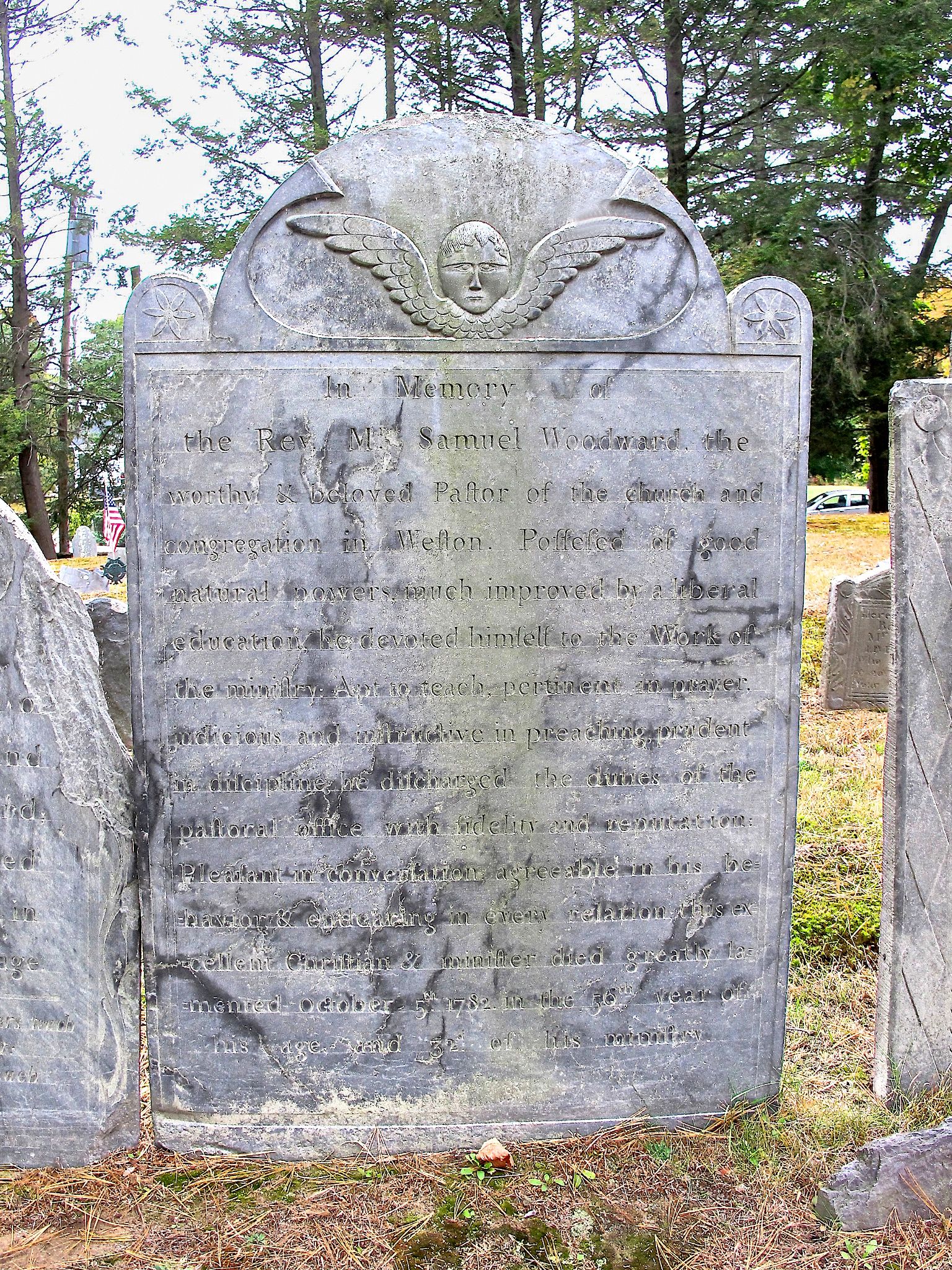
In his Centennial Discourse of 1813, his successor, Rev. Dr. Samuel Kendal, described Rev. Woodward as a “serious, sensible, practical preacher, rarely entering upon controversial points, but always striving to mend the heart and life,” and a man who “took care not to lose sight of the great object of his ministry, the moral improvement of men, their ultimate happiness, and the glory of his and their God.”
This description helps illustrate how the First Parish Church avoided the schism that took place in Congregational churches across New England in the late 18th and early 19th century, when time-honored orthodoxy was replaced by a period of uncertainty and new, more moderate views. The Rev. Samuel Woodward and his successor, Rev. Samuel Kendal, who served as minister for another 31 years, deserve credit for avoiding theological conflicts that might have split the church, instead focusing on the “great object of [their] ministry.”
Author
Related Articles
Backyard Naturalist: Monarch math… Or the world’s longest relay race
Why choose numbers over poetry to celebrate the wonder of America’s favorite butterfly?