
Backyard Naturalist: Can you learn to love a stinker?
Skunks are, in fact, all over the place.
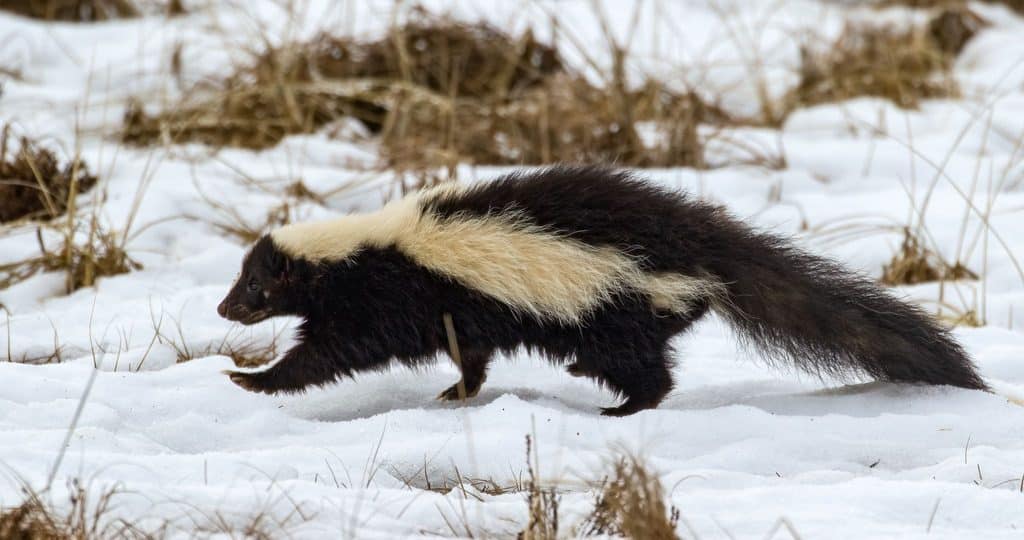
What’s in a name, you may wonder? The striped skunk’s binomial (scientifically favored) name (Mephitis mephitis) means “double foul odor” in Latin. The Indigenous folk in the Midwest called the striped skunk “shee-gawk.” Chicago’s name means “place of the skunk.”
Skunks are, in fact, all over the place. But unless one shows up as roadkill, this nocturnal creature is seldom visually encountered. Our noses, though, can detect skunk spray up to a mile and a half away.
A shy, good-natured, intelligent animal about the heft of a housecat, mephistis only lives up to its binomial as a matter of last resort. It does not ambush random dogs. Rather, only when trapped or threatened will it unleash its famous superpower in self-defense. Skunks graciously afford you a series of clear warnings and an opportunity to clear an escape path for them. First comes the back-arching display; next is the raised tail and the pivot to a backwards stance.
“Wait–are you still here?”
Okay then: get ready for the final warning–a stomping of the front feet. Anyone still crowding the creature’s personal space may find himself on the wrong side of a blast of yellowish, oily liquid. Skunks can aim that stream with distressing accuracy and hit targets 15 feet away. The source of the stink is an organosulfur compound known as n-butyl mercaptan–a chemical thoughtfully added to pesticides and natural gas sources to warn people of their presence. Once a skunk has sprayed, it needs 10 days to replenish its supply.
I treasure childhood memories of playing with my neighbor’s de-scented pet skunk. So it’s no trouble for me to segue into praise for this animal. The striped skunk is at home across the Commonwealth in all types of habitats: meadows, forests, farmlands, wetlands and even beaches. They are equally comfortable in urban and suburban environments.
Our well-clad neighbor deserves gratitude for the benefits it bestows. Its taste for beetles (Japanese, if you please) protects our rose bushes. The strong forefeetare equipped with claws well-suited to excavating the grubs that damage our lawns. Skunks also feed on nasty yellowjacket wasps. In winter months, they go after small rodent pests. If you’re in a part of the country where poisonous snakes are a concern, the venom-immune skunk is your ally. To round out their diet, they will choose a serving of eggs, uncannily sensing just when the snapping turtles have come ashore to deposit their eggs in the springtime.
Skunks borrow the dens of woodchucks and foxes to rear their young. If necessary, they’ll deploy those powerful forefeet as excavators to burrow tunnels up to 20 feet long and three feet deep. They are also quite content to adopt the space beneath your porch as a den. Usually, the female gives birth to a litter of five or six kits. Her young will start following her, single file, on foraging outings before they are two months old, and go solo a few months after that.
Adults have virtually no predators – save the formidable great horned owl. The young are especially at risk from hungry coyotes, foxes and dogs. Roadkill and rabies are a scourge.
As for us, we can peacefully coexist with this beneficial neighbor by hiding temptations like garbage and pet food; sealing up openings to spaces that might appeal to them as dens and switching on outdoor lights before giving Rover that good-night walk.
All that said, I am hoping the next live skunk I see is a healthy one that is not lifting its tail in my direction.
Q: What do you get when you cross a skunk with a shark?
A: As far away as possible!
Author

Related Articles

Your gifts bring grant dollars to the Weston Observer
On Nov. 1, the Observer launched its second year-end Institute for Nonprofit News/NewsMatch campaign.

History Corner: No ghosts but lots of history in Weston cemeteries
While October is the time for spooky stories, Historical Society President Pam Fox has never encountered a ghost around town.
Backyard Naturalist: Beavers: Nature’s Swiss Army knife of tools
As recently as 10,000 years ago, beavers as large as bears thrived across the continent. Now extinct, these creatures shared a common ancestor with your neighborhood beaver.