
Backyard Naturalist: What does the ‘late’ bird get? Ask the black-crowned night heron
Backyard Naturalist Michael Pappone traveled to Winchester to see the black-crowned night heron in action.
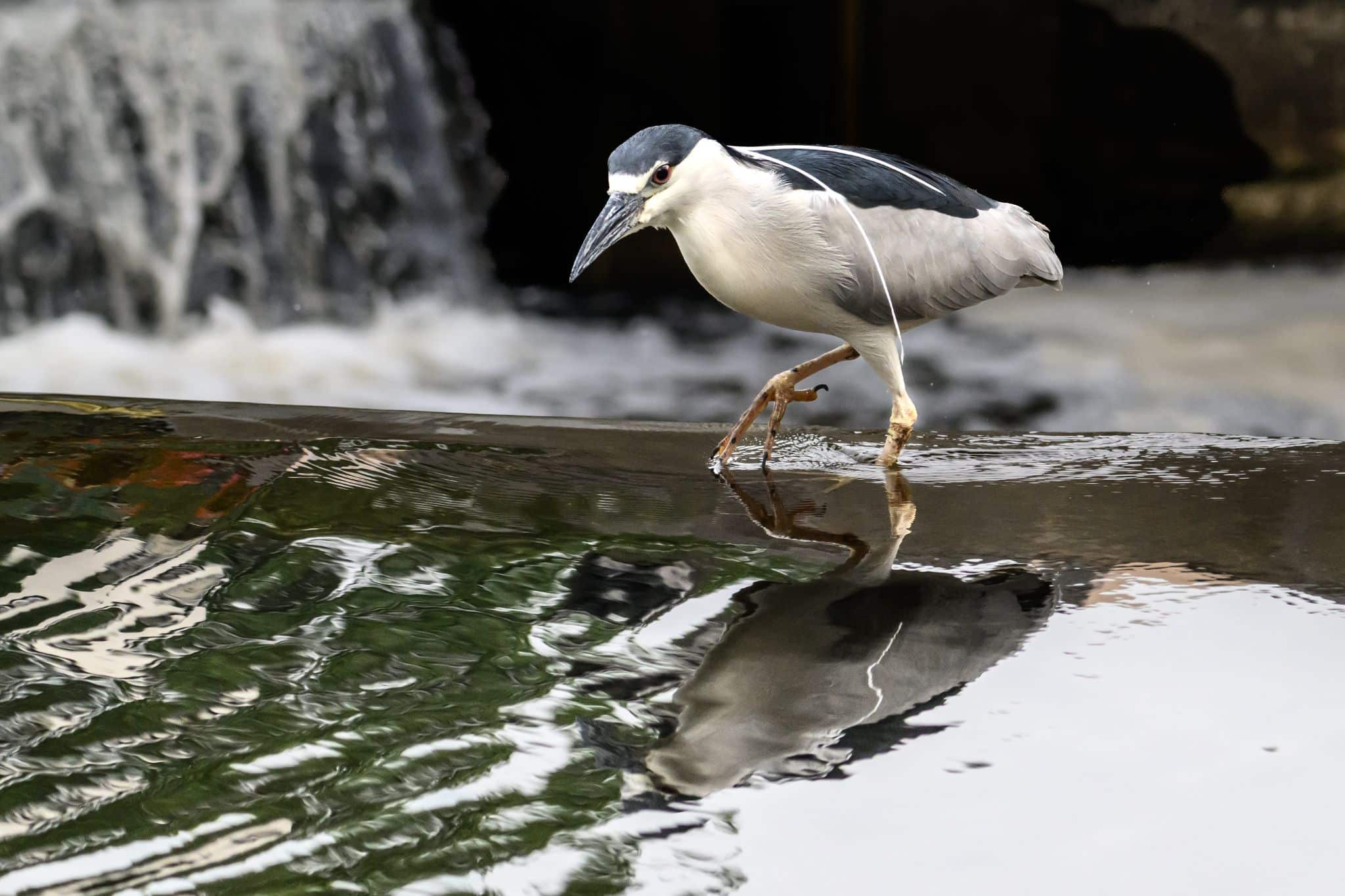
The early bird gets the worm.
Fine!
But what if your tastes don’t run to soil-dwelling terrestrial invertebrates? Maybe you prefer the feeling of cool water running over your toes and have no interest in hopping on the grass in the early morning?
Well then, you’d be very glad not to be a robin, but rather a black-crowned night heron. With your red-orange eyes that bulge when you’re agitated, contrasty black, white and gray feathers, topped off with a cluster of long, white cranial plumes, you’ll turn heads wherever you land. And you’re most decidedly not that early bird! You are, after all, Nycticorax nycticorax — the night raven!
While the robin is chirping cheerfully at dawn, dragging slimy earthworms out of the turf, you’re dozing in your creekside tree with 20 or so of your favorite neighbors, digesting last night’s dinner.
The black-crowned night-heron has been fishing since just after sunset, packing it all in before dawn. He’ll roost and yawn and preen in his heronry throughout the day, leaving the diurnal fishing to his larger heron and egret cousins. Our 2-foot, 2-pound “waterfront thug” sees no advantage whatsoever in competing with sharp-billed waders twice his size during the daylight hours.
He’ll have stalked his share of smaller fish, crayfish and amphibians in streams, ponds, swamps and tidal rivers before they’re even awake. And if the prey is not cooperating, he’ll toss a dragonfly or piece of bread out onto the water’s surface as bait. Employing a suite of varied feeding techniques, the night-heron will fulfill his annual 100-pound dietary quota one way or the other.
I had the pleasure earlier this season of tagging along with two of my favorite wildlife photographers on a sunset excursion to Mill Pond Falls in Winchester. Migrating herring were running in adequate numbers to attract a dozen “night ravens” who dutifully posed for close-ups, oblivious to the traffic rolling past on the bridge and the dozens of onlookers — many armed with extra-long lenses. The birds’ concentration remained laser-focused on the river as they waited for any glimmer of silver beneath the surface that might spell “food.”
“Some herons were fishing in the robes of night/At a low hour of the water’s body…” Mary Oliver, “Night Herons.”
Remarkably resilient in a multitude of environments, this species has the most widespread distribution of any heron. It breeds on all continents, save Australia and Antarctica. In Massachusetts, we find the bird within 20 miles of the coast, on riverbanks especially. They’ll nest communally on an island or in dense shrubs (even in poison ivy) near the water, in hopes of keeping predators at bay. Despite those best efforts, two-thirds of first-year birds never get a chance to migrate. Raccoons, owls, gulls and bad weather thin their ranks. Those that survive may live to breed for a dozen or more years, often returning to the same nesting colonies (“philopatry”) and even the same old nests.
Many will have migrated to the American South or to the Caribbean for the winter. Those that remain seek out running water where their prey may be found.
There’s plenty of time for you to enjoy the night ravens’ antics before migration starts in late September. Stake out a spot near a known heronry before sunset. Listen for a prehistoric-sounding, “kwok,” and scan the riverbanks for signs of this patient hunter.
“With feathers cloaked in silver, and eyes that pierce the dark,/It rises from the reeds, where whispers leave their mark,” Anon.

Author

Related Articles
Backyard Naturalist: Tree swallows herald fall’s arrival
Such is the life of a tree swallow: filled with beauty, alive with frenetic activity and fraught with endless uncertainty. Carpe diem.

Ideas in the Making at the AIC: Watercolor: flowing color and infinite possibilities
Water meets pigment, pigment meets paper, and magic happens on the page. That’s the quiet alchemy of watercolor — a medium simple in its ingredients and boundless in its results.

History Corner: Light in the Colonial dark: The Magic lantern and Declaration Day
When visitors arrive at the JST for Declaration Day festivities on Sunday, Sept. 13, they will experience a form of entertainment that predates film, photography, and the Tavern itself: the magic lantern show.