
Backyard Naturalist: More beavers: How do they survive winter?
Last week we extolled the various superpowers that the Castor canadensis deploys to thrive in their aquatic niche. Today we’ll focus on how they organize their lives – and why their survival matters to us.
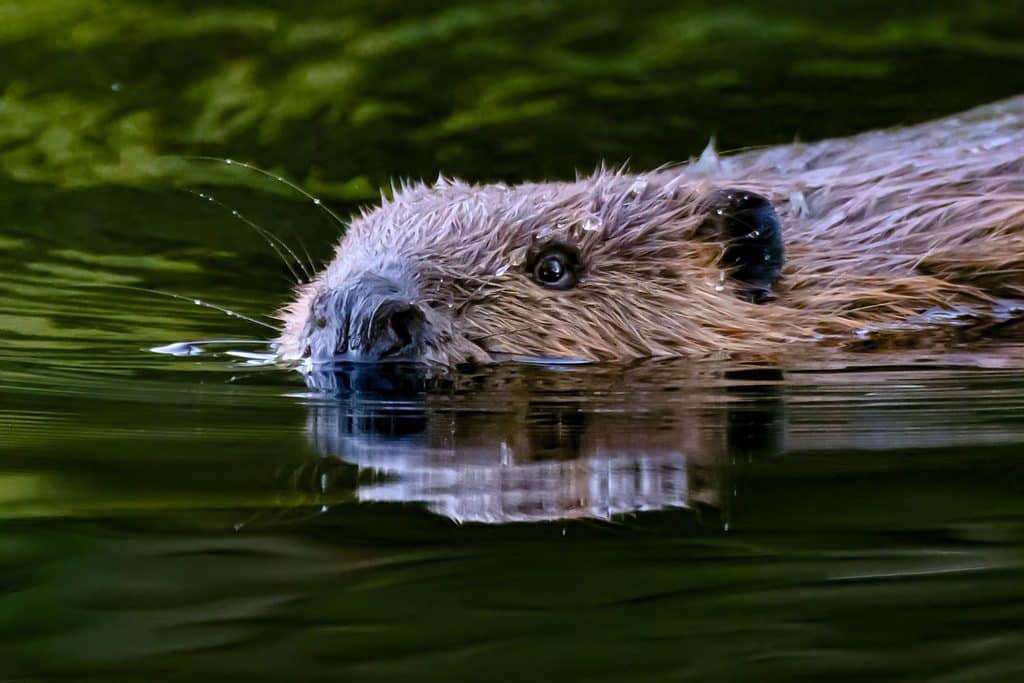
Last week we extolled the various superpowers that the Castor canadensis deploys to thrive in their aquatic niche. Today we’ll focus on how they organize their lives – and why their survival matters to us.
Autumn is a busy time of year for beavers. Before their ponds freeze they need to have cached enough food to endure four to five frozen months. That means gnawing down branches, fetching twigs from as far away as one-third of a mile beyond their ponds and dragging up to 2,500 pounds of material back to the lodge to be secured outside of the mouth of the entry tunnel. Each beaver needs on average a couple of pounds a day – even though it’s slowed its metabolism to a veritable crawl. Beavers store oxygen deep in their muscles, and have other breathable air under the dome of the lodge. They can also use their hard heads to butt breathing holes in the ice when it’s not too thick.
Typically, five or six members of a family lodge together: the adult pair, this year’s offspring and the previous year’s young. Beavers’ strongest sense is their sense of smell. The beaver uses its nose to sniff out the cinnamony birch and licorice-y aspen scents. Scent is also an important means of communication. Come spring the young adults will start marking new territory with their musk, hoping a potential mate responds to the advertisement that they’re officially available. The castoreum in their musk, incidentally, is the same compound that is blended into many top fragrances, including Chanel No. 5. Beavers mate for life and the newborns arriving in spring get the benefit of not only parental care, but the attention of the siblings born the previous year. Last year’s young also help repair the lodge and dam.
Beavers put a couple of unique superpowers to good use in doing their aquatic chores. Their lips can close behind those big orange incisors, preventing water from entering their mouths while they cut and bite things under water. The back of their tongues can be positioned to create a waterproof seal, too. And a beaver can hold its breath for as long as 15 minutes. Fifteen minutes happens to be the length of time they’d need to fell a tree having a six-inch diameter.
And so…just what is the value of a 60-pound rodent that kills our trees, anyway? Well, I’m glad you asked!
For starters, as reported by the folks at Beaver Solutions and Worth a Dam, beavers improve water quality. Beaver ponds function as natural sponges, soaking up and storing stormwater runoff. That prevents erosion and downstream flooding. In drier times, the pond water serves as a reservoir that keeps the stream supplied with running water.
By felling the trees that they need for their food and their building projects, beavers open the tree canopy. The sunlight stimulates an “explosion of biological activity.” The algae, plants and sediment act like the “Earth’s kidneys” as they absorb dissolved nutrients, process organic wastes and remove toxins from the water. The result is a cleaner, sediment-free river. The ponds also serve to recharge groundwater supplies.
A recent study estimated the ecological value of wetlands to be about $5,000 per acre. Weston’s dozen or so beaver lodges have created numerous new wetland acres, providing millions of dollars of ecological services over their lives. Further from home, beavers have been relocated to fire-prone forests to mitigate risks, where they provide a collateral benefit of boosting salmon recovery.
Isn’t it time to become a beaver believer: For an entire book of beaver believer stories, check out Leila Philip’s Beaverland.
To see more of Nicole Mordecai’s photos of beavers, visit Mass Audubon Broadmoor Wildlife Sanctuary, 280 Eliot St., Natick. The show opens Sunday, Nov. 8, and runs from 2 to 4 p.m.
Author

Related Articles

Your gifts bring grant dollars to the Weston Observer
On Nov. 1, the Observer launched its second year-end Institute for Nonprofit News/NewsMatch campaign.
History Corner: No ghosts but lots of history in Weston cemeteries
While October is the time for spooky stories, Historical Society President Pam Fox has never encountered a ghost around town.
Backyard Naturalist: Beavers: Nature’s Swiss Army knife of tools
As recently as 10,000 years ago, beavers as large as bears thrived across the continent. Now extinct, these creatures shared a common ancestor with your neighborhood beaver.