
Backyard Naturalist: Six billion sounds like a lot of birds, until you look more closely
Every year since 1900, the Audubon Society has conducted a Christmas Bird Count event.
Every year since 1900, the Audubon Society has conducted a Christmas Bird Count event. It started as an antidote to the deadly annual Christmas Side Hunt, where nimrods would choose up sides and hunt all day. The winning team was the one that amassed the biggest pile of fur and feathers. By then the conservation movement had started to gain some traction, and gradually supplanted the practice of indiscriminate killing with counting birds across the New World, one 15-mile-diameter circle at a time. The earliest count was conducted within 25 circles scattered from Ontario to California, with most located in the Northeast. The participants reported all of 90 species. Nowadays, the entire Western Hemisphere is in play, with thousands of circles and nearly 100,000 participants. Species numbers have climbed to around 2,700 (588 in the United States).
What these numbers don’t tell us, however, is that North America has lost 3 billion birds since 1970. So, while 6 billion sounds like a lot, in reality it reflects the disappearance of nearly one out of every three adult birds. According to Ken Rosenberg of the prestigious Cornell Lab of Ornithology, “These bird losses are a strong signal that our human-altered landscapes are losing their ability to support birdlife; and that is an indicator of a coming collapse of the overall environment.” Much needs to be done to stem habitat loss, predation by feral, as well as domestic cats (1.3 to 4 billion birds a year), window and other collisions (1 billion annually) and threats arising on the birds’ wintering grounds. Our grassland birds and shorebirds are faring the worst.
Blame habitat loss, pesticides and climate change.
In the midst of these distressing macro-trends, we Christmas Bird counters soldier on, totaling whatever we can find in our distinct territories every single year. The data from the thousands of circles is shared widely amongst conservation biologists, wildlife agencies and those of us who care deeply about the health of the natural world. Of the 588 species identified in the United States during a recent year’s count, half are “in trouble.” For a treasure trove of data, go to christmasbirdcount.org or nationalaudubon.org.
This year I signed up to participate in three counts: one on Plum Island (part of the Newburyport circle), one on the Stellwagen Banks aboard the R/V Auk (a vessel operated by the National Oceanic and Atmospheric Administration), and the one here in Weston. My Stellwagen voyage ended up conflicting with the date of the local circle count, so I didn’t sail with the Auk. Instead I covered northwest Weston around the Campion Center, College Pond and the Community Gardens – which is the only sliver of our town that lies within the 15-mile Concord count circle.
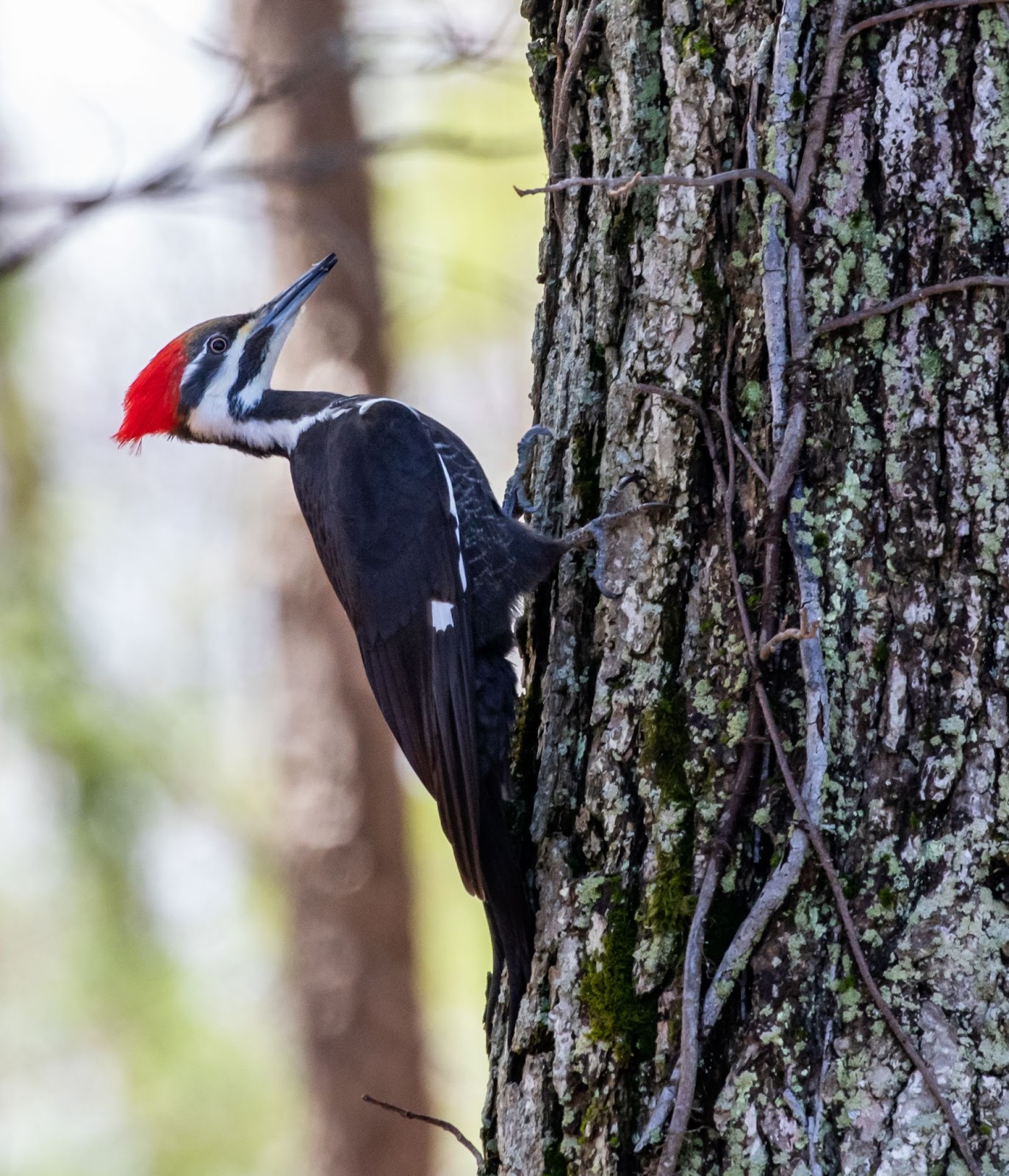
The product of my effort was added to the work of 260 other counters for a total of nearly 26,000 birds – actually a rather low number historically. We did manage to log 87 different species, including an all-time high 90 pileated woodpeckers (I contributed five), as well as 50 great horned owls. And as always, we had a great time swapping stories with other birders. By contrast, my Newburyport outing returned counts (total approximately 24,000) dominated by sea ducks and gulls, with only a few pileated woodpeckers and great horned owls. Not at all unexpected – and it explains why birders love doing more than one Christmas Bird Count.
Next year I may be able to regale you with tall sea tales of puffins, razorbills and shearwaters, mixing in the occasional whale. In the meantime, I’ll be trying to conserve local birds by working for passage of legislation to enact a statewide ban on rodenticides that kill their natural predators.
Author

Related Articles
Backyard Naturalist: Keep an eye out for bald eagles feeding in Weston
While they’re not actually bald at all, Backyard Naturalist Michael Pappone loves our national bird.
History Corner: George Washington really did sleep here!
George Washington once spent some time in Weston.