
Architect presents history of modern homes in Weston
The idea of a classic New England home might bring to mind high-pitched roofs and farmhouses, but Massachusetts — and Weston — are home to several iconic modernist buildings.
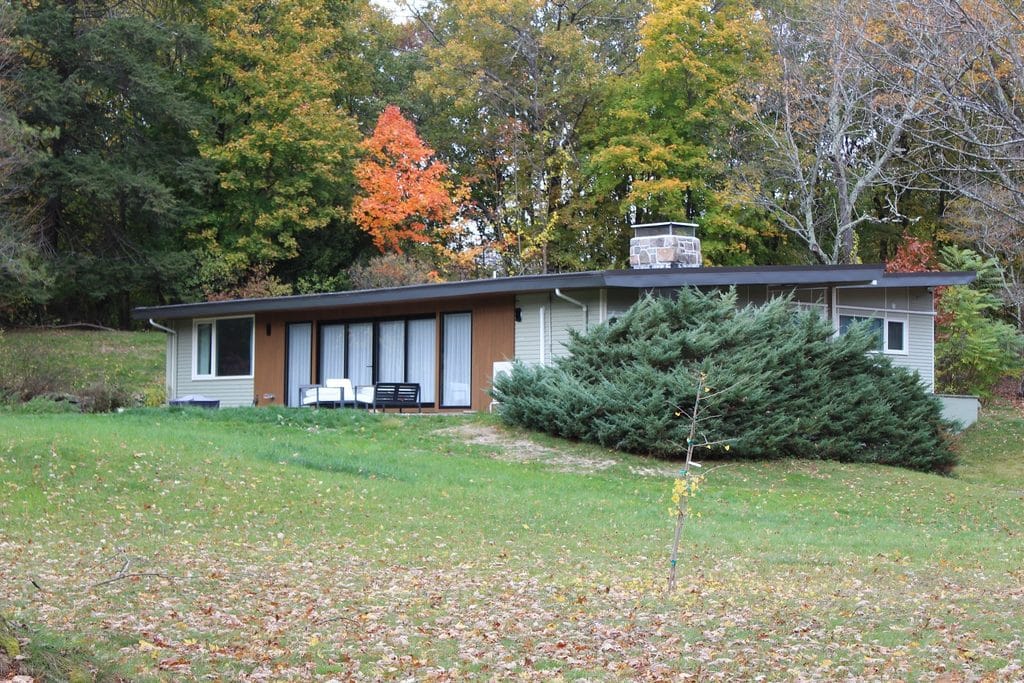
The idea of a classic New England home might bring to mind high-pitched roofs and farmhouses, but Massachusetts — and Weston — are home to several iconic modernist buildings.
David Fixler, a Weston resident, architect and lecturer at the Harvard Graduate School of Design, will be giving a presentation on modernist homes in Weston next week.
“[Modernist architecture] strips away all traditional ornamentation and opens up the plan,” Fixler said. “Rather than a house being a collection of rooms, it’s a singular space with functional barriers.”

Modern architecture, which grew in popularity from the 1930s into the 1980s, according to Fixler, is a style of building that experimented with new building techniques and focused on function.
“There is some outstanding design in Massachusetts for modern homes,” Fixler said. “One of the most outstanding is the Field House on Sudbury road.”
The Field House was built in 1933, designed by Ned Goodell. In Massachusetts, modernism grew in popularity in the late 30s, in part due to architect Walter Gropius. Gropius, founder of the Bauhaus School in Germany, moved to Massachusetts in 1937 and began to teach at Harvard.
Other architects of the movement included Eleanor Raymond, Carl Koch and Henry Hoover, who built the house where Fixler now lives. Fixler said these homes are a reminder of how compact buildings can still provide a fulfilling space that emphasizes the nature of Weston.
“These houses point to a way that you can live a quality, invigorating lifestyle that is closely connected to nature,” he said.
In Weston, Kendal Common, founded by Koch in 1950, is a preeminent example of modernism. Beyond the physical buildings, the area emphasized an aspect of life that Fixler thinks people in the current day should focus on: community. The neighborhood is semi-cooperative and gives homeowners voting rights over shared spaces, including a playground. Fixler said it is an example of the mindset behind modernism.
“In a place like Weston, community can be difficult because houses can sit on large lots separate from each other,” Fixler said. “You have to do things to foster it. A development like Kendal Common builds around these communal spaces. Everybody’s got some stake in it.”
Fixler’s lecture will take place in the Weston Public Library’s Community Room as part of the historical society’s annual meeting on Thursday, Oct. 29 at 7 p.m. The public is welcome and refreshments will be provided.
Author

Related Articles
Building inspector resigns
Building Inspector Paul Creedon resigned on Oct. 16.
Door closed on HYM project, Regis to consider what comes next
What will happen to the 30 acres of Regis College land remains to be seen, but it will likely not remain undeveloped.
Route 30 recommendation to come in December
After receiving 116 resident letters about the Route 30 reconstruction project, the Traffic and Sidewalk Committee will issue its recommendations on the controversial proposal in December.