
Backyard Naturalist: Big Night is here for Weston’s amphibians
Monday’s warm rain sounded the alarm, triggering the instinctive arousal button in thousands of our slippery, neighbors.
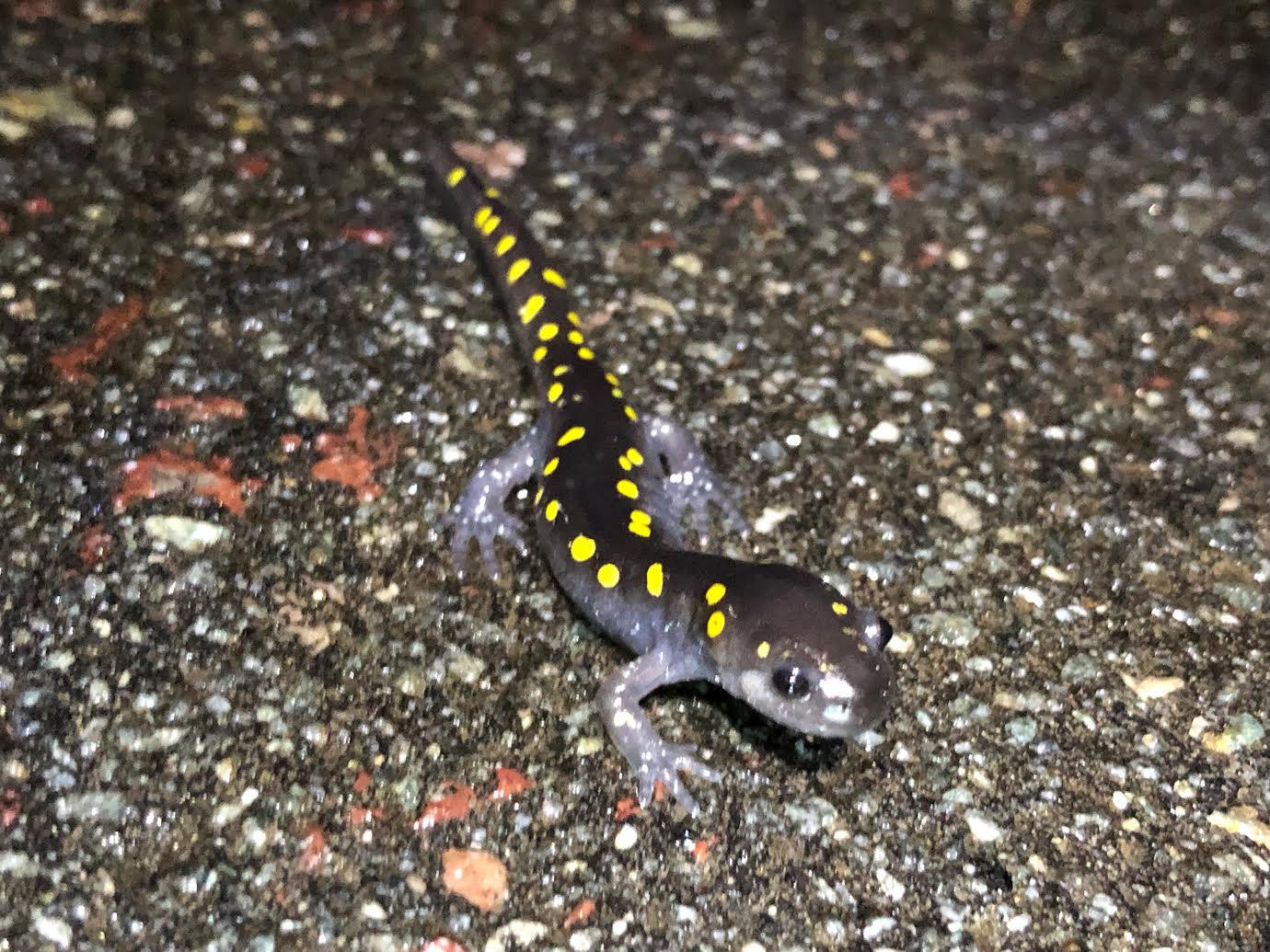
Monday’s warm rain sounded the wake-up alarm, triggering the instinctive arousal button in thousands of our slippery, sleeping neighbors. The blanket of February snow has largely disappeared, and the amphibious animals that have been slumbering in the wet soil below will now begin their spring rituals. Read on to learn why the first warm and rainy nights of spring are a signal to us to leave our car keys in the drawer and pick up a flashlight instead.
Weston hosts a baker’s dozen amphibian species. Right now it’s the several salamander and frog species that need to shake a leg and find their way down from upland winter burrows and back down to their birthplaces in the nearby vernal pools. Many of them will need to risk their lives navigating a path that crosses a piece of asphalt carrying tons of chrome-trimmed monsters armed with spinning tires that can squash them like bugs in a split second. Members of the Big Night Crossing Brigade will be out, wearing reflective vests and wielding flashlights, to escort these creatures safely across the roads, stopping traffic if necessary.
Vernal pools are unique bodies of water that form after the spring snow-melt, and go dry every summer, which means they don’t support fish. And that’s good news for the frogs and salamanders that breed there: it removes a class of hungry predators that would make a quick feast of all the amphibian eggs it could find, and a juicy meal of any young that might have successfully hatched from the eggs the fish had overlooked. Those frogs and salamanders lucky enough to find their way home will turn their attention to courtship activities, primarily song (frogs) and dance (salamanders). Every spring I sneak quietly over to the vernal pool in my neighbor’s woods to listen to the spring peepers–and to wonder where all those salamanders are hiding.
With its prominent yellow spots and nine-inch length, the spotted salamander (Ambystoma maculatum) seems like it should be easy to, um, spot, right? Well, the problem is that during daylight hours, they’re tucked out of sight under wet leaves and logs. Only at night do they sally forth, wielding their long, sticky tongues to reel in worms, small aquatic invertebrates and crustaceans, insects, slugs and snails. We’re more likely to spy them during their Big Night foray, or in the form of one of the eggs glommed together in the 100 to 300-egg masses that the female will have attached to a twig or rock just beneath the surface of the pool. Spotted salamander eggs contain green algae, which consume the carbon dioxide produced by the embryo, and then turn it into the oxygen that helps support the embryo’s growth.
The hatchlings emerge from the eggs as larvae, breathing through gills like fish do, and whirling around like tadpoles until they’ve metamorphosed into juveniles and leave the pool to forage in the woods. It may take a few years for the spotty to reach sexual maturity and start playing a role in the life cycle of the species. A spotted salamander that succeeds in dodging speeding cars and avoiding hungry predators like raccoons can hope to live up to 20 years.
“Pay attention; be astonished; tell about it.’ Mary Oliver, American poet.
Author

Related Articles
Backyard Naturalist: Keep an eye out for bald eagles feeding in Weston
While they’re not actually bald at all, Backyard Naturalist Michael Pappone loves our national bird.
History Corner: George Washington really did sleep here!
George Washington once spent some time in Weston.