
‘Grave cost:’ Route 30 letters overwhelmingly oppose project
Dozens of resident wrote letters opposing the Route 30 reconstruction project, citing concerns about the environment and safety.
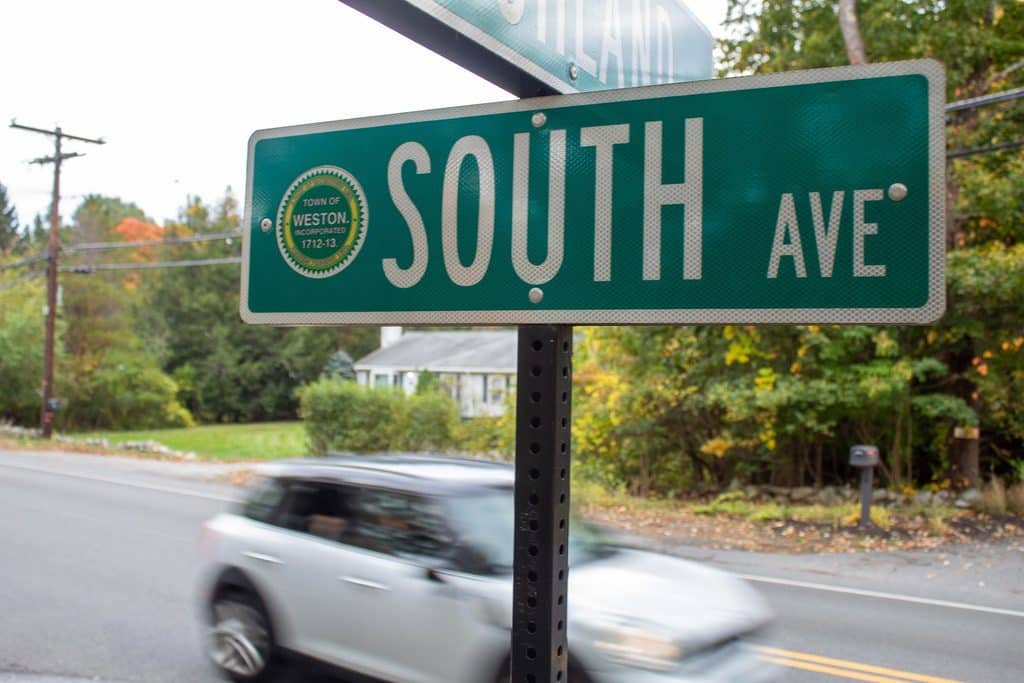
Weston residents have a lot to say about the Route 30 reconstruction project.
Just ask them.
After soliciting feedback over the spring and summer, the Traffic and Sidewalk Committee, Department of Public Works and the Select Board received 116 letters regarding the Route 30 project by the Sept. 30 comment deadline.
Some letters are general questions. Some express support for the reconstruction. And a whole lot of them want the project stopped in its tracks or scuttled entirely.
The $18.5 million state-funded project is a 3.7-mile reconstruction of Route 30 from the Natick town line to the intersection of Cutters Bluff Road. The work will widen the driving surface, create a 10-foot shared-use path, improve pedestrian crossings, update drainage and make connections to other sidewalks and paths along the route.
The Observer reviewed dozens of residents’ letters, finding that concerns about the environment, the safety of drivers, cyclists and pedestrians, a perceived lack of potential shared-use path users, and changes to Weston’s semi-rural character topped the list.
The environment and safety were the primary focus for many residents opposed to the project, with about half of the letters citing those as reasons to end the project. Many writers cited the proposed cutting of hundreds of trees as a major concern.
Many of the nearly 50 opposition letters reviewed reinforce opinions shared by residents at two May listening sessions and an additional hands-on workshop hosted at the end of June.
“Weston has a feel that is different than all the surrounding towns because of this town’s
commitment to keeping it green,” a Bittersweet Lane resident wrote. “While I appreciate the interest in a bike lane, it cannot be done at such a grave cost.”
“The environmental cost of the project seems especially hard to justify given the uncertainty about usage in the eastern part of the corridor,” a Fox Meadow Lane resident wrote. “Before moving forward, the town should take a much closer look at alternatives that would reduce tree loss, minimize disturbance and better preserve the natural environment along Route 30.”
Traffic and Sidewalk Committee Chair Richard Flynn said the high level of concern from residents about the reconstruction’s safety and environmental impact has led the committee to “re-examine some of the project’s prior assumptions.” Specifically, he said they are looking at the steepness of parts of the path and its distance from the roadway, as well as the impact of lost trees and the project’s effect on wetlands.
“Our recent field checks have raised concerns about the tree counts, and it appears more trees would be removed than HSH has indicated,” Flynn said. “We are also reviewing the traffic assumptions and projections behind the design, and looking at how other towns have handled similar issues.”
Bundled together with many of the environmental concerns were fears about transforming Weston from a semi-rural farm town into its more-developed suburban neighbor, Newton.
“Why are we trying so hard to change our image? Our wonderful town will turn into downtown Boston with bike lanes, no trees and still traffic issues,” a Rolling Lane resident wrote. “It’s sad that this was approved to start with. I hope the town can stop this project and start looking at real traffic issues that will save lives.”
Another resident, of Deer Path Lane, said the shared-use path would make Weston take on “the look of tidy suburban sprawl,” which would make the town less charming.
A perceived lack of shared-use path users was one of the chief concerns among letter writers, too, with several stating they believe there is little to no demand among residents, including Weston Public Schools students, to walk or cycle along Route 30.
“I understand that there are only a handful of students who regularly cycle to the High School or the Junior High School,” a Walnut Road resident wrote. “I would assume the number declines as the clocks change and the weather turns cold. I’d be willing to bet that there are more high school students driving Range Rovers than cycling to school.”
Another major theme was disappointment in the expanded scope of the project, which began in 2018 as a reconstruction of Route 30 that included a 5-foot sidewalk.
After several years of development, an additional funding request was brought forward at the 2024 Annual Town Meeting. The design had been changed to include a 10-foot shared-use path, as required by the Massachusetts Department of Transportation’s “Healthy Design Standards” to keep the project on the state- and federally funded Transportation Improvement Plan, according to language on the warrant.
That 2024 appropriation was approved by a much narrower margin than the original proposal, 285-203.
A few writers connected the state’s requirements to other statewide initiatives that they feel take away local control, including Chapter 40B developments and the MBTA Communities Act.
“Please don’t allow the character of this beautiful small town to be taken away by state bureaucrats,” a former Select Board member wrote. “They have already damaged this town enough.”
There were several novel issues flagged by letter writers, including concerns about the effects of years of construction if the project proceeds, increased noise for abutters and the rights of property owners, who will likely have land taken through easements for construction.
“As much as I would love to be able to safely walk down the street where I live,” one South Avenue resident wrote, “it should not be at the cost of losing our visual barrier and some sound barrier of the Pike. And not at the cost of those direct abutters, who already deal with so much noise and cars, sandwiched between busy Route 30 and the Pike.”
Although the majority of letters were negative, 10 letters in support of the project highlighted the health benefits of walking and cycling, the potential to reduce traffic and the lively atmosphere created by welcoming pedestrians.
“I have ridden bikes, run and walked on the multi-use lanes in Boston, Manhattan, Copenhagen, Nantucket and many other places and have seen firsthand how multi-use trails can help invigorate communities,” a Wellesley Street resident wrote. “This project will also help to alleviate heavy automobile traffic by providing other means of getting around the area.”
Another said change is always happening, and while there might be some pushback – as there was for the Mass Central Rail Trail – the benefits will be realized in time.
“As a long-time resident of the town I am well aware that change comes slowly and
often with resistance. We all value the rural character of the town and our tree canopies,” a Boston Post Road resident wrote. “That said – we should not and cannot halt inevitable progress.”
The Traffic and Sidewalk Committee closed its public comment deadline for the 75% design on Sept. 30. Flynn said the committee has committed to making a preliminary recommendation to the Select Board in December, which will include an assessment of the design, next steps and related costs.
“We owe the town of Weston a careful, fact-based evaluation, and we will work hard to deliver it,” Flynn said. “We thank the many Weston residents who took part in this process and shared their comments and concerns.”
Author

Related Articles

Spooky season begins with Pumpkin Fest
Each October, Weston’s Pumpkin Fest brings families together on the Town Green for pumpkin carving, games and food while raising money for Camp Sunshine, a program serving children with life threatening illnesses and their families.
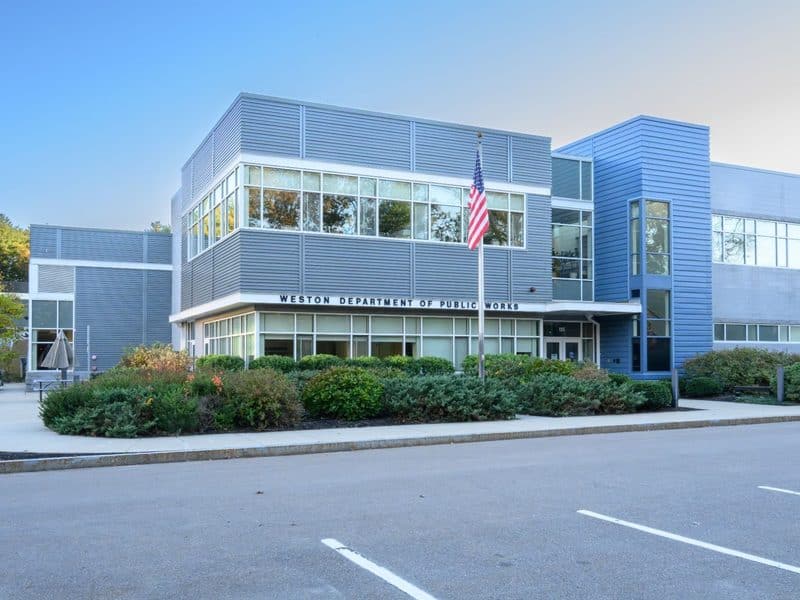
Mechanic shortage reflective of wider hiring problems
The DPW has just one mechanic, exacerbating maintenance needs. It is an example of how hard it is becoming to hire municipal workers.

FY27 water rates set; town prepares for water tank debt
The Select Board voted to raise water rates around 5% across all tiers at its Sept. 29 meeting to help fund the water tank replacement project.