
Town Hall side project: Raising cecropia caterpillars
The Conservation Department raises cecropia caterpillars each year.
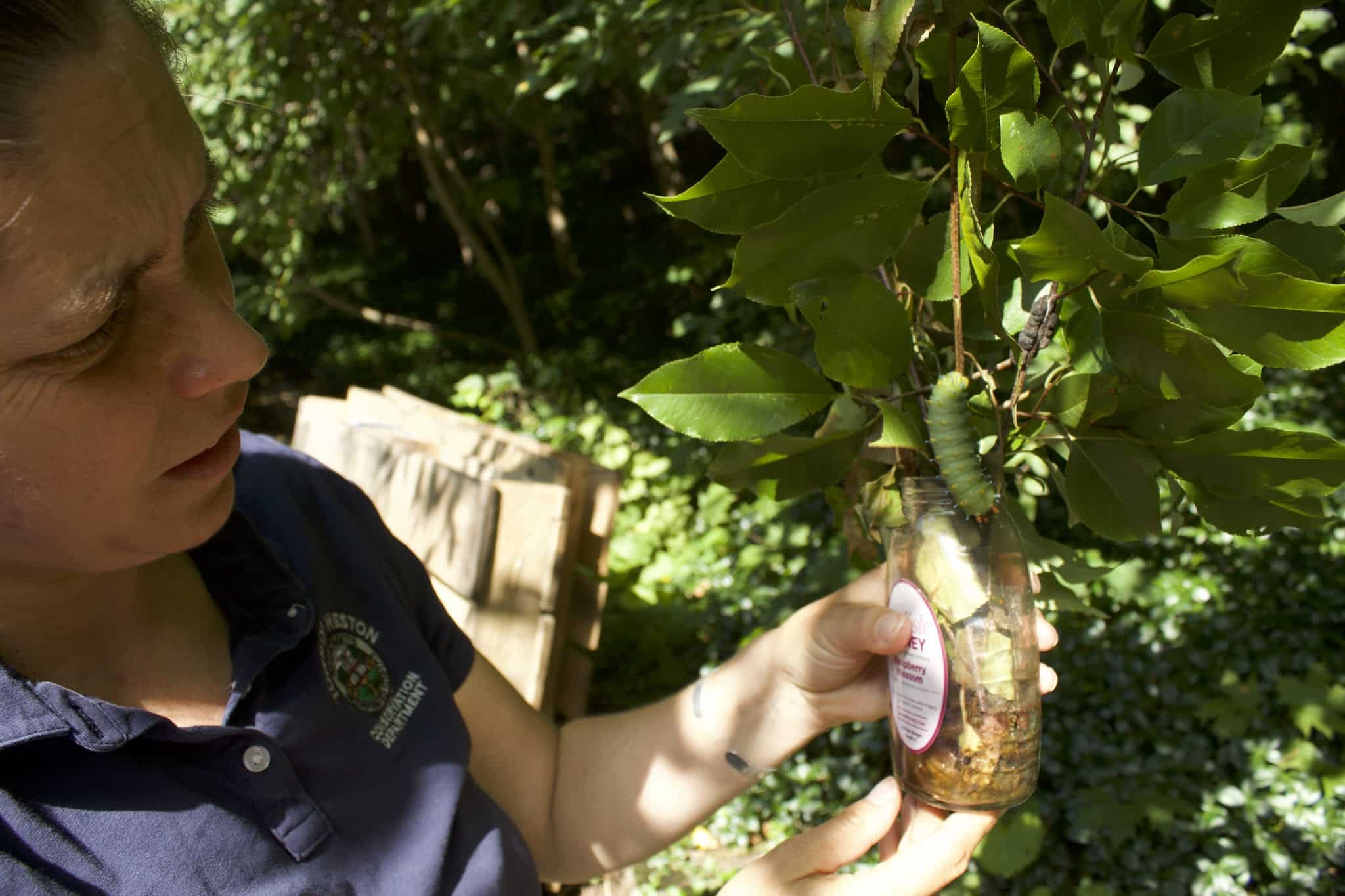
Afternoons in the Conservation Department’s office can be quiet, employees hard at work at their desks. In the summer, that silence is interrupted by munching.
It’s not hungry interns. From May to July, the department shares desk space with a group of cecropia caterpillars– on their way to become the largest moths in North America after about nine months in cocoon. They came to the office with Conservation Stewardship Program Coordinator Emily Schadler when she began working in Weston.
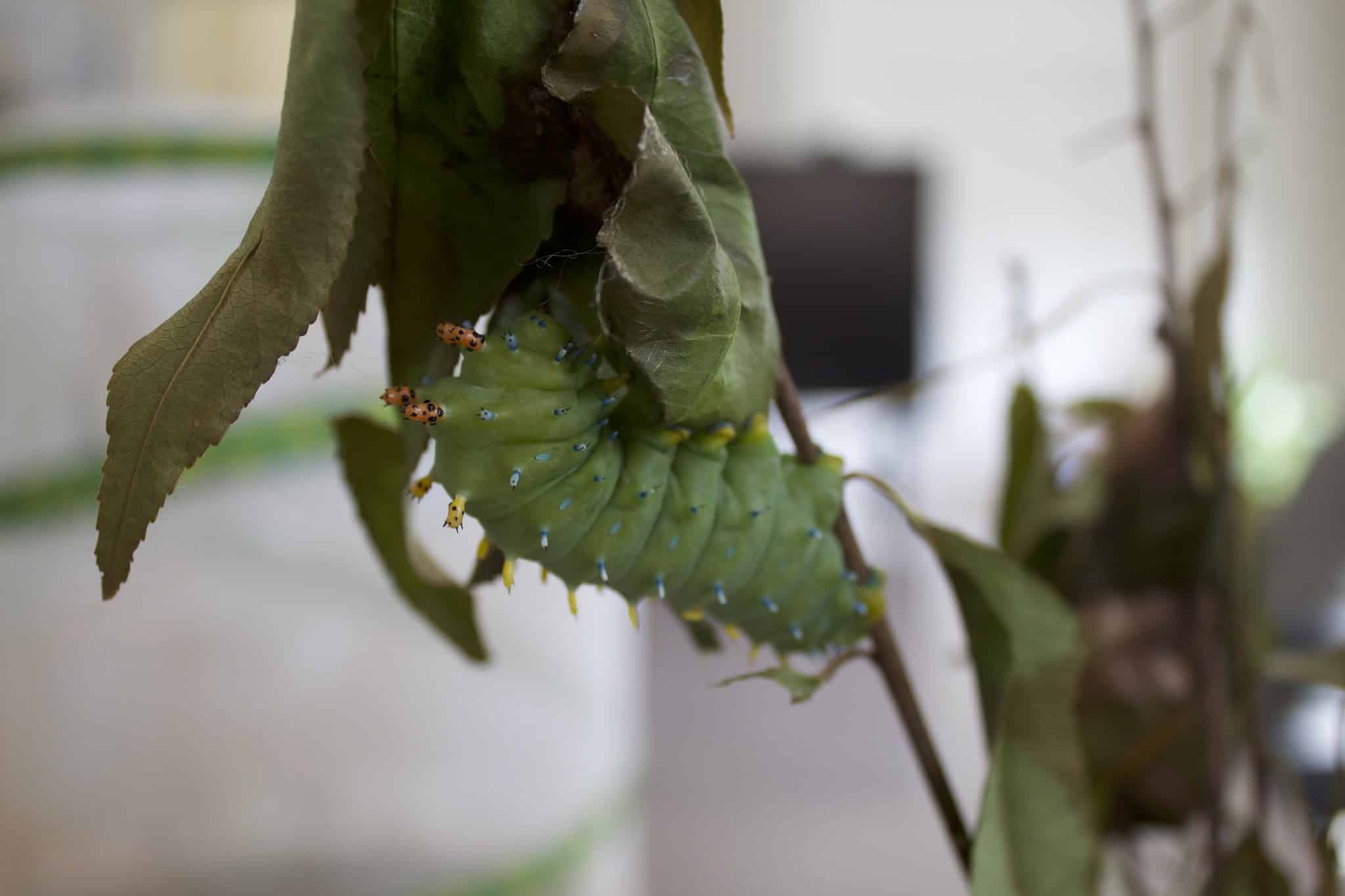
“It’s been like ‘The Very Hungry Caterpillar’ here since May,” she said, referencing the Eric Carle children’s book. “They’re basically a digestive system and not much else…It’s like they’re eating corn on the cob. It clears one side of the leaf and then the other.”
Last week, three of the four office caterpillars had already cocooned themselves. One remained, chewing its way through black cherry leaves that Schadler had brought in off of a tree near Town Hall. The caterpillars have a voracious appetite because they have to rely on that energy supply for the rest of their lives. Once they emerge from the chrysalis next summer, the cecropia will live in their moth stage, with no digestive system, for about two weeks.
Schadler has raised these caterpillars for years. She first began rearing them after she met Sam Jaffe, the founder of the Caterpillar Lab, an organization focused on environmental education through the lens of caterpillars. Schadler was working in Lexington at the time, where Jaffe was helping with an educational program. Schadler brought home some caterpillars, and has been taking care of the species ever since.
Once all of the caterpillars are cocooned, Schadler moves them to a protected area outside so they can react to the changing weather. Once they emerge as moths, Schadler releases them to mate with the wild population. Male moths use feathery antennae to sniff out female moths, which tend to stay rather sedentary. Schadler is able to collect some of the next generation of caterpillars to keep the project going.
“You don’t think you’d fall in love with a bug, but with this insect you can,” she said.
Her kids love the caterpillars, too, letting the insects crawl over their faces. Schadler said they are a fun addition to the office, and that several other town employees, including Conservation Administrator Jordan McCarron, have taken some home.
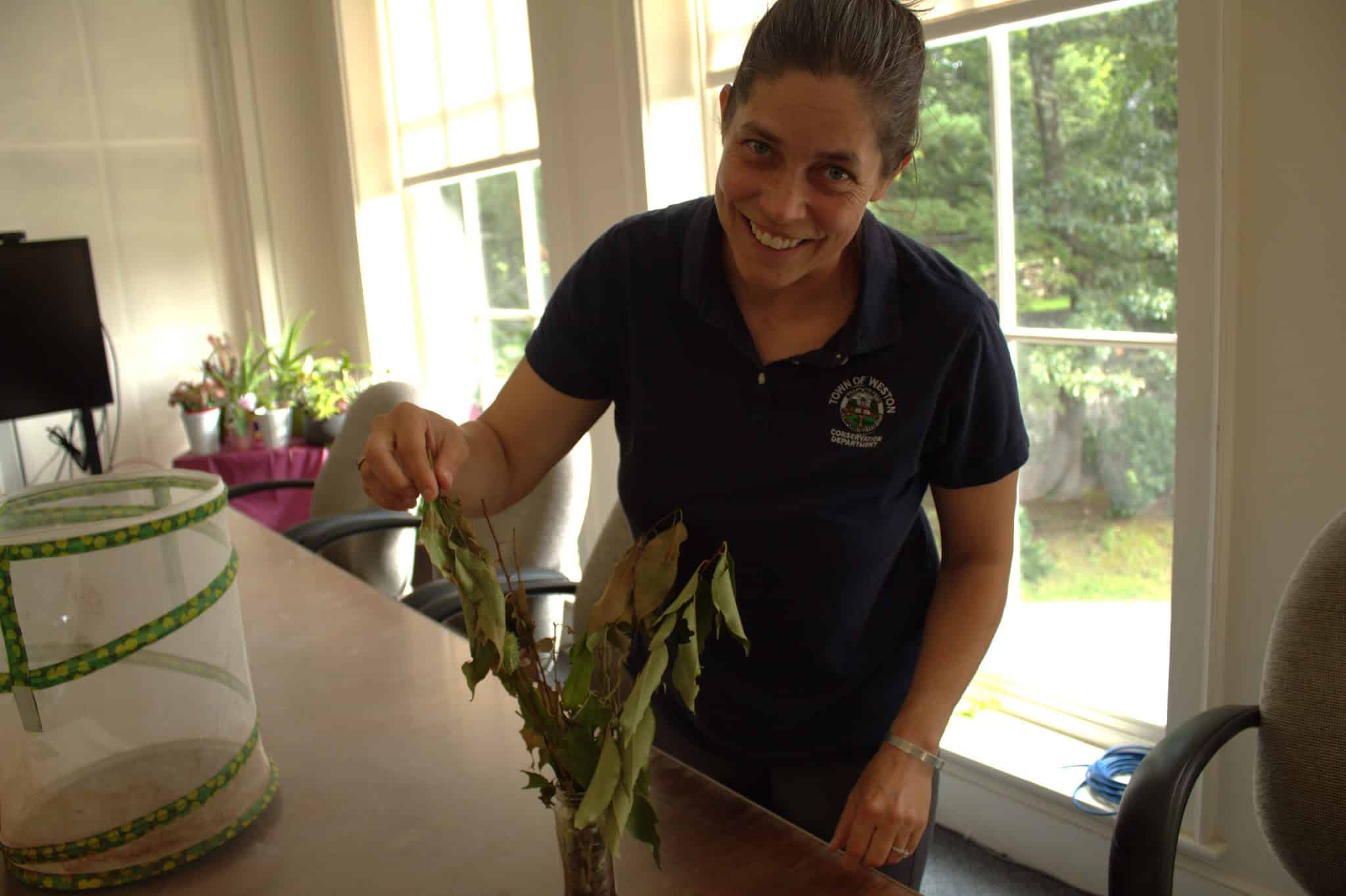
Schadler said rearing caterpillars helps people understand the work required to support an ecosystem’s life. Cecropia caterpillars are usually camouflaged high in the trees, but bringing them to desk level makes it easier for anyone who stops by the Conservation Department to conceptualize how intertwined every part of the food web can be.
“It really gives you an appreciation for what it takes to take care of the backyard,” she said.
According to Schadler, there are two issues facing the cecropia population: loss of habitat and pesticides. She said impacts to the cecropia population affect other species relying on them for food.
When there are fewer plants to feed on, such as the black cherry tree, it weakens the cecropia population. When there are fewer caterpillars, birds go hungry. According to Schadler, baby birds across species rely heavily on caterpillars because they are soft enough to eat.
Schadler said she has seen the impact of pesticides on cecropia directly. One summer, she fed her caterpillars leaves from a neighbor’s yard that had been sprayed for pests. The caterpillars died shortly after. She cautioned anyone raising caterpillars to be careful to pick pesticide-free leaves. Although many sprays are advertised to kill ticks and mosquitoes, she said, they also impact other insects.
“All of nature is one big web, and when we mess with one small part of it, it impacts everything,” Schadler said.
As the days shorten, the last of the cecropia caterpillars are hunkering down for their transformation. They will miss the worst of Massachusetts weather, and emerge nine months from now. Once their gray and red wings dry, they will set off to find mates, and the cycle will start over once again.
Author

Related Articles

All aboard! Weston Depot is new chapter in railroad history
While the effort to restore the historic Weston Depot is a relatively new endeavor, the process behind it is on a similar track as restorations in other towns.

Photos: COA goat yoga leads to headbutts, warm hearts
The Council on Aging offered a slightly non-traditional yoga class last week, with participants working out in the company of baby goats.

Weston’s mahjong enthusiasm builds community
Mahjong has recently experienced a surge in popularity in Weston.