
Backyard Naturalist: Rethinking pest control: Avoid rodenticides that harm pets and wildlife
Backyard Naturalist Michael Pappone and Kristin Barbieri advocate for a bill restricting the use of certain rodenticides.
By Michael Pappone and Kristin Barbieri
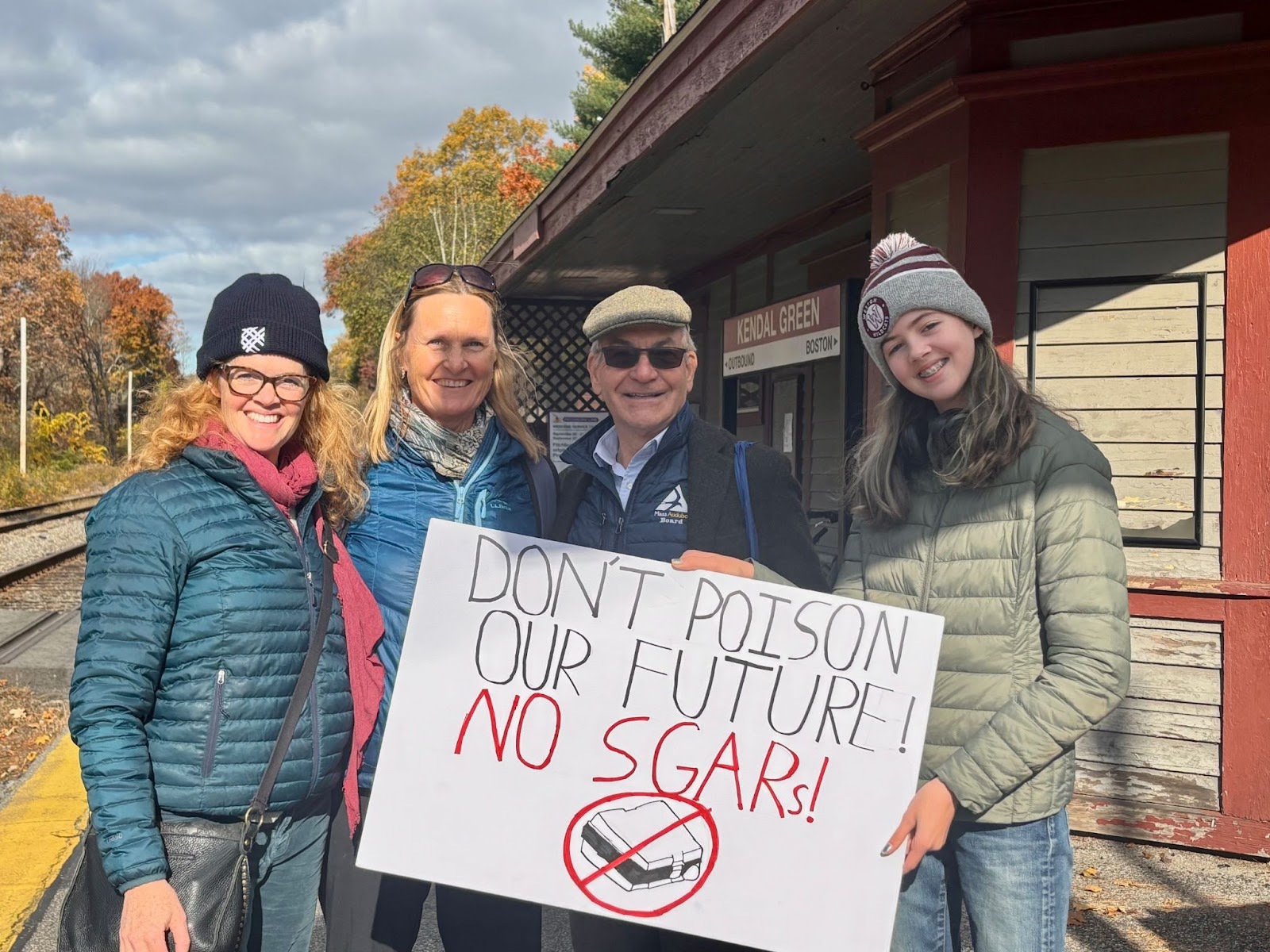
On Monday, Oct. 27, the three co-founders of Save Weston Wildlife, plus Ava Muzila, one of the Girl Scouts working with us to reduce the use of rodenticides, took the train to the Massachusetts State House to speak at the hearing for the Joint Committee on Environment and Natural Resources. The Committee was taking testimony on a number of proposed bills to protect the environment, including An Act Restricting the Use of Rodenticides in the Environment (H965/S644). More than 100 speakers were registered to speak at the hearing.
The rodenticides under discussion are SGARs – second-generation anticoagulant rodenticides which are a class of rodent poisons that kill by preventing blood clotting. When an animal ingests a lethal dose of an SGAR, it dies slowly, making it an easy target for predators, such as owls or hawks, or even for those dogs and cats who love to chase and catch rodents. SGARs are deadly for predators and pets–when they prey on poisoned rodents, they develop painful and often fatal internal bleeding.
In May 2025, the Town of Weston adopted a policy to ban rodenticides on all town-owned properties, except for schools. The school administration requested more time to pilot test snap-traps at Woodland School as well as to train one of our facilities workers in pest control methods. In general, however, if you see a black box outside of the schools, it contains SGARs– highly dangerous rodenticides.
Considering our schools’ proximity to 2,000 acres of Town woodlands and wetlands, the use of SGARs affects more than just school properties. SGARs persist in rat and predator carcasses, which means they stay in the ecosystem for a long time. They seep into the soil and have been found in insects, snapping turtles, herons and fish. They are dangerous to children. They are dangerous to pets.
If you, a Weston homeowner, have hired a pest control company, do you know what is in that black box in your basement or garage? If the label (all indoor bait boxes must have a label by law) reads one of the following four products–brodifacoum, bromadialone, difenacoum, or difethialone–you have SGARs in your house.
Predator deaths worsen the rodent problem. Rodenticides cannot effectively reduce rodent populations because rodents populate faster than the SGARs kill them. Any bird, other wildlife or pet that eats poisoned rodents accumulates rodenticides in their own bodies. Since an individual raptor can consume thousands of rodents a year, and raptors are particularly susceptible to rodenticide poisoning, their deaths result in more rodents.
Instead of SGARs, Mass Audubon, along with many wildlife rescue organizations, recommends Integrated Pest Management or IPM. Rodent IPM is cheaper, safer, more effective, and has no secondary effects on predators. IPM involves exclusion, starvation (remove food source) and targeting. In addition to targeting methods that do not affect wildlife, a major part of IPM is managing food waste and trash, to avoid attracting rodents.
One IPM target method is contraception, which is coming online locally and around the country. For example: Washington D.C. did a contraceptive pilot in two neighborhoods and rat populations were reduced 77% in four months. The city of Newton has been successfully using contraceptives since 2022 as well. IPM programs including trash management have proven to decrease rodent populations in a lasting way.
Your Backyard Naturalist and the other members of Save Weston Wildlife hope you will act now to protect our wildlife, families and pets from these rat poisons. Support the pending legislation by contacting Representative Alice Peisch and Senator Michael Barrett and request that they urge passage; be sure your home is an SGAR-free zone–ask your own pest management service what they’re using on your property; raise awareness by informing friends and businesses of the lethal effects of SGARs and let any member of Save Weston Wildlife know of SGAR bait boxes that you find around Weston so that SWW can help inform the property owner of the deleterious effects of SGARs.
Authors


Related Articles

Backyard Naturalist: Keep an eye out for bald eagles feeding in Weston
While they’re not actually bald at all, Backyard Naturalist Michael Pappone loves our national bird.
History Corner: George Washington really did sleep here!
George Washington once spent some time in Weston.