
Special Town Meeting approves school feasibility study
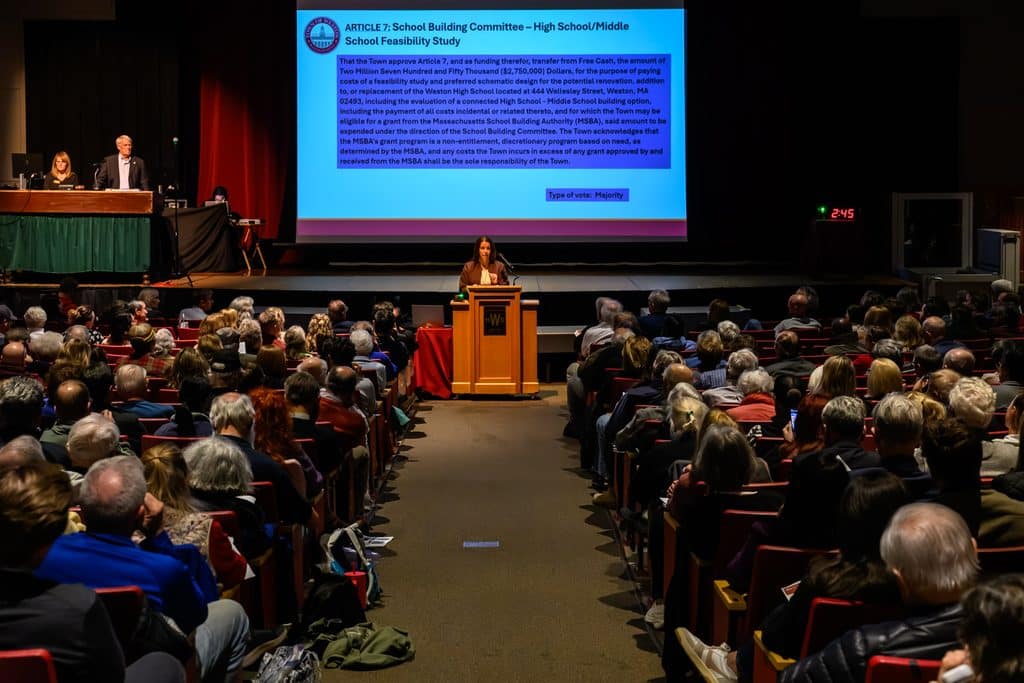
Residents approved $2.75 million in funding to pay for a school feasibility study.
The feasibility study for the Middle and High School building project will move forward.
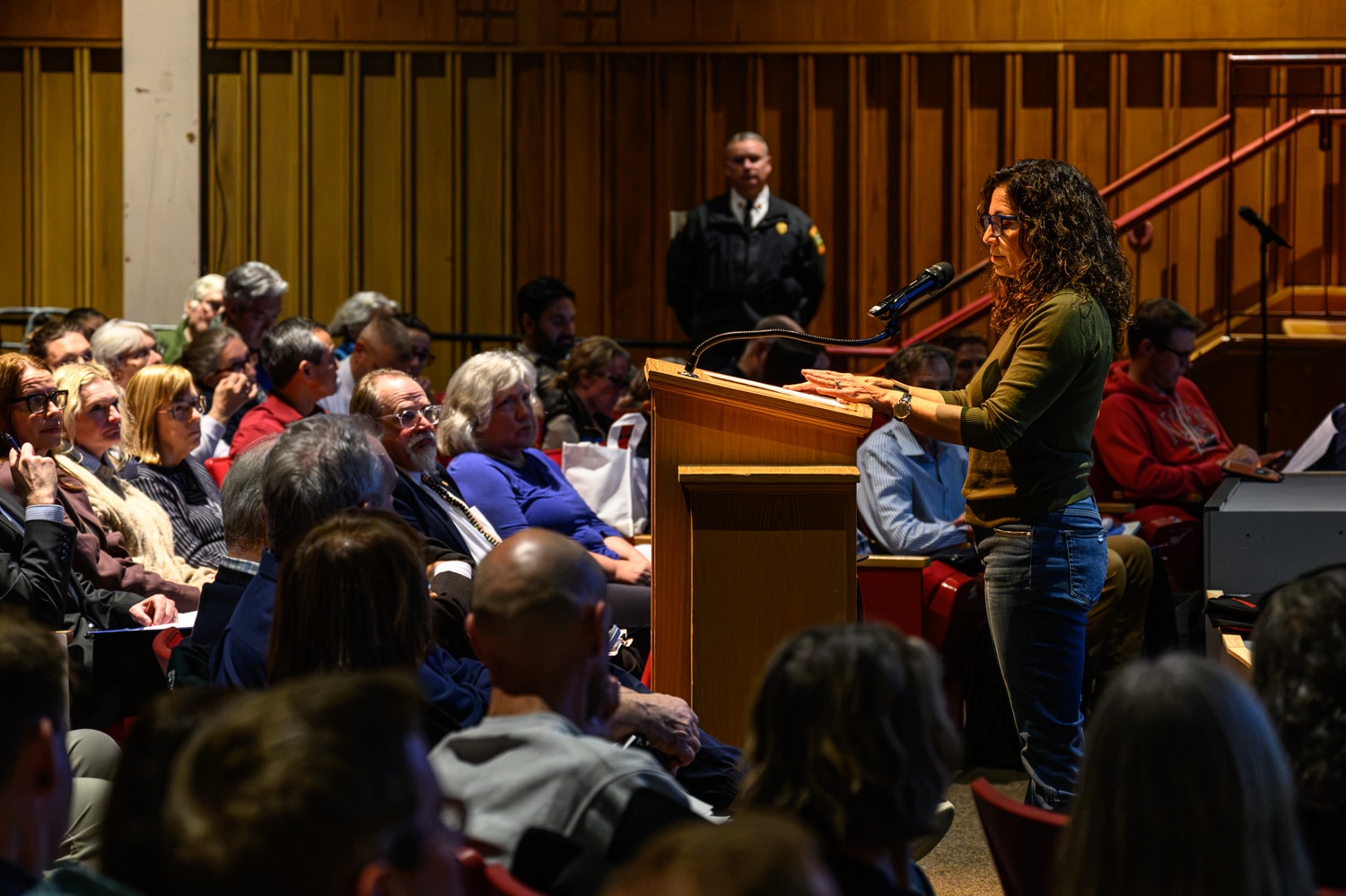
Around 450 Weston residents gathered at Weston High School on Monday, Nov. 23, to vote on the $2.75 million study and a number of other items at Special Town Meeting.
The feasibility study, which will include a schematic design, will analyze existing conditions of the middle and high school buildings, compare construction versus repair options and recommend a solution to Weston and the Massachusetts School Building Authority (MSBA). The MSBA will reimburse at least 31% of eligible project costs, according to School Building Committee Chair Ken Newberg.
“You can vote yes to study the problem, but no on the later proposed solution if you don’t think it’s best for Weston,” he said, in a nod to those against funding the study.
Rachel Stewart, a resident and former School Committee member, said she believed financing the study was irresponsible given that town officials have projected an 80% tax increase over the next decade if Weston borrows money for the school and other capital projects.
“Our schools are not falling down. They are not beyond repair,” Stewart said. “We need to maintain our school buildings, but when our homes need a new air-conditioning system or a new roof, we don’t tear down our whole house and build a new one.”
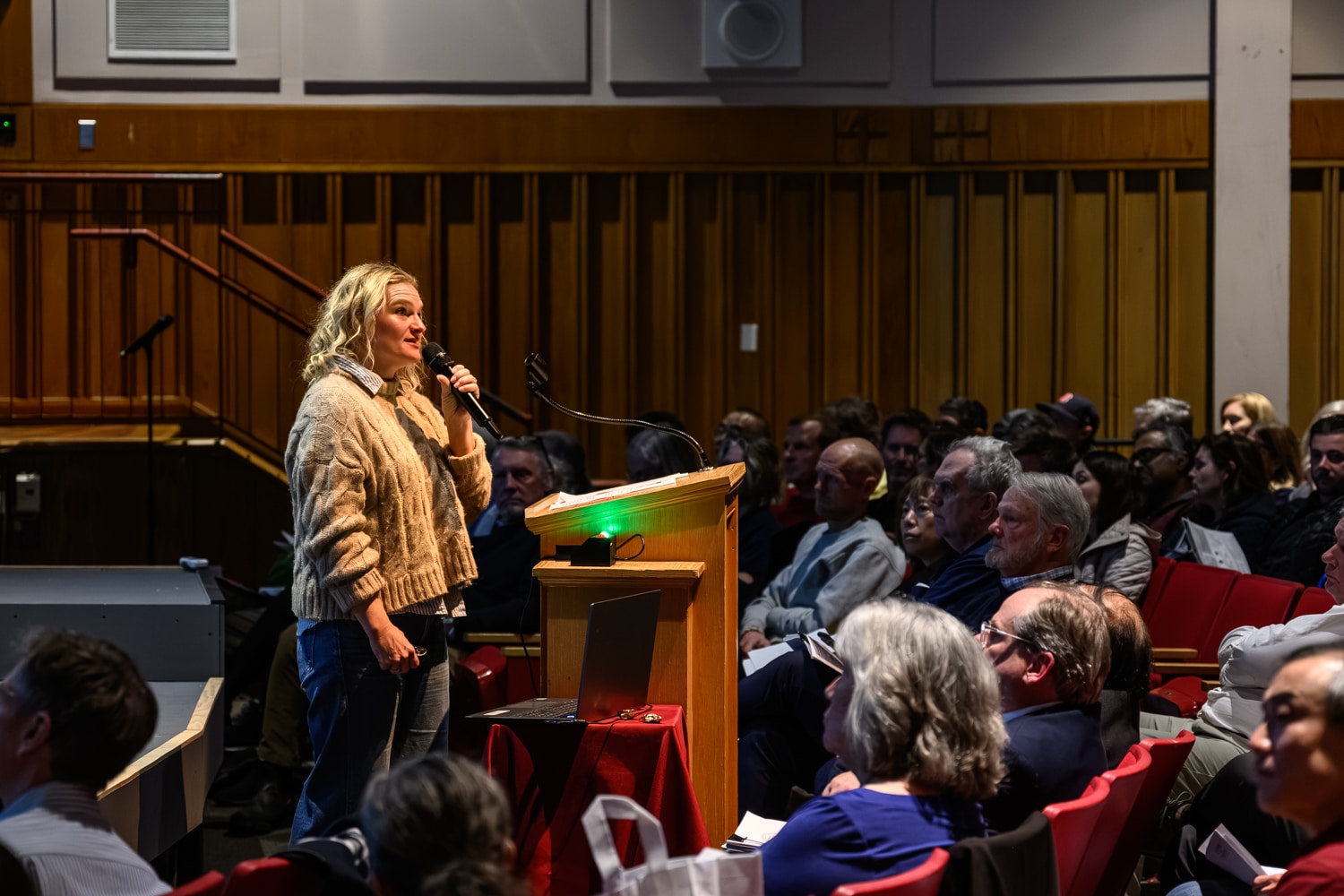
While some residents worried about the spending, others worried about the MSBA process. Rochelle Nemrow proposed an amendment that would have added $350,000 to the project to pay for a third-party reviewer. Nemrow said a separate entity should review the work because the firm undertaking the feasibility study is also involved with construction. This would ensure the town is pursuing the most cost-efficient option, she added.
“I want to make sure that we have an independent assessment of our existing buildings, the cost and feasibility of renovation and realistic projections,” she said. “I think that can only be done if it’s done independent of the people that would actually be doing the work.”
Select Board member Al Aydelott also supported additional independent oversight, but members of both the Finance Committee and the Permanent Building Committee said local experts on existing committees and the project manager would be guardrails against any unnecessary proposals.
Phil Memmott, a member of the Permanent Building Committee and the School Building Committee, said the Permanent Building Committee is comprised of industry professionals who can already address the concerns.
“When we want to look at spending extra money to basically peer review what your school building is being asked to do, that’s our charge,” he said. “I have a problem paying $350,000 extra to support what we’re being asked.”
Nemrow’s amendment failed 358-63, and the original funding of $2.75 million passed 291-138.
Residents also approved the appropriation of $800,000 of Community Preservation Act (CPA) funds to be used toward window replacements and a new HVAC system for the Brook School Apartments. Tom Timko, the chair of the Elderly Housing Committee, said the Committee asked for the money instead of taking it from the reserve fund because there is not enough money to cover the replacements and other projects currently in the pipeline.
“We have additional capital projects underway at the Brook School, including completing the two new units in Building A and additional planned campus-wide renovations on the interiors of the older buildings,” Timko said.
The window replacement project passed 161-37 and the HVAC replacement passed 134-65.
Other housing matters were also passed. Residents authorized the Select Board to sign a lease with Drabbington Lodge, a 17-unit senior housing project that has been in development since 2022. Residents also voted to allocate $863,000 in CPA funds to replace doors, siding and windows at Merriam Village.
The controversial gas-powered leaf blower bylaw was passed over at the request of Nick Christman, Sustainability Committee chair and proponent of the bill. He said he wanted to rework the bill before bringing it to a vote.
“Since I proposed it in October, I’ve received a lot of feedback and questions, and those have convinced me that the article…is not in the best interest of the whole community at the moment,” Christman said. “I’d like to take the time and input to try to make it better and to work for more of the community as a whole, and bring it back at a point when it would work better for everyone.”
Author

Related Articles
Growth is coming. Is Weston ready?
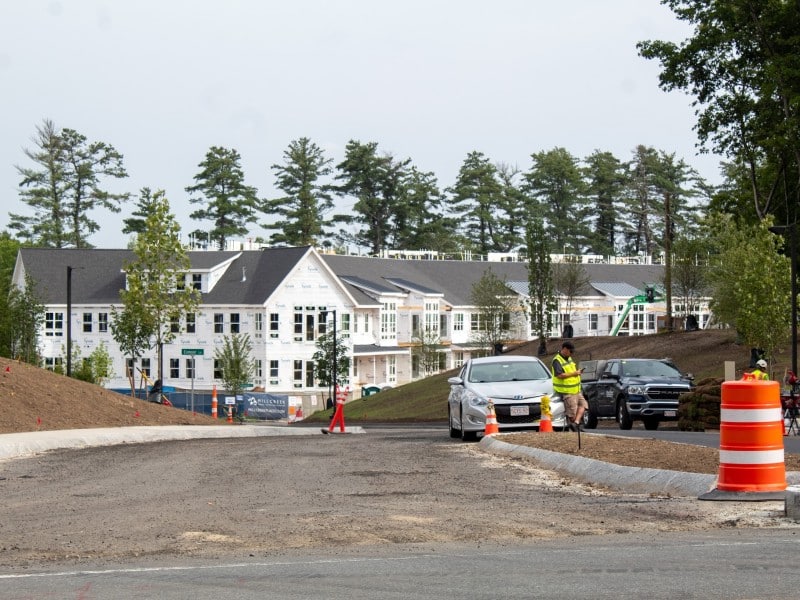
With one housing project nearing completion, another under Planning Board review and two major developments under appeal in court, the town is facing a surge of housing projects in the coming years.

Leaf blowers to be passed over, school study on deck for Special Town Meeting
A proposed ban on gas-powered leaf blowers, which stirred up debate in Select Board meetings and around town, was on the warrant, but the bylaw’s proponent requested it be passed over.

BXP begins site plan review for 133 Boston Post Road
Following a site walk with the Planning Board last month, Boston Properties (BXP) officially kicked off its site plan approval process on Nov. 4 for a proposed multifamily development at 133 Boston Post Road, the former Stony Brook quarry located just west of the I-95 interchange.