Special election to decide Select Board expansion
Voters at the ballot box on Tuesday, Jan. 13, will have the final say on whether or not to expand Weston’s Select Board.
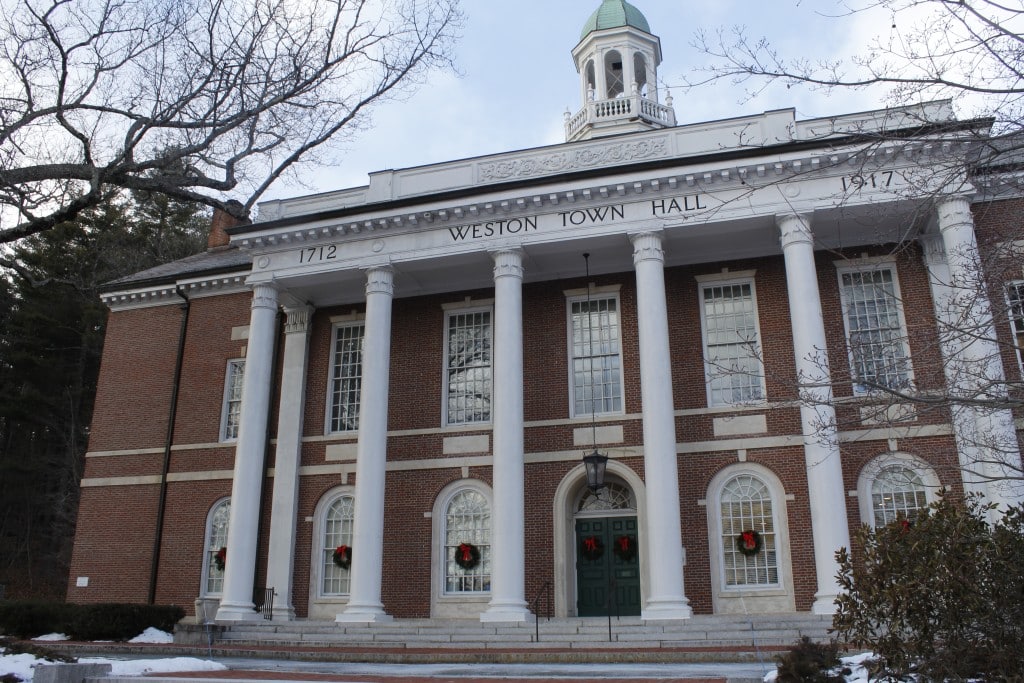
Voters at the ballot box on Tuesday, Jan. 13, will have the final say on whether Weston’s Select Board will remain at three members or expand to five in the spring.
Polls will be open from 7:30 a.m. to 6 p.m. at Town Hall, 11 Town House Road. A majority of voters must approve the ballot question for it to pass. If it is approved, two new Select Board positions will appear on the 2026 annual town election ballot, alongside the three-year term currently held by Tom Palmer.
It’s been a long road for the expansion effort to get to the ballot box.
Its roots trace back to November 2021, when former longtime Planning Board member Susan Zacharias broached the topic with the Select Board. After the board declined to proceed, Zacharias filed a nonbinding citizens’ petition for the 2022 Annual Town Meeting, which was overwhelmingly approved by those in attendance.
Select Board members at the time, however, stated they wanted more information, and in 2023 created the Town Governance Study Committee to examine the potential impact of expansion on town government and its practices across all levels of the town. Residents continued to press the Select Board, and the Study Committee shifted its focus solely to expansion.
The committee’s final report issued earlier this year unanimously recommended against increasing the Select Board size, but also recommended letting voters decide at the 2025 Annual Town Meeting, where a warrant article was approved. Gov. Maura Healey enacted the home rule petition in October, teeing up the Jan. 13 special election.
Proponents of expanding the Select Board say it could help broaden resident representation, diversify opinions, improve accessibility to the board and encourage more people to run for office.
“I think moving to five members will actually produce more energy for the Select Board,” Select Board Chair Lise Revers previously said in an interview.
Expanding the Select Board was “one of the primary reasons” Revers ran for the position, as she said it is an opportunity for board members to work together and share ideas more than they can now, allow for more viewpoints and increase the board’s capacity to take on complex projects.
In a mailer Revers sent out to residents in December, she called the vote a “historic opportunity to improve our government.” (The State Ethics Commission allows elected officials to advocate for a ballot question, as its guidance states they are “not prohibited from identifying themselves by their individual official titles in endorsing other candidates for elected office, and in supporting or opposing ballot questions.”)
Opponents of expanding the Select Board argue that it could result in less efficient meetings, allow two board members to discuss town matters outside a quorum and create a turnover issue.
The Town Governance Study Committee voted unanimously against increasing the Select Board size, citing the town’s mostly stable population over the last quarter-century, a relatively low year-round population, “poor government participation” in the last 10 years and an overall decline in volunteers for boards and committees.
The low number of candidates to fill open positions in town government was a particular factor cited by the committee, as it could allow a write-in candidate to claim a vacant seat on a board with “significant responsibility.” The report added the Select Board “should not be the initial foray into town volunteering.”
Since 2014, election participation has averaged 13.52% of registered voters. The 2020 town election drew the highest turnout, with 29.37% of voters heading to the polls. In the past 11 years, there have been five contested Select Board races – three of those races saw an incumbent challenged.
In lieu of expanding the Select Board, the Town Governance Study Committee recommended improving town communication and engagement systems, which could stir more participation in government.
“The committee also concluded that the town should focus on improving its civic engagement and volunteer recruitment infrastructure, and reassess the question in the future if circumstances materially change,” the committee stated in its report.
Author

Related Articles
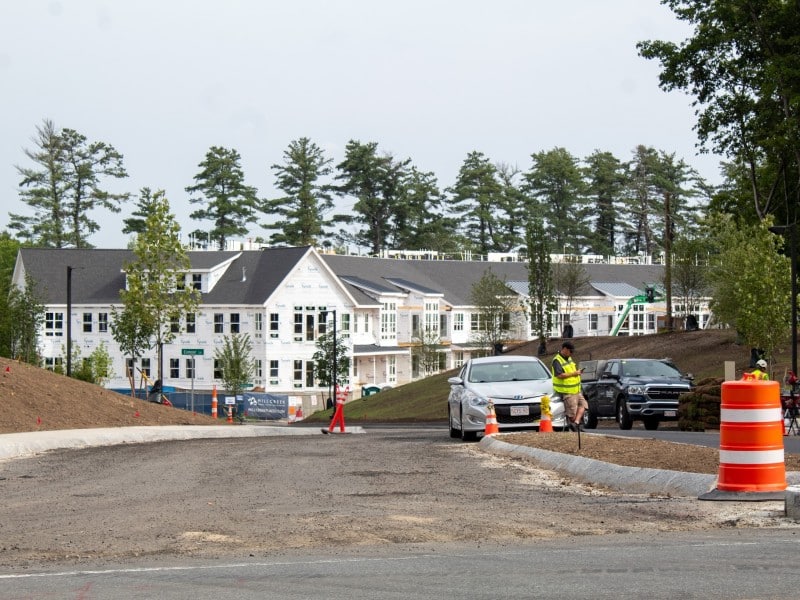
Modera Weston preleasing, affordable housing lottery open
Both an affordable housing lottery and preleasing for Modera Weston, the 172-unit housing complex at 751 Boston Post Road, are now open.
Weston real estate snapshot Q2 2026
As temperatures began to heat up in spring and early summer, so did the town’s real estate market.
Comment period deadline for Route 30 reconstruction set for Sept. 15
Residents interested in submitting comments on the proposed Route 30 reconstruction project have until Sept. 15 to do so.