Schools, long-term debt focus of financial summit
A tight year for the education budget and long-term town debt were the focus at Weston’s annual financial summit as town officials kicked off budget-building season.
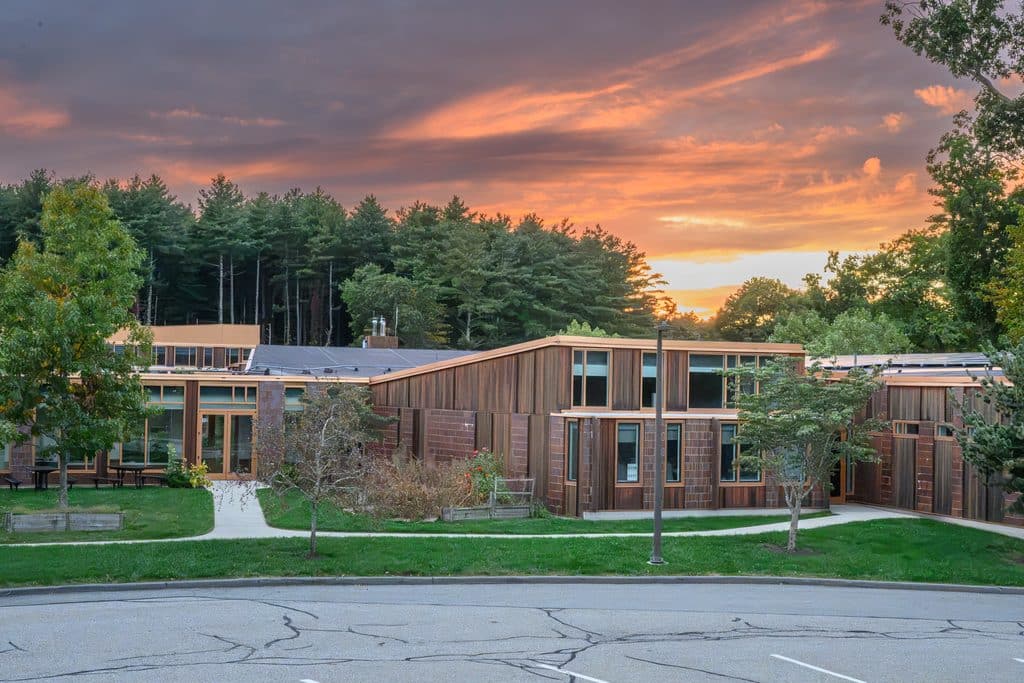
A tight year for the education budget and long-term town debt were the focus at Weston’s annual financial summit as town officials kicked off budget-building season.
The Select Board, Finance Committee and School Committee come together in late October each year to present their initial ideas about the upcoming fiscal year’s budget, while Town Manager Leon Gaumond shares his team’s view on what is to come financially for Weston. All figures shared by town officials are preliminary and are subject to change because it is still early in the budget-crafting process.
While the Middle School and High School building project decision lies on the horizon, the immediate fiscal year 2028 budget was the main point of discussion.
Weston Public Schools are currently operating on a roughly $51.36 million budget, a 3.95% increase from FY26. That rate of increase, however, is not expected to cover the district’s needs in FY28 because it needs buses – the School Committee approved a five-year lease for five school buses on Sept. 4 to address a shortage resulting from three vehicles breaking down on the first day of school.
The School Committee and administration are examining options for leasing or purchasing buses, each with different financial impacts. Regardless of which option is selected, the district will need more money to maintain a level-service budget; a 4% increase, similar to last year’s, would still leave at least a $792,525 deficit, according to School Committee Chair Daina Selvig.
Selvig said the initial budget estimate shows that either a 5.54% or 6.61% increase would be necessary to maintain level services and lease or purchase buses, respectively. In dollars, that means about $2.85 million for the leasing scenario or $3.4 million for purchasing buses.
“To state the obvious, our services aren’t increasing by 5% or 6% and it also doesn’t remove the need to examine the assumptions carefully as this budget is refined over the course of the next couple of months,” Selvig said.
If available funding isn’t enough to cover the level-service budget estimate, Selvig said the School Committee and district will have to look at reductions. Either the 5.54% or 6.61% increase would be well above the 3.95% increase approved this year after the School Committee expressed concerns about taxpayers’ willingness to support an increase above 4%.
Selvig presented a number of options, including cutting staff, consolidating bus routes, reducing information technology purchases or charging bus fees. Any cut, she noted, would likely impact staffing because salaries account for 79% of the school’s budget. The School Committee will consider options over the coming months as the budget is developed.
“The size of the gap and the choices we make will determine what combination is necessary,” Selvig said. “The vast majority of the school’s costs deal with staffing, and we will not be able to close a budget gap without impacting staffing.”
Residents will get a look at the school’s budget development on Dec. 14, when school administrators share an update with the School Committee. Superintendent Karen Zaleski will share an initial budget presentation on Jan. 11.
General budget outlook
Gaumond and the Select Board are embracing a three-pronged philosophy for this year’s budget: provide level services, evaluate all new ideas presented and search for efficiencies wherever possible.
While Weston’s finances are stable, Gaumond identified several major concerns. Skyrocketing health insurance costs, unpredictable state and federal funding and inflation are making it difficult to plan ahead. On the town end, several unions are in negotiations, staff recruitment and retention “remain a major concern,” large capital projects are about to begin and numerous utility contracts are coming to an end in the coming years.
Debt is likely to be the pressure point for the next decade or so. Weston is borrowing money for the water tanks – debt service is expected to start in FY28 – and in the coming years, residents will consider borrowing tens of millions for the fire station project and potentially hundreds of millions for the Middle School and High School project.
“All of the boards that are here today, and the town in its entirety, need to be very carefully watching how those debt increases within the operations of the budget and what the impact would be to our Weston taxpayers,” Gaumond said.
Select Board Chair John McDonald emphasized the importance of monitoring budgets. He said departments should identify cost efficiencies, potentially “take a pause on what we sometimes euphemistically call ‘investments’” and remember that a level-service budget does not mean the prior year’s budget was necessary.
“As everyone has noted here, there’s going to be a huge tax impact on our residents,” McDonald said. “That’s a big ask for the residents, and I think in light of that, it should be incumbent upon us to moderate our budgets.”
With budget season underway, residents will have several chances to review town finances before their vote at the Annual Town Meeting. The tax classification hearing is set for Dec. 8, Gaumond’s initial budget recommendation is set for Jan. 25 and the Select Board will adopt a final budget on March 23.
Author

Related Articles

Community the key to success for Wayland-Weston Rowing
Over the years, the town of Weston has become a breeding ground for individual and team success in the sport of rowing
Students, parents take to the roads for Bike to School Day
The wheels on the bus go round and round, and last week, bicycles, scooters and skateboards joined the ride to school.
Town Government 101: What’s in a feasibility study?
You hear about feasibility studies for a variety of projects around the community – fire and police stations, the school building project, to name a few – but perhaps you may not know what the document actually represents.