School Committee candidate interview: Adam Newman
This is a longer version of the Q-and-A with School Committee candidate Adam Newman that appeared in April 10’s Observer.

This is a more-comprehensive interview with School Committee Chair Adam Newman, 54, who is facing a challenge from Steve Dietz in this year’s annual town election. He moved to Weston in 2010 with his wife Wendy, their daughter Lucy and son Oliver.
Weston’s annual town election is set for Saturday, May 2, from 8 a.m. to 6 p.m. at Town Hall.
This interview, conducted on March 30, has been condensed and edited for clarity.
Tell me a little bit about yourself and your background:
I grew up in Needham, Massachusetts, so not too far from here. I’m a product of the public schools there, and had a first-hand view of what a great school system looks like. I went to college down in North Carolina, Duke University, and was an English major there and had incredibly powerful experiences in teachers and in high school, and so wanted to go into education. After graduating, I came up to the Boston area and taught three years up here, eighth and ninth grade English, and coached several sports, tennis, golf and soccer. Then I moved down to New Orleans and taught down there for three years, sixth grade English, some 10th grade English and 12th grade English, and really loved it and was passionate about it. I loved working with the students, loved working with my peers, my fellow teachers, and also saw how hard it was and how hard it is to run schools, and the different demands and tensions that exist and the different stakeholders, and that really shaped me.
I thought I was going to go from teaching into an administrative role, and said, “Hey, this is really hard, and maybe I need to sort of see some other parts of the education ecosystem,” and that led me to, somewhat serendipitously, what I’ve been doing for the last 25-plus years or so.
I think one of the things that was always important to me when I was a teacher, and since then, was systemic change, focusing on students and making sure that our systems of education, particularly K-12, were doing everything it could to deliver the best outcomes for all students. That’s been the through line for me professionally, and I ended up working at a couple different organizations. One was a research and consulting firm focused on the education sector, Eduventures, that was really about providing guidance, advice, data and insight to leaders of K-12 and post secondary institutions, companies, and nonprofit organizations. I built a business that grew to about 150 people at its peak, then joined one of my colleagues in investment banking, also in the education sector. One of the things we realized in working at both of those organizations is that all the organizations were working with were at growth inflection points. They often needed both advice and access to the capital markets. So that led to the launch of what is now Tyton Partners, the firm I’m currently running. We launched that about 15 years ago, and it’s the largest dedicated education sector consultancy and investment bank in the US focused on education. Along the way, I got married, had two kids, two cats, and moved to Weston in 2010, and have loved living in Weston. And I have found ways to contribute back into that community.
What previous municipal or other qualifying experiences have you had?
[I’m at the end of my] first term on the School Committee, I spent seven years coaching youth soccer Weston in the Weston boys program, spent time on the Parent Advisory Council at Country School when my kids were at Country, and was also involved in the last strategic planning exercise during the pandemic, and coming out of the pandemic as an at-large member as well. I’m also on a couple different advisory boards. I’m a trustee for exploration schools, commonly known as EXPLO around here, which is the summer enrichment program and nonprofit. I also serve as an advisor for Edulab capital, which is an early-stage investment fund focused on education businesses.
Looking in on budget discussions, they talk about needs and wants, and the balancing of being financially responsible while still making investments in the district. How are you going to manage that?
Historically, folks were focused on a number, like, “What’s the percentage increase?” I think what’s really important for the community, as well as the committee, is to understand the story. What are we trying to achieve as a school district, what are our priorities? What are the district’s priorities? Why are those the priorities? And how best do we then make decisions about funding and financing those various things?
My first year, I was given a number … I’ve sort of pushed and asked us to say, “OK, this might be the number, but what are the things that you really care about, and what are the pillars of your investment strategy? What’s the why of what we’re trying to achieve?” I think that’s critical. That doesn’t mean you get all of the things that you asked for, but I think it starts to create a more of a frame for what we’re trying to achieve as a district. You heard this year … It was about supporting instructional quality. It was about supporting all students, and it was about technology. For me, that has to be the rhythm of the budget process, and that’s the discipline I’ve tried to introduce, both as a member the last couple of years and as chair this year, is telling a story about what we’re trying to do with the school budget, and then let’s have a conversation about that.
I think that what makes it hard for district leaders, and for us as a school, is it’s hard to forecast and commit to multi-year [investments] in the way that you do when you’re running a business. What’s really important is the continuity of some of these themes and concepts from a budget perspective over time, so that we’re building upon and getting benefit and leverage from the things that we are investing in, not just in this academic year, but down the road.
It’s really important to be able to tell a story to the town about what we are trying to do. Not suggesting the town will always accept that story or not, that they won’t have pushback. But I think that’s what the process with Fin Com is a good version of. Spending time with them and telling the story there and sharpening the story is really valuable and important for, ultimately, when we need to come in front of community members and explain to them, here’s what we’re investing in and here’s why.
The School Committee and district are looking at a potential $400 million school building project. There is a building committee handling that, but what other challenging decisions and topics do you expect to address?
If you look at the Boston Globe these days, it’s hard to go a week without seeing a story about the financial pressures that different school districts are facing, Lexington being the most recent.
Regardless of the school building initiative, which will work its way through and will have its time in town discussion, the fundamental financial sustainability and model of school districts, and Weston is no exception, is a real critical issue. That’s not to say that we don’t value and don’t want to invest. I think there’s a tension between people’s perception of how much we’re investing and our conviction or willingness to invest; this is why I think it’s been important for me to really focus on why are we making investments that are important to the district, that benefit all children and where are the places where we just can’t. I think that’s going to be a consistent dynamic over the next couple years, is this financial pressure that we feel, and we are not alone. It is exacerbated in our community. We don’t have a commercial tax base, so it does fall on our residents disproportionately relative to a lot of these other towns that we look at. I think that’s going to be one issue.
I think a second issue is going to continue to be: how are we creating more effective service delivery in different parts of our organization? We’ve spent a bunch of time this year talking about transportation. We run an incredibly robust transportation program in Weston, which is great for families, institutions, and I think it’s critical that we have to continue to think about how we continue to make that an efficient resource. I think it’s the same with the launch of the PowerSchool initiative and the student information system and some of the self-service applications that are available, not just for parents and students, but even for teachers and staff. How do we continue to use technology in an administrative context to stay connected with the community, to help them do the things they need to do effectively?
I think the third big issue for me that’s really important and has been a priority for me, is we have to open up the conversation and get more people involved in the conversations about our schools. It can’t be just a small cohort of people who are passionate about it. We need to engage the broader community, so that when we do have to make the decisions we’re making, people have a chance, and people understand their voices matter. Their voices need to be heard. And you’ll see that actually tonight when we talk about … the review process for the superintendent. We’re going to do something different this year, which is we’re going to invite others in the community to offer perspective, to sort of fold that in. It’s such a significant part of our town budget, and we’re asking a lot of people for it. We’ve got to make sure we’re inviting people in, that we’re communicating effectively, and that we’re creating discussions so that folks can have a voice in the decisions that get made. It doesn’t mean everyone will always get what they want at the end of the process, but hopefully what it will create is a culture of transparency and a degree of understanding of why and how decisions are arrived at. You know, whether it’s by administrators, by the School Committee or others.
There’s a lot of initiatives on the table – the strategic plan, the anti-hate plan and the recently presented digital literacy curriculum, for example. How are you going to help ensure these plans are implemented in reality?
It’s something I’ve spent a lot of time on when I’ve been on the School Committee; working with the superintendent and the leadership teams to help them understand less is more. Better that we do fewer things really well than a lot of things mediocre.
As a school committee member, we’re not involved in the operations of the schools. We have three responsibilities: We select the superintendent, we support and oversee the budget, and we focus on policy and governance issues. After that, we’re sort of guides on the side. What I’ve tried to do, as it comes to the level of initiatives, is really tried to encourage the leadership team to focus on core things that really are going to have an impact for as many students as possible.
I think the Early Literacy initiative over the last couple years is a good example. It was clear we needed to create a consistent program across and within the K-5 schools. The external review was pretty clear about that, that we practiced very differently across the district at the K-5 level, so it’s been really nice to see the level of emphasis and focus at the K-5 level around literacy. Now, does that mean other things don’t get done or don’t get as much attention? Absolutely, but I don’t think anyone would argue that teaching our kids how to read and making sure all of our kids can read at the levels they should is, if not, job number one, right?
I think the High School, Middle School schedule and the work being done there is another good example. People have invested a lot of time. We had a wonderful multi-stakeholder group last year working on that, that I think built a lot of confidence, and this year has been a lot of planning for implementation. It may not seem like a big change, but actually, operationally and from an opportunity standpoint, for kids and for teachers it is, and it’s exciting. We only have capacity to do so many of those things. To me, the thing that I think is sometimes not always clear from the School Committee meetings is a lot of what goes on that is informing us of continuous improvement or self-reflection that’s happening at the district to sort of educate us and to keep us up to speed. Behind the scenes, and even even with the anti-hate plan, I think you’ve heard it in the questions, how does this fit in with some of our other initiatives? Not that it’s not important, but we need to understand, and the administration needs to come back to us with some prioritization, and that’s an annual effort.
The other thing I would just say, and this gets into a little bit the question before, but also this one, is I think relations with our bargaining units are also critical. We’ve got three negotiations actively in process right now, including the teachers. We had three last year. Continuing to work collaboratively with those folks, it’s a win-win. This sort of situation, as opposed to some of the zero-sum approaches that you see, is, I think, also something that the administration is working hard to do. I know at the School Committee level with the current composition we’re focused on, but I think those types of relationships between the bargaining units and the district will also be an issue for us too.
How are you equipped to help the committee oversee all of these things?
When you run a business, as I have, you learn pretty quickly where and how to invest your time and be efficient in providing support. This volunteer role takes a lot of time, and I think what helps me is I know this terrain. I’ve been involved in this space for 30 years, so there’s very rarely a conversation we are having at the School Committee level or that is coming up where I do not have a knowledge base and an ability to understand the issues. I think that helps me tremendously. I can be pretty efficient just from understanding the issues that we’re facing as a district. Then it becomes, how do you use your time and your expertise most effectively? That’s where as a committee, I think we do a nice job of balancing different folks’ expertise and valuing them. But for me, it comes back to being a business owner. There’s always more that needs to get done than there’s time to do it, so it’s being focused on the priorities, creating stability in those priorities and focus. That is, I think, what helps me be successful.
Why are you the best person for the job?
I think you need experienced leadership at this point in time. If you are running and you are sitting on a school committee, the challenges facing our schools are profound and significant. In Weston and in other places, it is a very challenging time. In all of our other volunteer committees in town, we value and expect professional expertise. I think when you’re talking about an organization that represents 50% of the town budget, you need to have people who have expertise and education on that committee. It’s not to say it needs to be all people with education expertise, but I think not to have folks who understand, have been in the classroom, have worked with companies and organizations that sell into a district like Weston, you need to have that.
One of the things I’ve been struck by over the last five to eight years is how much turnover there has been at the School Committee and at the district leadership level, which is not to say that that’s not valuable at times, but there’s also value in stability. There are a lot of complex and important issues right now, as I mentioned, we’ve got three active negotiations, including the teachers. We’re kicking off a school building project. We’re implementing a number of initiatives, the K-5 literacy, so there’s value in a degree of stability. It takes a while, if you don’t know education, to figure out what you are doing. I think we need to have a bit more stability in the composition of our School Committee to see through some of these big issues and key challenges at this point in time. I’m, by nature, a collaborative person. I think I’ve worked hard over the last three years to bring in more voices and to let different voices be heard, even if they may be different than my perspective. That’s a good thing. We need to continue to develop that and have a growth mindset about all the things that the members of this community can bring to bear and the perspectives they have for our schools.
You have the floor, any final thoughts or topics we didn’t touch on?
I really enjoy the work. It’s incredibly valuable and rewarding to be able to give back to a community that’s given so much to my family. I am a steward of a phenomenal school system that has benefited my children and lots of other children, and will continue to. I think experienced leadership matters at this point in time.
Author

Related Articles
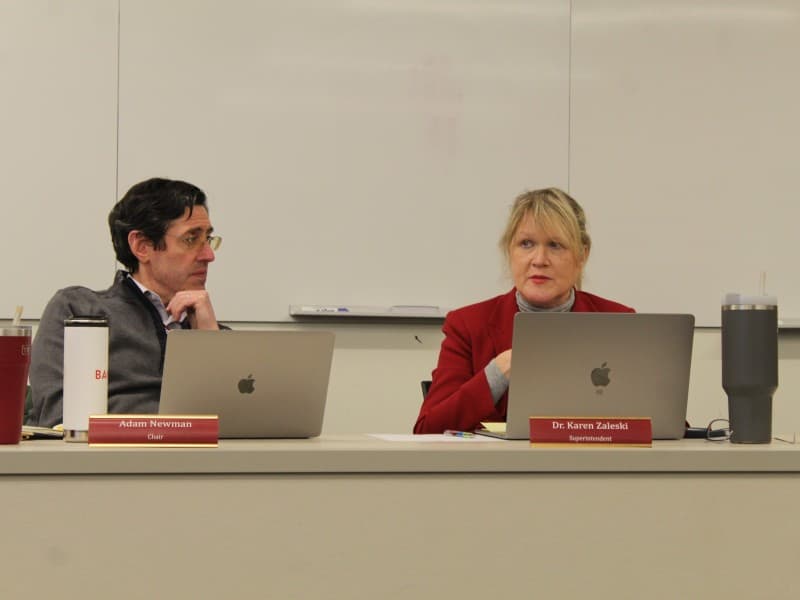
Superintendent Zaleski’s contract up for renewal
The School Committee in the coming weeks will negotiate contract terms with Superintendent Karen Zaleski, whose contract expires at the end of the fiscal year.
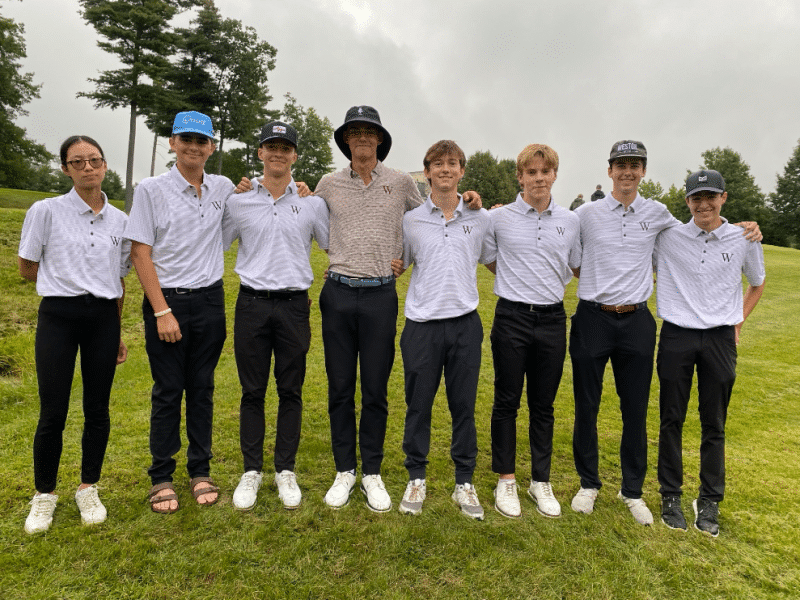
Wildcat golf looks to get back to state tournament
The fall 2025 season ended abruptly in unfamiliar territory for the Weston High School golf team, as the Wildcats failed to qualify for the MIAA state championship for the first time in over two decades.

WPS turns to leasing to address bus shortage
Long-running Weston Public Schools transportation concerns boiled over on the first day of school as three buses broke down, leading the School Committee to take action to reinforce the fleet.