School Committee candidate interview: Steve Dietz
This is a longer version of the Q-and-A with School Committee candidate Steve Dietz that appeared in April 10’s Observer.

This is a more-comprehensive interview with Steve Dietz, 46, who is challenging School Committee Chair Adam Newman for a three-year term. He and his wife Beth moved to Weston nearly six years ago with their children Abby, Hannah, Ben and Heidi, who will be enrolled at each level in the district this fall.
Weston’s annual town election is set for Saturday, May 2, from 8 a.m. to 6 p.m. at Town Hall.
This interview, conducted on March 25, has been condensed and edited for clarity.
Tell me a little about yourself and your background:
My wife Beth and I both grew up in Massachusetts. I grew up in Andover. She grew up in Wayland. She actually grew up going to church at St. Peter’s just down the road here. We have 4 kids: Abby, who’s 14, Hannah, who’s 12, Ben, who’s 10, and Heidi, who’s 5. We had Abby in 2011, and then we started looking to move out of the city, and we ended up in Wellesley first, primarily because Beth grew up here.
Long story short, Wellesley is a nice place to live; it’s great commute-wise, but we felt like the school district was a little large and impersonal. It’s not a 4,000-kid high school or anything like that. But it was actually Beth who really started cluing into this early, that you looked across the border at Weston and you had half the size of a high school. Having Field School with just fourth and fifth grade, that’s a pretty unique setup. When Abby started to get into first and second grade, we started to say, hey, maybe we should think about where else we want to do this, and that led to the move to Weston.
It’s something that I think you’ll hear from a lot of people. It’s a small-town feel, but very close to Boston and a really intimate school district.
The reason I’m running is really simple. I would boil it down to two things. One is we have these 4 kids, right? And I think the school district in a lot of ways is run very well. [Let’s use] Heidi, who’s 5, as an example. Heidi’s going to be in the schools for another 13 years. I look at that and I’m like, oh my God, that’s a long time. We’ve lived in Weston, it’ll be 6 years in November, and every year I’ve just gotten more interested and engaged, and it just hit me that, hey, there is a way that I could actually contribute.
The second thing is, and this sounds maybe more romantic than it can be, but like, I just felt like as a society there’s a lot of fracturing and pulling apart, and I was like, I could run for Senate, but that feels like a bad choice. When I started considering this, I was like, well, this is kind of cool. You can actually have sort of a micro-level impact on civil discourse, and that’s really it. I wish I had something more explosive to tell you, like, oh, I’m really running because I want this thing or I’m against this thing, but it’s really that I want to support my kids and the town values.
What previous municipal or other qualifying experiences have you had?
Both Beth and I have participated in various committees over the years, but this will be the first elected [for me]. My involvement in town has only been volunteer capacity, and has only been coaching. I’ve been coaching the kids. There are some nonprofit boards that I’ve helped out with, but nothing town-related.
Looking in on school budget discussions, they talk about needs and wants and the balancing of being financially responsible, while still making investments in the district. How are you going to manage that?
I think the first thing is interesting because I’ve reviewed the last two budget cycles that we’ve talked about. The first thing is we just need a little more clarity and transparency. That perhaps sounds a little obvious, but, if you look at the superintendent presentation, that is a very high level that’s presented. Behind that is an almost literally cost-line-item by cost-line-item spreadsheet, hundreds, if not thousands, of general ledger entries. What’s needed is something in between to really understand how the costs are shifting over time, how investments are being made.
I’ve spoken to a couple of current and former committee members. I don’t think there’s a 5% to 10% immediate savings to be had. We’ve just cut eight positions, some of them are student-facing, some of them are pure administrative roles, and then we’re going to invest in what are largely sort of curriculum-related roles. And I think that makes sense, right? We want to be focused on the things that are directly impacting the kids.
In my experience, and I’ll give you a specific example, if we are able to see real detail, there will be things that we can be more efficient about. The technology budget went up, and it’s hard to tell actually. It either went up $500,000 or $1 million.
I work in software, so this is interesting — and I’ll tell you that in most of the world, software prices are going down. We’re seeing deflation in the cost of technology. A lot of it because of AI, but not just AI. I saw that line item and I said, there might be something there, but there might not be. We really need to scrutinize that type of thing.
Then we can say, the number one cost line item within the school budget is going to be personnel. It’s always going to be that. And some of that is great. I really want Weston to be a desirable place for teachers to come work, but we have to be really careful about how we think about growth. I don’t have an “Oh my God, like we overspent so badly in this area,” but I think there’s something missing here from an inspection and transparency perspective. That’s partly what I do for work, and that’s really what I want to bring.
The School Committee and district are looking at a potential half-billion-dollar school building project. There is a building committee handling that, but what other challenging decisions and topics do you expect to address?
The building committee is out there. I think people can sometimes overstate [how quick things move], we will have time to review that. We’re on a nine-month clock now for September, and there are stages to this that people will have influence. I talk to people who are worried, like, “oh my God, in a month I’m going to be asked to vote on a $500 million [project].” That’s not where we are. I think the other one that gets a lot of attention, at the Select-Board level too, which is that we have 2, potentially 3 big [housing developments], and then the Boston Properties one out by 95. I think there will be meaningful growth in the school district. I don’t think it’s going to be as explosive as some people are worried about. But even a 10% change in the student body, that has very simple [effects] — do we need another classroom at Country? Do we need another classroom at Field? That’ll be an issue, and we have to think about how we maintain the class sizes and that stuff, while there is inevitable growth coming.
The other one that I have a point of view on is curriculum changes. There are changes in doctrine in how education works, and I think that the superintendent really should drive that. The school committee’s role is to say, OK, we see that recommendation. We represent the parents, we represent the town, and then to say, “OK, based on those recommendations, how can we set and influence policy?
There’s a lot of initiatives on the table here, like the new anti-hate plan, the digital literacy plan they just presented and then the strategic plan. There’s a lot of balls being juggled by the district, how are you going to help ensure these plans are implemented in reality?
I think that we have to start from a strategic plan first, that’s the foundational document. In some ways, the anti-hate plan or the curriculum guides or any of these things, they can flow from the strategic plan. The strategic plan won’t answer every question, but it does provide a framework under which to analyze all these choices. I wouldn’t say that we’ve quite got the cart before the horse, but we need to focus on that specifically.
We have a very important hiring process going on too, with the assistant superintendent. That person, they won’t set policy, but they’re going to be a very important voice day-to-day between them and the superintendent. That’s how things will get done. So, I think that’s something we’re very involved in.
How are you equipped to help the committee oversee all of these things?
I would say that having a child in every level of the schools is pretty unique. So Abby, she’ll be a freshman next year. And it’s a little crazy saying it out loud, but I’m gonna have Country, Field, Middle, and High, all in a single year. One of the things, and I didn’t think about this when I started running, is we really don’t get a lot of representation at the School Committee for people in kindergarten and elementary school … That breadth of perspective, I think, is really, really important.
The other thing … and I wouldn’t say is unique to me, but I want to emphasize is, I’m coming at this as an amateur. I have a full-time job, I have interests outside of this, and I really want the School Committee to be something that people like me can do. I think that brings a lot of things to the committee, that this is not my full-time job. The state is going to change, the town is going to change, let’s have a point of view about how we fit within all that. In some ways, the essence of amateurism is actually really important in small-town governance, and I think that’s something that should be brought … We want more people to participate.
I work in technology, prior to technology I was in finance, and just bringing a little bit of scrutiny from the future of technology and how that impacts education. I’m a techno-optimist, I think this could be really great for a lot of things, but I think people are very nervous about how AI and some of the technological changes are going to play out.
I use the analogy of, if you know how a car works, you can be a better driver. How it pertains to education specifically, it’s sort of a bargain. On the one hand, for kids to know technology and to be involved – and we don’t have to have everyone be a programmer – to really understand what technology is and how it works is important. On the other hand, how can we create experiences for kids that are, I’ll use the word analog; like completely divorced from technology. If you take the optimistic path with where this is going, what’s super cool is that the truly human skills – judgment, taste, community, working with other people – those are the things that become really important and powerful.
Even Hannah, when she’s doing homework at the middle school level, I see this tension: should she be working in Google Classroom on literally everything she does, or are there analog things we should emphasize more? It’s not anti-technology, it’s what’s the right ratio of how we do that?
Why are you the best person for the job?
I want participation from everyone who has skin in the game. And I think people who volunteer for these committees, really should be thanked, and you notice that a lot of roles in town, even at the caucus three weeks ago, were unopposed.
The truth, though, is we should prefer people who have skin in the game. Adam’s kids don’t go to the schools, and that’s not why I’m running, but I think it’s something that people should know about.
The answer to why I’m running is really simple. Number one, I want to represent people like me who have kids and will have kids in the schools. Particularly, when you do a big building project, which I don’t know the exact timeline of, but is in front of us, that can change things. It can cause pressures. I want to be involved because I’m gonna have someone here for 13 more years.
The second thing is what I said before … in early February when I did decide to run, there was a part of me that was excited in a way that I hadn’t been in a long time. I want to be engaged in the community this way, I want other people to say we can have full-time jobs and we can participate in the civic life of the town.
You have the floor, any final thoughts or topics we didn’t touch on?
People may have seen me and the interactions that a group of people had about a year ago about the cellphone policy in the high school. I think it’s very easy to see that interaction and say “Steve is anti-technology,” and I think that’s actually the inverse of the truth. I’m actually personally involved in technology.
I do have a point of view, like I said, about what’s the right balance and where do we expose kids more to technology and where do we have analog experiences. The cellphone thing to me was just very simple. I think for a certain period of time, we should just not have phones present at all, like it feels very common sense. What that led to, which comes back to what I’ve said before, is just simply that was the first time where I was like, “OK, I have to be at the School Committee meetings, I have to see what’s going on.” I saw a lot of people doing good work with good intentions, but a lot of groupthink and consensus.
Let’s just say the common sense thing out loud, which is we should create a space where there’s no distractions, and that felt like we kind of lost that.
Another thing we didn’t cover is the volunteer exposure I have in the town is through coaching. I don’t think there’s a ton that comes before the School Committee on athletics. My wife was a really big college lacrosse player; we’re going to be deeply involved in the athletics of the town, and I have a point of view, and I think that’s important for the School Committee to have.
It sounds like we’re most likely going to put a fire station on top of the JV baseball field, and I don’t know what the JV baseball team is going to do. I’ve talked to a couple of the committee members and I understand the things they were balancing when that decision was made, but I want to drill in a little bit harder.
Author

Related Articles
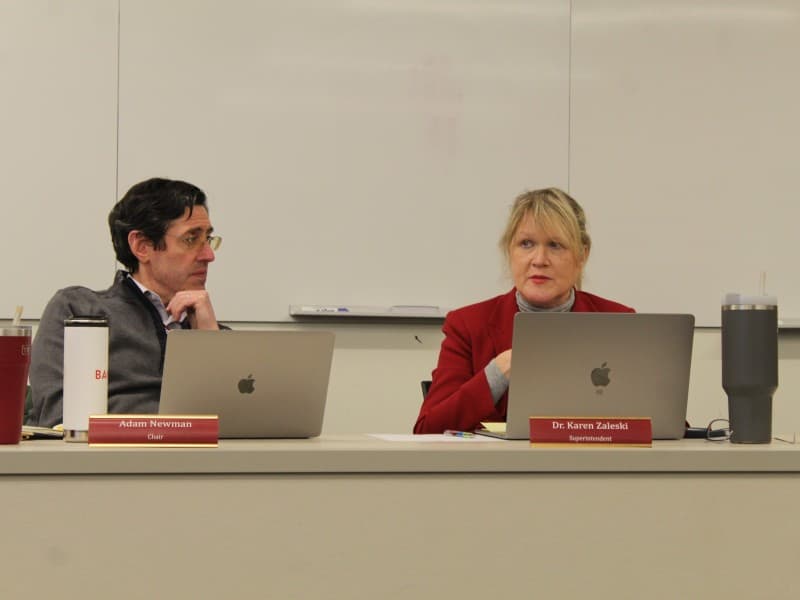
Superintendent Zaleski’s contract up for renewal
The School Committee in the coming weeks will negotiate contract terms with Superintendent Karen Zaleski, whose contract expires at the end of the fiscal year.
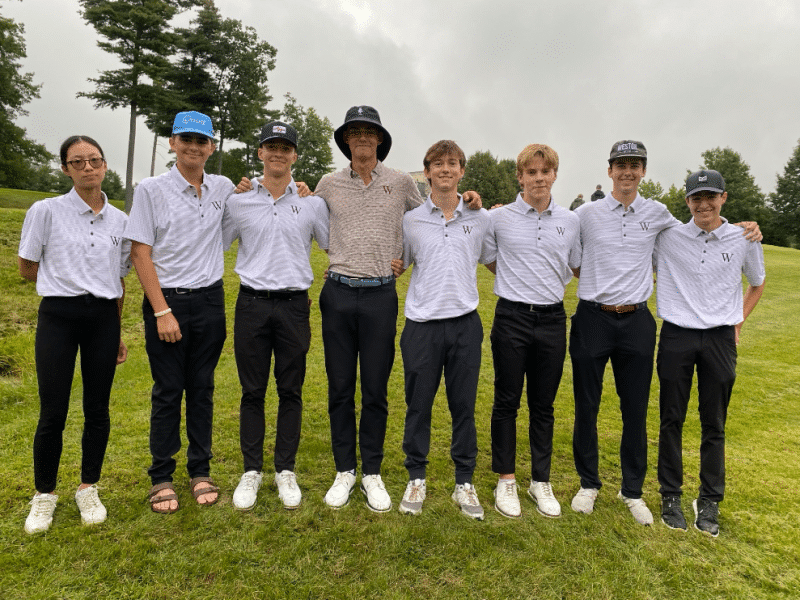
Wildcat golf looks to get back to state tournament
The fall 2025 season ended abruptly in unfamiliar territory for the Weston High School golf team, as the Wildcats failed to qualify for the MIAA state championship for the first time in over two decades.

WPS turns to leasing to address bus shortage
Long-running Weston Public Schools transportation concerns boiled over on the first day of school as three buses broke down, leading the School Committee to take action to reinforce the fleet.