Letter: Student’s survey hints at health impacts of social media
Many public health strategies are extremely reliant on the public’s cooperation. Today, it only takes pulling up the news on your phone to see that how a community reacts to public medical guidance has real effects on their health.
I was curious to see what the people of Weston thought about different types of public health responses, and I was interested in the relationship between views, community engagement, and social media. So, I ran a short survey. Survey responses were gathered from posters around town center, as well as from Facebook. Questions asked about social media use, opinions on public health initiatives, and attendance frequency for community events. Responses were thorough but small in quantity (~20).
The majority of respondents were between the ages of 31 and 49, white, and female-identifying. The two most common favorite social media platforms were Facebook and Instagram (likely largely influenced by the age groups that most frequently responded).
The majority (75%) of respondents answered “agree” or “strongly agree” to statements in support of both community-wide and statewide public health measures, indicating a general sentiment of trust but still a distinct skeptic sector. Both Facebook and Instagram users had similarly high rates of support for public health measures, a fact that could be surprising due to the different political affiliations that each platform is associated with. More data is needed, however, to make any concrete conclusions. There was no significance between the number of community events responders attended and their opinions.
I found this data intriguing, and generally view the positivity towards public health strategies as encouraging. I would like to continue looking at these topics, and I would encourage you to do the same. Learning about how what influences your viewpoints is one of the best ways to have confidence in your beliefs.
Riley-Kate Andrasco, Weston High School, Graystone Lane
Related Articles
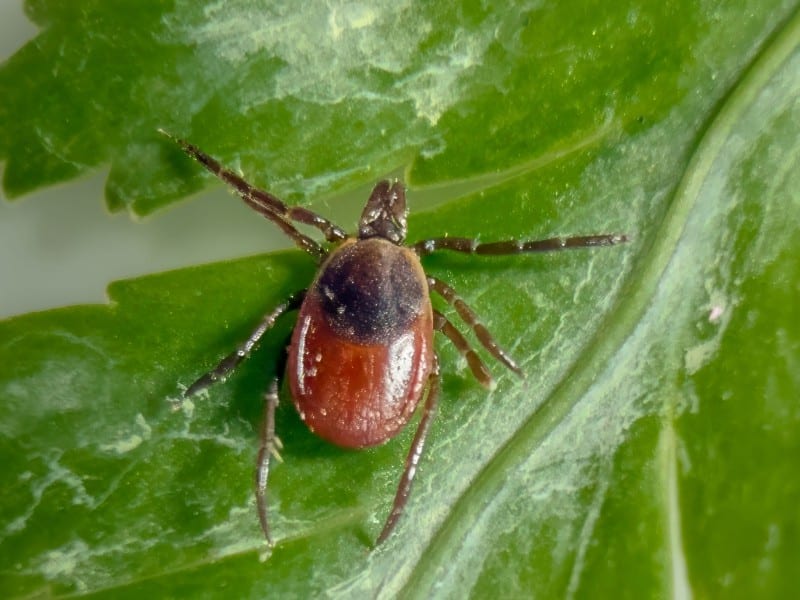
Backyard Naturalist: Tick season: We’re not yet out of the woods…
Right now adult deer ticks are reaching the apex of their feeding frenzy.