
Grant to progress Stony Brook culvert replacement
A state grant program is beginning the replacement process for two culverts serving Stony Brook.
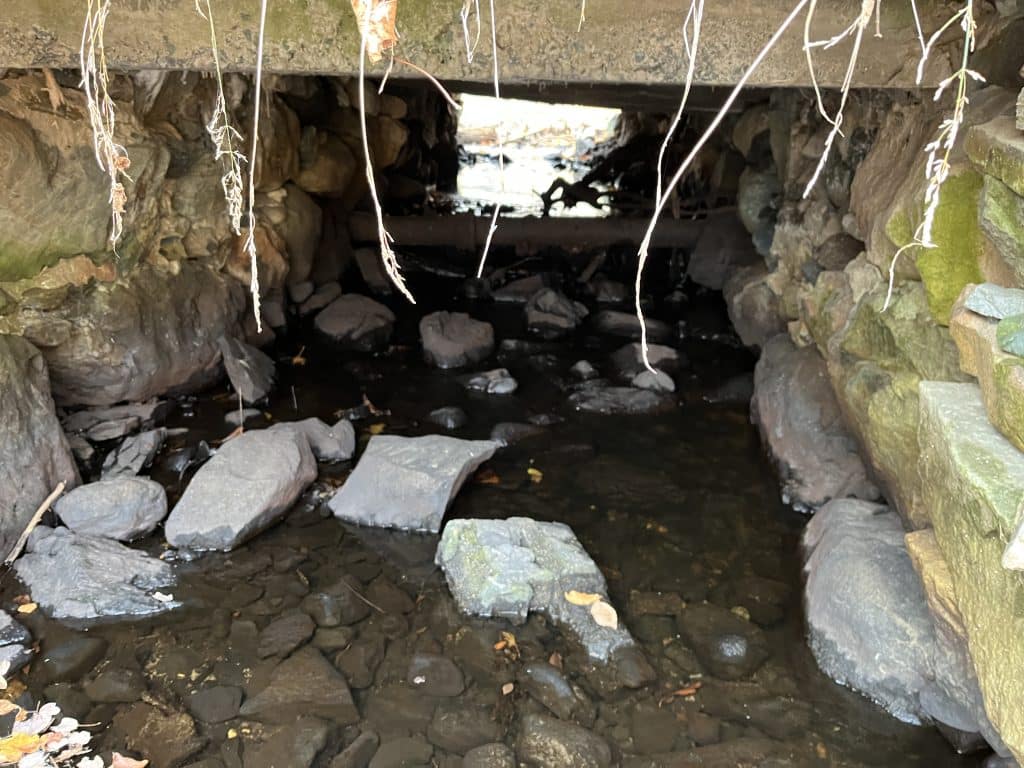
A state grant program is beginning the replacement process for two culverts serving Stony Brook, which will bolster the environment and increase flood-resiliency.
The Division of Ecological Restoration, part of the Department of Fish and Game, awarded a $76,924 grant to fund the early stages of replacing the two undersized culverts on Church and Viles streets. Additionally, Weston will host a state culvert-replacement training program for area departments of public works, engineers and other stakeholders.
The grant money will support field data collection and the preliminary engineering of the two replacement culverts, according to Holden Sparacino, the Stream Continuity program manager at the Division of Ecological Restoration.
“It’s very common for structures to be undersized or to be older structures that are at the end of their service life,” Sparacino said. If structures were to fail, it would lead to erosion and sediment in the stream, while removing and replacing the current barriers will allow for improved water flow.
The funding comes through the Division of Ecological Restoration’s Culvert Replacement Training Site Grant Funding program, which is a “network of culvert replacement sites across the state that serve as case studies and provide training opportunities for local road managers,” according to the program’s webpage. Weston was the only community in this funding cycle, which was announced in late February, to receive funding through this program. The grant expires at the end of the fiscal year.
Stony Brook is a tributary of the Charles River running through Lincoln and Weston that also feeds into the Stony Brook Reservoir, which is Cambridge’s water source. It is designated as a coldwater fish resource, which means it supports fish that require cold water in their life cycles, such as trout or longnose suckers.
“Stony Brook is one of our top concern brooks, and it probably ranks that way because it’s a coldwater resource,” said Emilia Dick Fiora del Fabro, the Charles River Watershed Association’s senior restoration associate. “It’s such an ecological resource, and especially with climate change, those coldwater fish habitats are diminishing.”
There are approximately 25,000 culverts across Massachusetts, and while many might be unseen by residents driving on roads, they are a vital piece of infrastructure that supports wildlife and flood mitigation. When a culvert is plugged by debris, or when it is too small to handle heavy water flows, it causes flooding and affects the ecosystem.
“Fish and wildlife that aren’t able to go upstream and downstream in order to meet their needs can mean reduced population or reduced number of species that are able to access the ecosystems they need to thrive,” Sparacino said. “These projects help realize the goals of both [Department of Fish and Game’s] strategic plan, and then also the biodiversity plan the state has put forward, as well.”
Dick Fiora del Fabro said functioning culverts allow fish and terrestrial species to travel up and down the river – land animals receive the added benefit of avoiding traffic on roads. Additionally, functioning culverts prevent a stream’s temperature from rising, as a blocked culvert acts as a dam.
“Unlike a lot of other projects, this is a very unglamorous type of work, but it’s very essential,” she said. “When you compare that to potholes and the type of stuff people are really showing up to town hall to complain about, it goes by the wayside.”
For the program’s training aspect, the Division of Ecological Restoration will partner with the town to host a culvert-replacement training session, which is split between classroom and on-site sessions.
While the grant funding expires at the end of the fiscal year, and Sparacino noted projects like these typically take three to five years, the Division of Ecological Restoration’s selection of Weston as a training site shows the state wants to work with the town.
“Weston would need to, like any town, apply for future funding,” he said. “But one thing with it being a designated training site, is basically DER is forming a partnership with the town, saying ‘We recognize this as an important project, and would like to work with you to progress this project forward.’”
Author

Related Articles
Panera headquarters moving to Weston
The fast-casual restaurant brand Panera Bread is moving its corporate headquarters to Weston from St. Louis next year.
Bent honored with Commonwealth award
Laurie Bent spent more than a decade in public service, and in recognition of her achievements, was honored with the Commonwealth Heroine Award.
Green lawns driving Weston up state’s list of water users
Lawns across Weston, one of the state’s highest water users, are verdant even as the heat of late summer settles over the town.