
Can you hear me now? Cell service remains a challenge
For all of Weston’s haves, there is one have-not that comes up often: reliable cell service.
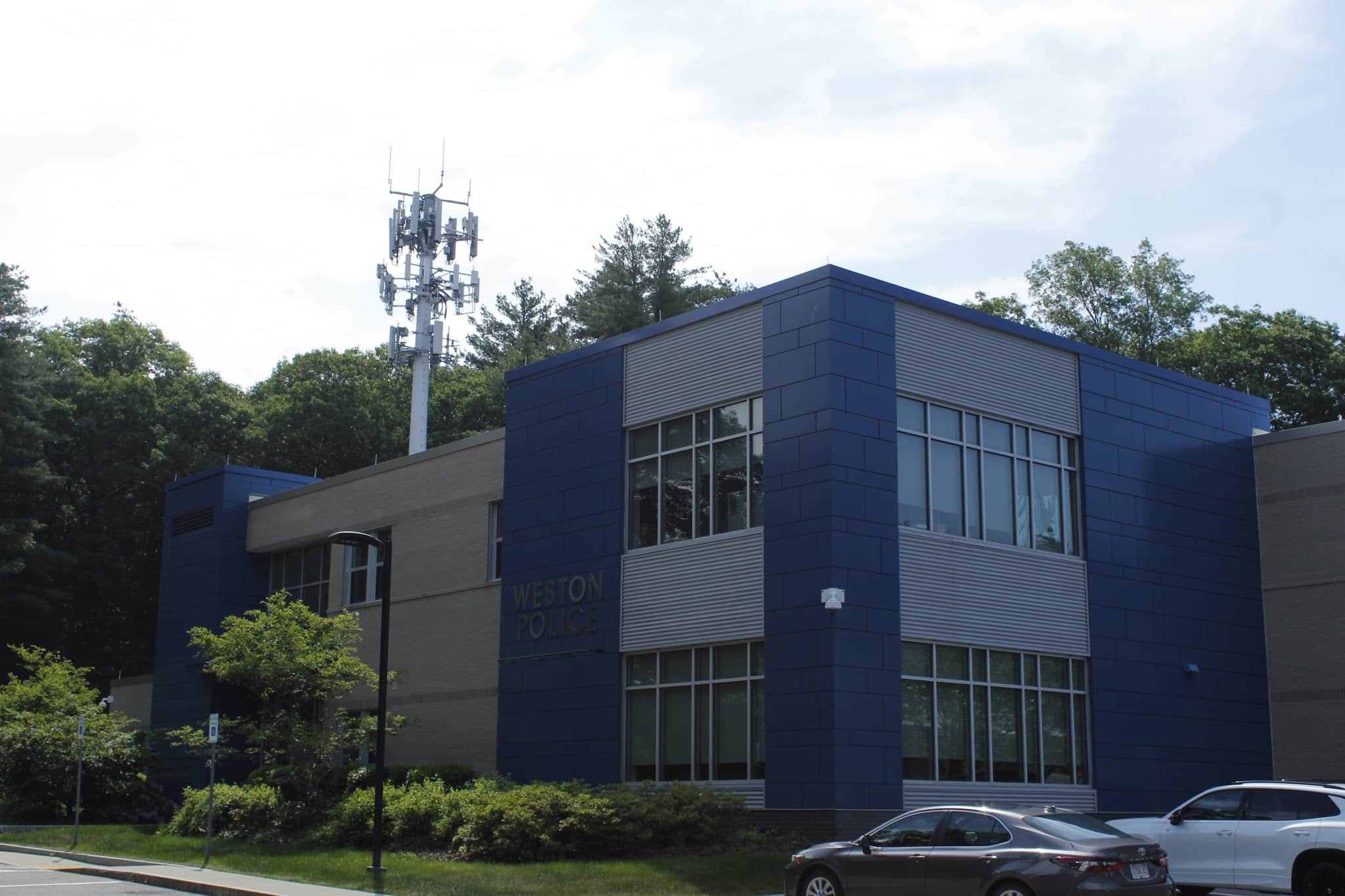
Weston is a town defined by its wealth, verdancy and small community feel. But for all of the haves, there is one have-not that comes up often: reliable cell service.
Dead zones, dropped calls and low levels of service bars throughout town have plagued residents for years.
Vanessa Schaefer is one resident who is frustrated with poor coverage around town and at her home.
“Our cell service is just so bad that we’ve come to realize we may have to go back to getting a landline just in case,” she said. In several areas around town, including outside the Weston Public Library and along North Avenue, residents have long complained about poor service and the inability to use apps when not connected to the internet.
Like many in Weston, Schaefer’s family can only make phone calls over Wi-Fi when in their home, which is near the Weston United Methodist Church on North Avenue. Schaefer said when there is a power outage, there is no way to make a call until the power returns. Handymen and other service providers have trouble contacting their supervisors when they come to her house to work.
“People are surprised when they come to the lovely and expensive town of Weston that basic cell coverage is not a given,” Schaefer said.
Town Manager Leon Gaumond said he gets more complaints about cell coverage than taxes. Despite this, he said solving the issue with a new cell tower would be difficult to achieve.
“The biggest impediment to putting in towers is the appearance. People rely on their cell phones and other devices, particularly since Covid when more people are working from home,” he said. “At the same time, they are not interested in looking out the kitchen window and seeing a cell tower. That’s always been the balance, how do you find a site that will satisfy the needs of cell companies and users without impacting the abutters.”
The issue is not a new one. In 2018, radio communications company Isotrope conducted a coverage survey around Weston. While results vary from carrier to carrier, large swaths of the town receive marginal coverage from all four major carriers – AT&T, Sprint, T-Mobile and Verizon. The report states the town’s physical character makes it difficult to provide cellular service.
“It is challenging to provide wireless service to areas that consist of wooded and hilly terrain with low density of development,” the report reads.
David Maxson, the co-founder of Isotrope, said poor cell service can be a difficult problem to alleviate because there has to be enough demand to make it worthwhile for a wireless company, a willingness from residents to have a tower built and a property owner in town interested in leasing their land. In Maxon’s view, this would be difficult to achieve in Weston.
“These things all conspire in making it hard to find a place to put a cell tower,” he said.
The issue is not unique to Weston. Maxson said several municipalities around the state have fought attempts to improve cell coverage. In April, Concord rejected a zoning amendment – by one vote – that would have made it easier to bring cell towers and building-mounted antennae to a town that has long struggled with dead zones, according to the Concord Bridge.
Attempts to alleviate the issue in Weston have been made through the installation of small cells – telecommunication systems affixed to utility poles and other locations that help provide wireless stations. The Select Board has approved two, both of which were petitioned for by AT&T in the past seven months.
Maxson said small cells cannot cover Weston’s needs because their signal has a shorter range and is unable to pierce vegetation that a tower could.
“The problem is, in a town like Weston, because we have all these houses that are separated by masses of trees on relatively large parcels, the idea of trying to cover that area with small cells was not something that wireless companies found to be cost-effective or they were not able to penetrate the vegetation well enough,” he said.
In February, then-Select Board member Tom Palmer, whose term ended at the end of April, proposed adding six sites to the Wireless Overlay District to begin the process of bringing another cell tower to town – a decision that would have to be voted on at T own Meeting. He developed the idea with Chris Hesse, an employee of US Wireless who has worked in cell tower development for more than 20 years. Palmer said he is interested in continuing to work on the zoning change and finding ways to improve cell coverage in Weston.
Palmer said poor cell coverage is also a safety concern, a worry echoed by Schaefer. If a resident has an emergency while unable to connect to Wi-Fi, it may be difficult to connect to emergency services.
While both Fire Chief Justin Woodside and Police Chief Denis Linehan share similar concerns, both said they have not received complaints from residents unable to reach their departments. It is not a high priority for either department.
Linehan said if a caller cannot make contact when dialing 911, the call still makes its way to dispatch, so emergency services can respond.
“The beauty with the 911 system is anytime you dial 911, it tracks that call,” Linehan said. “Even if you can’t speak to us, most of the time the call is still coming through.”
Woodside said his department does not worry about cell reception when on the scene because the department has used a two-way radio system to communicate between firefighters for more than five years.
“We have public safety radio. That’s our primary. That is our lifeline,” he said. “The [cell] coverage that we have isn’t awesome…It doesn’t really hamper us because we use two-way radio.”
Improving cell coverage remains on the Select Board’s list of projects and priorities, with Board member Rebecca Mercuri designated as the new point person. Gaumond said the town’s ad hoc committee dedicated to the topic does not meet regularly.
“Now that the Select Board has voted to [keep the topic on the priorities list], my next step would be to coordinate a meeting with folks…and see what the appetite is,” he said.
Author

Related Articles
Modera Weston preleasing, affordable housing lottery open
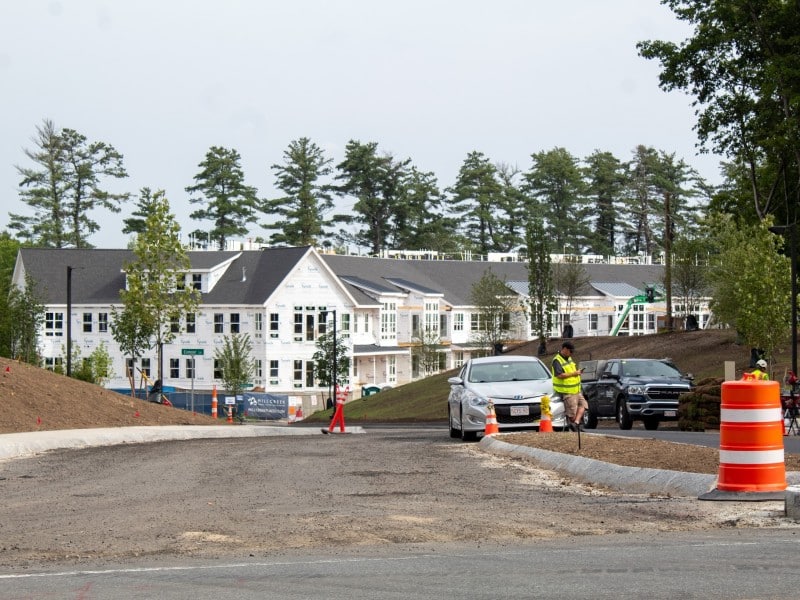
Both an affordable housing lottery and preleasing for Modera Weston, the 172-unit housing complex at 751 Boston Post Road, are now open.
Weston real estate snapshot Q2 2026
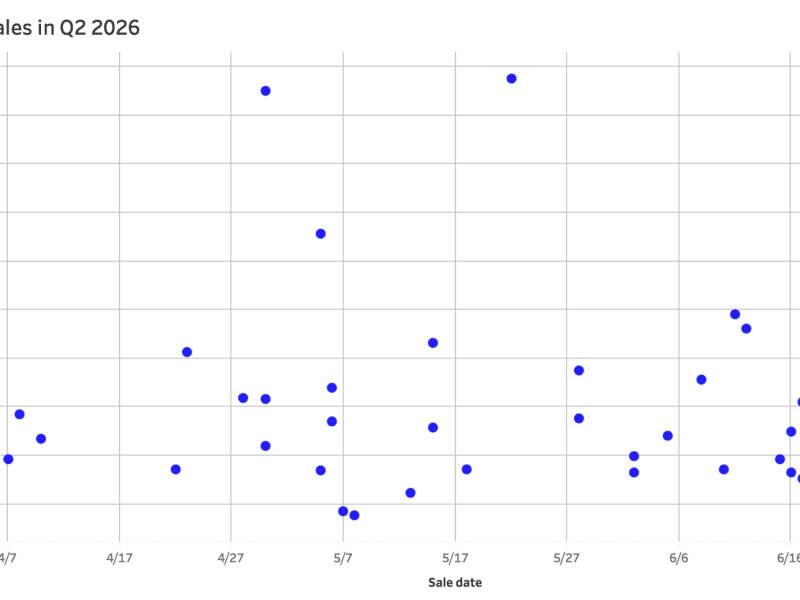
As temperatures began to heat up in spring and early summer, so did the town’s real estate market.