
Backyard Naturalist: The October surprise I’ve come to expect
Backyard Naturalist Michael Pappone’s annual October surprise isn’t what you think it might be.
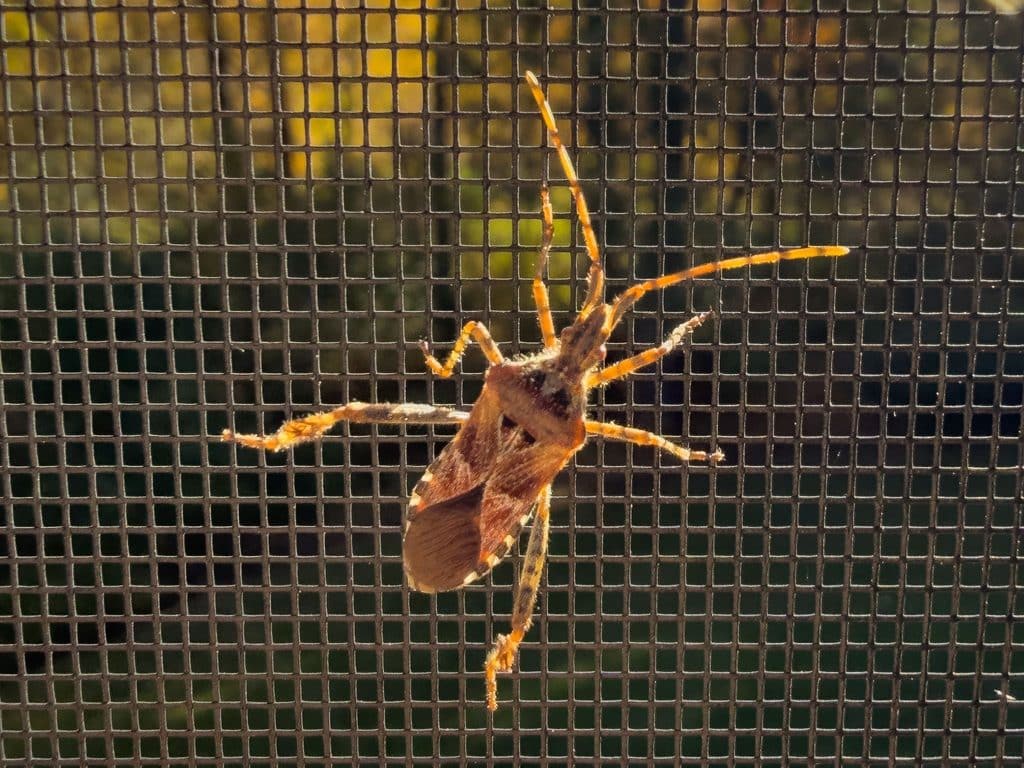
Every October I brace myself for the inevitability of a familiar distress call: “Ewww” followed by my name in all caps, resonating through the thickest of walls and the most tightly closed doors.
This is a call that is not to be ignored. It means that I get to slip on my figurative Superman cape and rise to the occasion of terminating a member of the coreidae family with, ahem, “extreme prejudice”–fitting punishment for the unforgivable crime of its having six legs and breeching the sacrosanctity of our building perimeter.
Okay, fine: what I mean to say is that a loved one has summoned me to kill a stink bug in the house.
Raise your hand, please (you lucky few), if you have been spared the indignity of having found one of these creepy brown insects crawling around your walls this month. The western conifer seed bug possesses a preternatural ability to locate any gaps in our homes’ armor, even after we’ve gone to great lengths to hermetically seal it off against all intruders. Stink bugs behave as if the month of October was invented just for them. And why shouldn’t they? The iNaturalist.org site graphically demonstrates how the number of stinkbug observations spikes to 10 times its usual number this very month.
Previously content to terrorize denizens west of the Rockies, Leptoglossus occidentalis now disgusts people throughout the entire Northeast, as well. You’re going to get more than your fair share of these ungainly-looking creatures visiting your premises if your neighborhood has plenty of conifers–their favorite host plant. The stinkbug comes equipped with a proboscis (mouthpart) designed for sucking the sap out of young pine cones, ruining the seeds’ chances of becoming a nice tall tree–or for that matter, any tree at all. Eggs that are laid on pine needles hatch in the spring and produce nymphs that must morph into adults by transforming themselves five times. During this journey, they’ll feed on various parts of maturing pine cones.
By September, the adults start looking for warm places to overwinter. A crevice in a tree trunk might well suffice. What we humans have learned is that they seem to prefer risking their lives to spend the season indoors. Such home invaders shouldn’t be surprised to find themselves dispatched with a fly-swatter, a vacuum cleaner (a tool that marks the user as “terminally squeamish”), or Superman style: squished in a tissue held between the thumb and forefinger of the residence’s designated Superman. The squished bug emits a vinegary, foul-smelling odor, a pheromone that serves as an alarm/defense mechanism against would-be predators. As far as I can tell, it has none; it feeds no other living organism and provides no known benefit to any other species on earth. It does produce a curiously blue stain when squished, though. So there’s that…
Here’s the good news: as hideous as this bug may look to people confronting it as an unwelcome house guest, it neither bites nor stings, and has no interest whatsoever in the contents of your pantry. Oh, and it does give me the chance to play the hero of the household, if only for the rest of the month. So, there’s that, too.
Postscript: if there’s a creature you’d like to know more about, do feel free to contact [email protected].
Author

Related Articles


In the Stacks: Spooky reading suggestions for scaredy cats like me
It’s spooky season – do you need some reading suggestions to fit the mood?
Backyard Naturalist: You can go home again: Visiting yesteryear’s backyard
For a nature lover, the journey to and from a place like South Dakota guarantees a change in scenery–and the avifauna that go with it.