MIT fellows show off research during Weston Middle School visit
Weston Middle School students on Dec. 3 got a little taste of what they might learn at the Massachusetts Institute of Technology
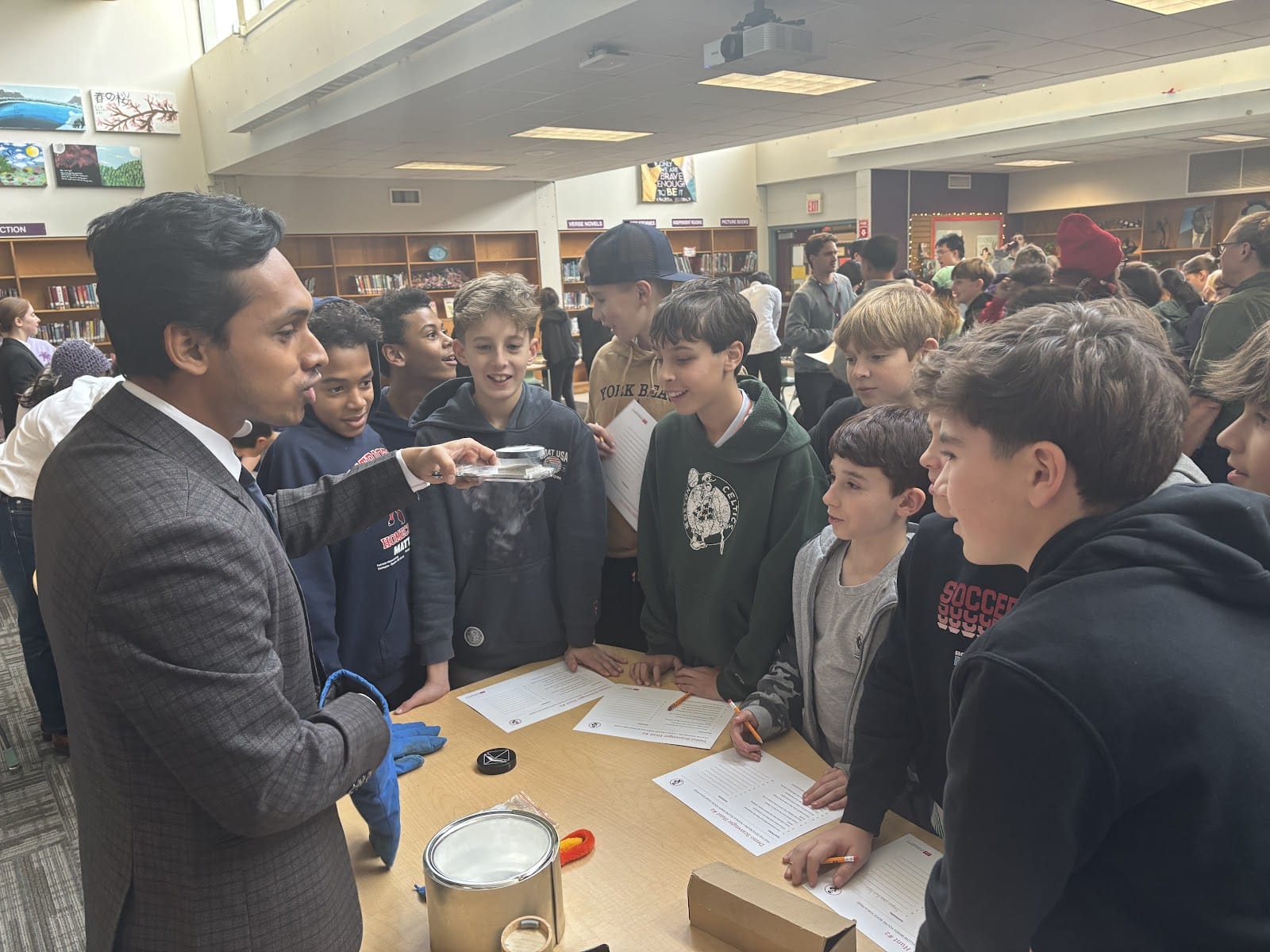
From how atoms and waves keep time to how nanochips and superconductors function, Weston Middle School students on Dec. 3 got a little taste of what they might learn at the Massachusetts Institute of Technology.
Ten Ph.D. students delivered five-minute TED Talks about their work at MIT’s Research Laboratory of Electronics to the sixth, seventh and eighth grade students, before providing some hands-on experience with some of the tools they use in the lab. The doctoral students are part of the Shannon Fellows program, named for Claude Shannon, a longtime MIT professor who laid the groundwork for the digital age.
The event was organized in partnership with Founder to Leader, an organization founded by Weston resident Jaye Goldstein in 2022 to help tech developers scale their startups.
Founder to Leader is piloting a new leadership development program, and the Dec. 3 event served as the final showcase for the program. The Middle School featured the showcase in a Kids’ Choice Award ceremony, with students tasked with ranking each presentation on its clarity, excitement and educational value.
“We’re teaching [the fellows] leadership and communication skills before they go into startups, take faculty positions or head into industry,” said Goldstein, whose son is a seventh grader. “If you can explain your research to this audience, you can explain it to everybody.”
Weston Middle School Assistant Principal Brian Buck said Goldstein pitched the idea to him over the summer, and it was a great opportunity for students to connect with MIT fellows in a fun, educational way.
“We have amazing future leaders in our building and I am hopeful that this event helped many of them begin to visualize the positive impact they can make on the world, and help them start to think about how they might do that,” Buck said.
He added that the event was an opportunity for the middle schoolers to see how the concepts they are learning in science and engineering classes now can make a difference in the world.
“We always emphasize the importance of their learning beyond the classroom. Seeing how what they are learning is being used by the MIT fellows to make the future of our planet a better, more sustainable and more fun place is an amazing opportunity that we were privileged to take part in,” Buck said. “I can say that the looks of amazement and curiosity on the students’ faces during the in-person demonstrations very much made organizing the effort worth it.”
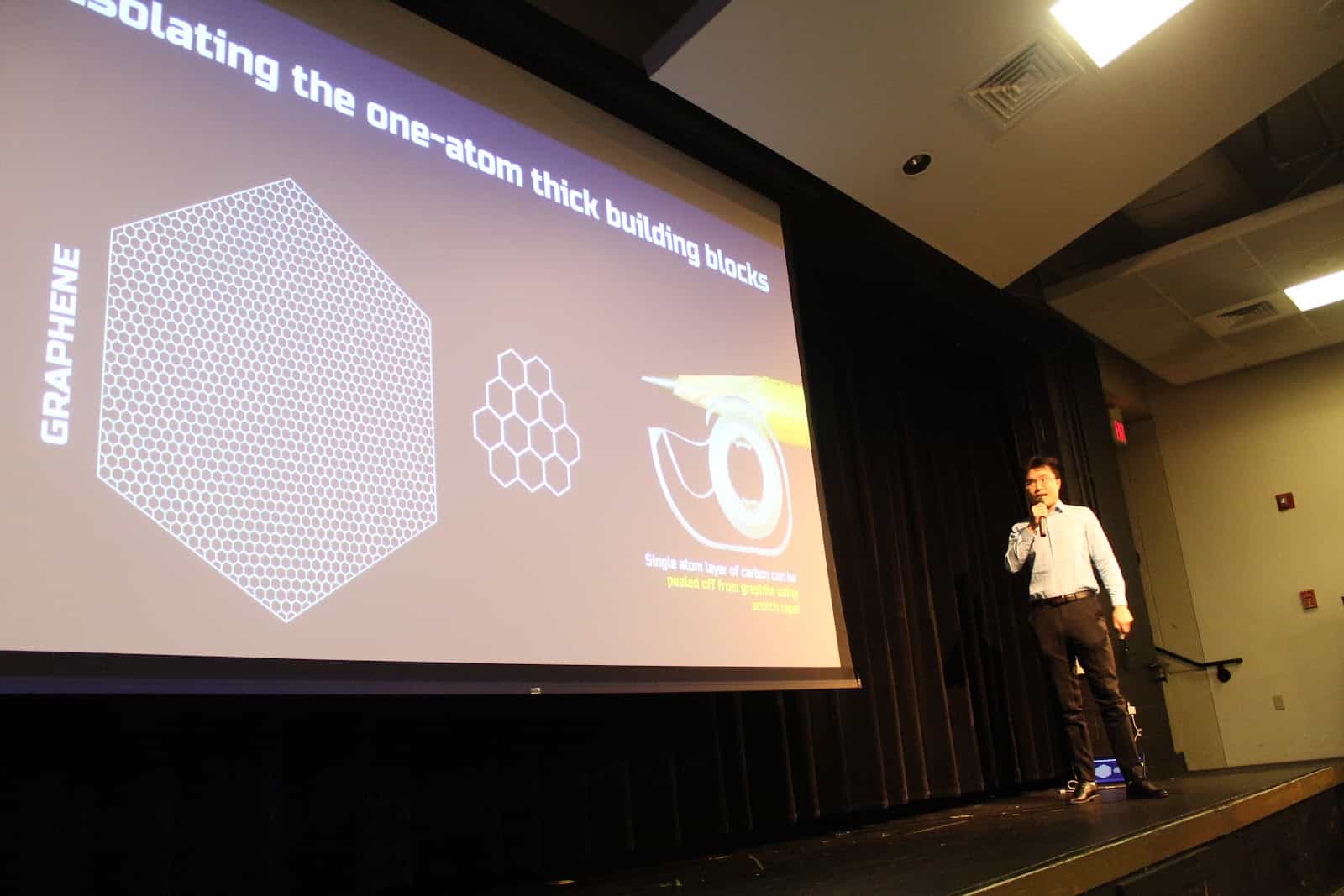
Sixth grade students selected Gustavo Velez and his presentation How Atoms and Waves Keep the World on Time as their winner. Velez discussed how atomic clocks on satellites, which measure the movement of atoms, keep electronic devices on time back on Earth.
He currently studies atoms at MIT, and he said his research is exploring how to make more precise technology at the atomic level.
“The hope is by making them better, we can unlock the technology of the future,” Velez said in his presentation.
Buck said he hopes to continue the partnership with MIT in the future.
Fun facts
There were plenty of interesting nuggets the fellows shared with students. Here are a few.
Sarah Spector spoke about nanotechnology and computers, drawing in students by explaining how electrical charges allow bugs to walk on walls and ceilings.
Oliver Nix is exploring the “lost colors of the digital world,” and how blue requires more energy to produce than any other color on the visible spectrum. He is using magnetic resonance imaging – as in an MRI machine – to research ways to reduce the amount of energy needed to produce blue colors on screens.
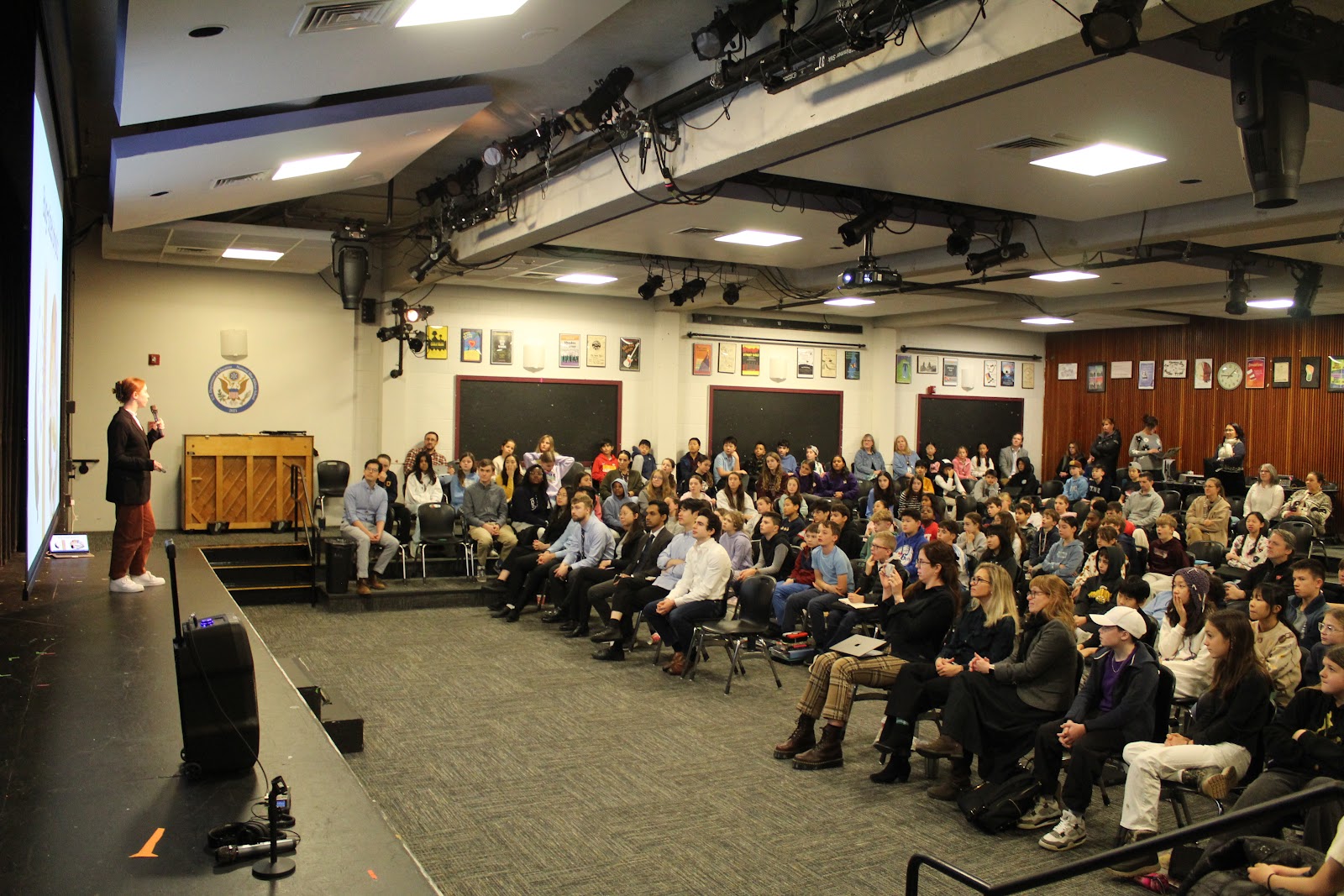
Two fellows focused on electricity, with Sharon Hsia discussing electrical waste and how gallium nitride could be more efficient than silicon in conserving energy. Liqiao Xia spoke to students about how graphene, a single-atom-thick layer of graphite, the material used in pencils, can be twisted to create superconductors.
Finally, Jennifer Wang told students about the power of amplifiers, from guitar amps to microscopes, which “help us discover things we didn’t see before.” She studies “ghost particles” such as neutrinos, tiny particles with nearly zero mass. At any given moment, she said, there are trillions of neutrinos passing through our bodies.
Author
Related Articles
Wildcat golf looks to get back to state tournament
The fall 2025 season ended abruptly in unfamiliar territory for the Weston High School golf team, as the Wildcats failed to qualify for the MIAA state championship for the first time in over two decades.

WPS turns to leasing to address bus shortage
Long-running Weston Public Schools transportation concerns boiled over on the first day of school as three buses broke down, leading the School Committee to take action to reinforce the fleet.

New year brings new schedule, phone ban to High School
As Weston High School students returned to school on Sept. 2, they probably noticed one of the year’s two major changes right away.