
Backyard Naturalist: The beating heart of the world beneath the snow
When the snow melts in the spring, watch carefully for signs that you’re walking where thousands of creatures spent the winter.
It couldn’t be some kind of omen, could it – that gaping three-inch hole in the snow, flanked by the imprints of the flight feathers of a bird’s wings?
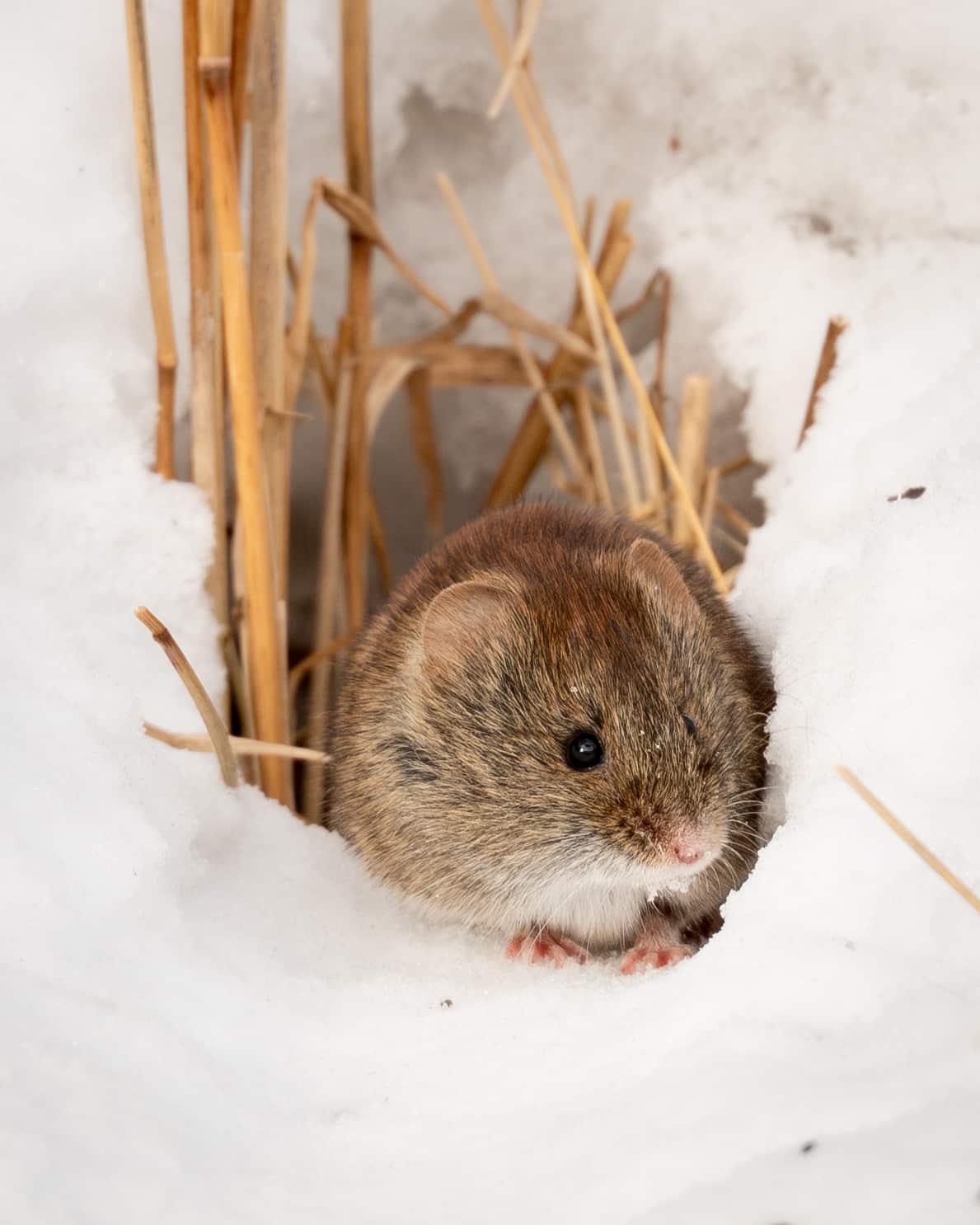
Best to banish preternatural musings and think logically, I told myself. The clue to solving the mystery is the word “subnivean”– “sub” for beneath, and “nivean” meaning pertaining to snow in Latin. An owl must have heard, located and pounced upon prey beneath the snow – some subnivean creature, expecting to wait out winter in the area between the surface of the ground and the bottom of the snowpack.
As winter approaches, our furred and feathered neighbors have three choices: migrate, hibernate or insulate. Foxes and coyotes grow their own insulation. But that’s not a solution for the scurrying little deer mice, meadow voles, white-footed mice and shrews. Their idea of insulation is a thick blanket of snow, beneath which they will dig tunnels and spend their days and nights foraging and sleeping shielded from the wind and biting cold above.
A mere eight inches of snowpack will keep the temperature a cozy 32 degrees Fahrenheit down in the subnivean zone – even when the temperature on the surface is below zero. The snow blanket traps a bit of the heat that rises out of the earth, which then causes the snow closest to the earth to sublimate (change from a solid state of ice directly to a gaseous state – water vapor). When it re-freezes at the top of the cavity formed by melted snow, it creates perfect conditions for little rodents to build their extensive networks of tunnels. A vole family will create an entire residential unit, complete with eating and food storage spaces, sleeping quarters and even a separate latrine. The red squirrel caches his food supply in the tunnel, while mice utilize the subnivean zone to protect them from wind and cold, while foraging on the ground for their supper. Shrews are constantly hunting insects, their larvae, and the occasional vole.
The ingenious tunnels, hidden though they are from the view of casual passers-by, are not a guarantee of safety. The subnivean populations still face existential hazards. If the tunnel should collapse, they risk suffocation. In case of a sudden thaw or downpour, they could drown. And then of course the chionophilic (“chion” – snow in Greek; “philic” – loving) predators have their own appetites to satisfy.
Our owl has the ability to hear rodents moving under a snow blanket three feet deep at a distance of 100 feet and can accurately punch its fisted talons through the snow to grab a meal. Weasels, who have donned a winter coat of white, can maintain their claim to primary subnivean predator status by slithering around the tunnels, navigating their intricate pathways on the scent of their prey. The fox comes to the banquet equipped with keen eyesight and a fine sense of smell. But it leans heavily on its super-acute sense of hearing and its sixth sense: magnetoreception, which allows it to align its sight and hearing with the earth’s magnetic field before aiming its signature head-first pounce at the spot where its range-finder has indicated the prey is to be found.
When the snow in the lawns and meadows melts in the spring, watch carefully for signs that you’re walking where thousands of creatures spent the winter in their snug snow forts.
“It was the sort of night when you think you could lie in snow until morning and never get cold.” — Faith Sullivan, “The Cape Ann”
Author

Related Articles

Backyard Naturalist: Make way for red-tail hawks
To Michael Pappone, nothing says “free as a bird” quite like a red-tailed hawk soaring overhead on a sunny day.