Weston Public Schools exploring AI implementation
As AI seeps into everyday life, the district is undertaking its own exploration of how the technology can be used to improve education.
Artificial intelligence is in news headlines, the vast majority of popular apps and, soon, it will be coming to Weston Public Schools.
As AI seeps more into everyday life, the district in the next five months is undertaking its own exploration of how the technology can be used to improve students’ education.
“Teachers are using it; teachers are seeing that kids are using it, and there’s really a lack of structure. We need to put structure around that,” Neil Trahan, assistant superintendent of technology and operations, said in an interview. “We know it’s a hot topic; we have to put some guardrails in place.”
Over the summer and into the fall, school faculty and staff will undertake AI training and workshops to develop their foundational knowledge, as well as identify what tools and strategies can enhance student learning.
From there, Trahan said they will “get a baseline of where we are through the fall,” which will inform future decisions on implementing AI into the district. A key tenet of this exploration, Trahan added, is being “thoughtful and transparent, so people know where we’re coming from.”
“The eventual goal will be that AI is integrated into classrooms,” Trahan said, emphasizing that the goal is to implement it “at the appropriate level” for each class and student. “The way a music teacher is going to use AI is going to be different than an English teacher … For some assignments, it may be brainstorming at the very beginning, for others it may be at the end to polish a final product.”
Superintendent Karen Zaleski said the district’s goal is to approach AI and other technology in a way that aligns with its educational values.
“Weston Public Schools is committed to the intentional and responsible integration of artificial intelligence to enhance teaching and learning,” Zaleski said. “Our focus is on ensuring AI serves as a tool to support critical thinking, creativity and ethical decision-making, while maintaining the central role of educators in guiding student growth.”
The AI initiative is part of a broad-reaching digital literacy and computer science curriculum that the district is examining as it looks to expand its technology offerings to students. Trahan and other staff presented the curriculum review at the March 23 School Committee meeting.
Although Weston currently offers several digital literacy and technology courses, such as AP computer science and Java programming, the district is looking at more courses. The administration looked at Wellesley, Wayland and Dover-Sherborn’s classes for inspiration, which showed several examples beyond what Weston is offering, including iOS and Python programming, foundational computer science, and game development.
A driving force of the curriculum review was looking at how students use technology. The district found that students are confident users of technology, but are “underconfident creators,” as they lack foundational knowledge of infrastructure, networking and programming.
With students so comfortable with the technology in their hands, the district heard “profound backlash against ubiquitous screen time, Chromebooks in early education and the erosion of traditional, hands-on learning.” The challenge, Trahan said, is not increasing technology access, but being intentional about its use.
The tail end of that presentation looked at how AI plays into technological literacy, and a survey of 159 households found that 93% of respondent households want AI instruction, but only as a supportive tool.
While the district is diving headfirst into its research on AI, that doesn’t mean students will be consulting with ChatGPT or other programs next fall.
“We want to make sure students are prepared for the pitfalls of AI, as well as the benefits,” Trahan said. “It doesn’t benefit the student if they are cheating with AI in the long run. Part of our job is to help them to see that.”
School Committee members at the March 23 meeting said they were supportive of the digital literacy initiative, but the district’s AI implementation needs to be clear about what is acceptable for students. Tiao Xie said AI is a “double-edged sword” because while it is a helpful tool, it can also be used to sidestep assignments that foster critical thinking and imagination in students.
“We need to put very strict guardrails on where they can use it,” Xie said. “AI can really suppress creativity, especially in younger kids.”
As the digital literacy curriculum moves forward and AI’s educational utility is examined, Trahan said the district will be looking to Weston residents’ deep well of knowledge and lived experience to help develop the plans.
“We have a community of very experienced and educated and driven professionals. One of the things I”m most looking forward to is digging into that resource and having a technology advisory committee of not just parents, but also educators, so all sides can hear and help guide how we’re using technology in the classroom.”
Author

Related Articles
MCAS scores stay steady in 2026
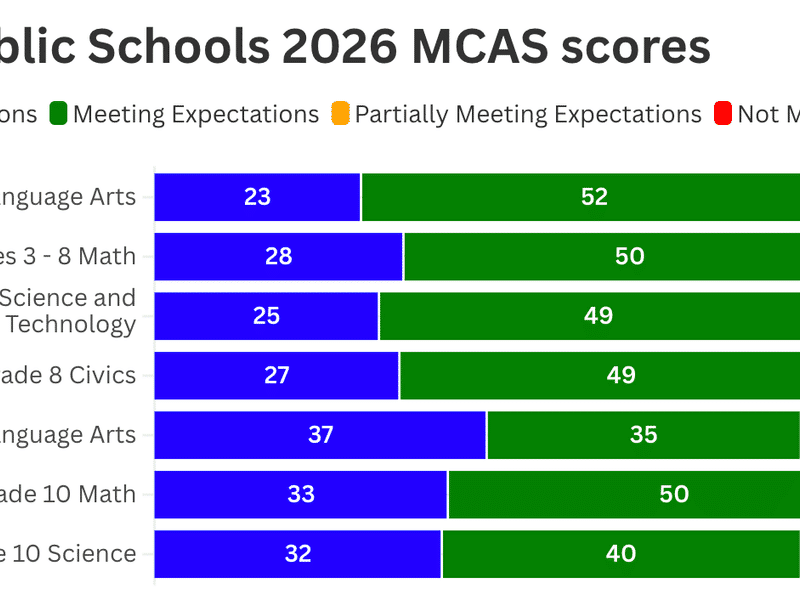
MCAS results released by the state on Sept. 22 show Weston Public Schools students continue to earn high marks.
Superintendent contract in review
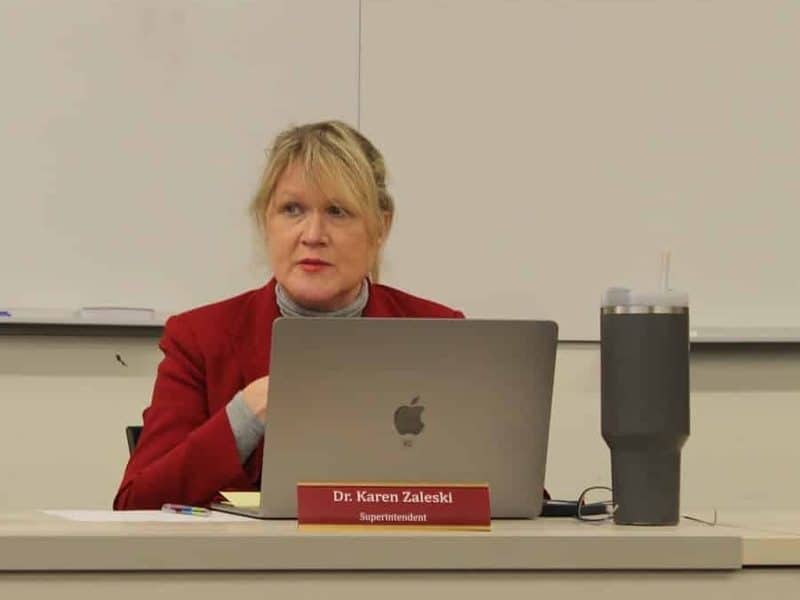
With the School Committee considering Superintendent Karen Zaleski’s future with the district, she made a pitch for her job on Sept. 28.

School building feasibility study to cost $2.75M
Residents will be asked to commit $2.75 million to the Middle School and High School building project’s feasibility study at the November Special Town Meeting.