
Weston native brings together theater and music
Bill Barclay is a composer, playwright and director who blends classical music with staged stories. It all started in Weston.
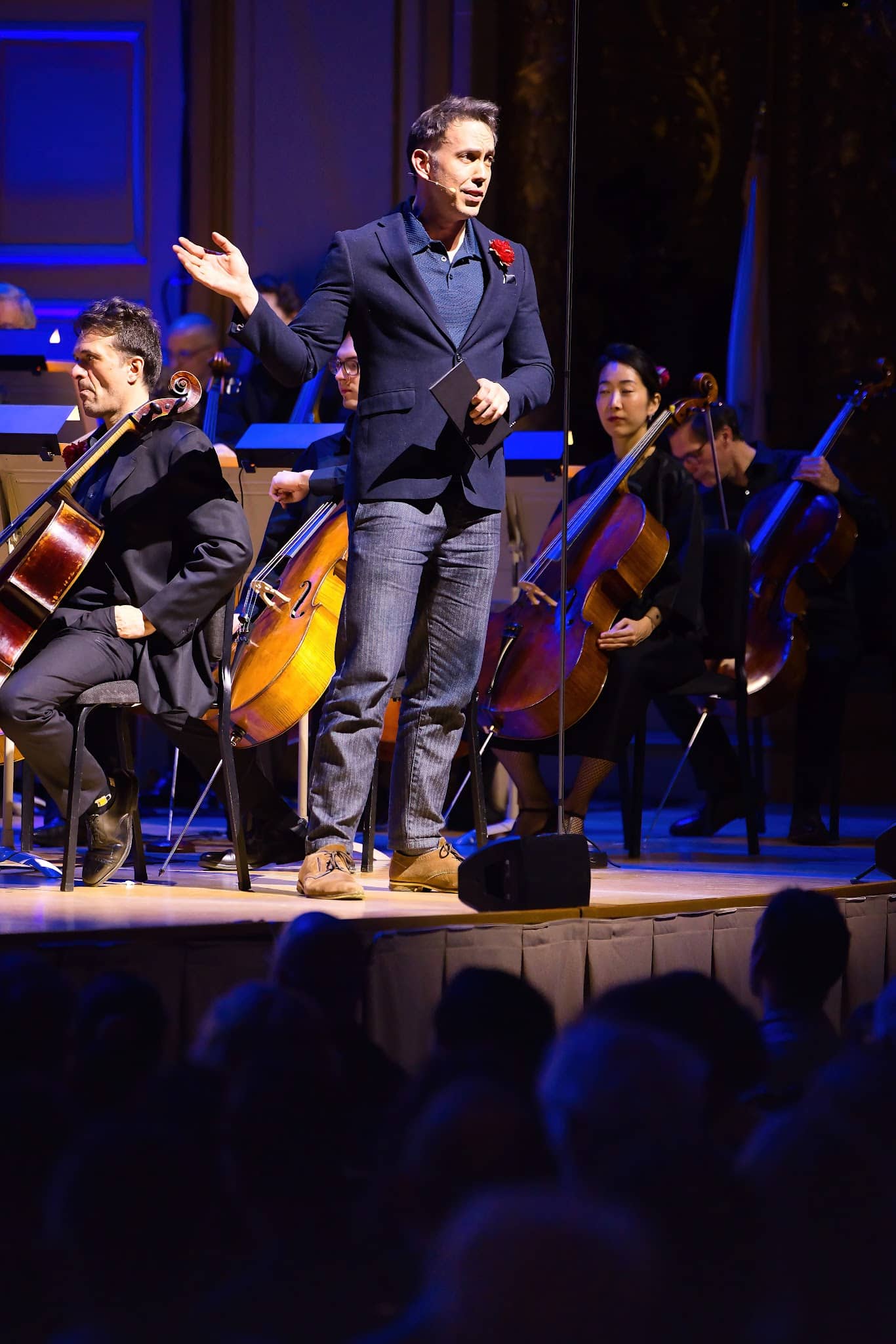
Bill Barclay is a composer, playwright and director who blends classical music with staged stories. His work has been performed around the world.
It all started in Weston.
“The artistic depth in Weston is profound and unique for a town of its size and it should be celebrated,” he said.
Barclay is the artistic director of Concert Theatre Works, an organization bringing together classical music with scripts in an effort to build audiences from people who tend not to engage with concert music.
He got his start in the performing arts as a student in Weston. He studied with music teacher Chris Memoli and theater teacher John Minigan. He built a strong foundation in both mediums and was able to explore different facets of these art forms, such as conducting. Outside of school, Barclay worked on shows with the Weston Friendly Society and the Weston Drama Workshop, the latter of which Barclay’s father was involved with.
“There’s so many memories, it’s hard to pick them out,” Barclay said. “That’s a great example of just how many hours I could get under my belt performing…Weston was an unbelievable gift.”
Freshman year of high school, Barclay was cast as the Stage Manager in “Our Town.” It’s a large part; the character serves as the narrator in Thornton Wilder’s classic. He said being trusted with such a large role gave him confidence and validated his hunger to be as involved in the arts as possible.
Memoli said that even when Barclay was a student, it was clear he was destined to make something of himself. When Memoli joined the staff at Weston High School, the music program was small. There were only four kids in the band, but Barclay was one of them.
“He’s wonderful. He was an incredible student,” Memoli said. “He was incredibly talented and motivated, a strong leader.”
After graduating from Weston High School in 1999, Barclay double majored in music and theater at Vassar College. He went on to serve as the director of music for Shakespeare’s Globe for seven years.
In Barclay’s time oscillating between the worlds of theater and music, he realized that it was easier for people to engage with a play than with classical music. He decided to bring the two mediums together.
“If you can hear what they’re saying, you can follow the story,” he said. “In a classical symphony concert, unless you know the composer, following the story is difficult. It requires a different level of attention. You have to ante up more.”
In Barclay’s shows, the script provides context for the music. The symphony is still on stage, but they are accompanied by actors who help tell the story. For example, “The Chevalier,” which will be performed Oct. 23 and 24 at the Old South Meeting House in Boston, tells the story of Joseph Bologne, Chevalier de Saint-George, a Black classical composer who was Wolfgang Amadeus Mozart’s roommate and Marie Antoinette’s music teacher. The show couples the story with music from the period.
“The reason I push these interdisciplinary productions on the world is because a lot of people need something to hold on to and are reluctant to show up for two hours of music they’ve never heard before,” he said.
Barclay hopes that these works will bring people into concert halls who have never been before, especially young audiences. While most symphony audiences are older adults, he said young people have an interest in live performances, but symphony orchestras are not meeting their needs. According to Barclay, in an era of artificial intelligence and businesses like Ticketmaster making art less profitable and more expensive to access, it is important to create something new to draw people into these spaces.
“Young people’s ‘bs’ meter about everything…is very high,” Barclay said. “People will come out, and they will come out in droves, if you’re offering them an essential experience. The reason classical music is seen to be dying is because the old format of violin concerto…or whatever famous symphony in a subscriber series does not seem experiential or essential. You have to offer something that has more thought behind it.”
In this digital era, Barclay believes live music remains as important as ever. While people may have access to most recorded music through their phones, coming together to hear pieces performed is a profound experience.
“Live music does something different to us as a community and as individuals than recorded music,” Barclay said. “It is our birthright.”
Author

Related Articles
Math meets art in Weston Public Library exhibit
Visitors walking through the Weston Public Library this month may notice colorful geometric paintings lining the walls
Spellman Museum participating in World Stamp Expo
The Spellman Museum of Stamps and Postal History is participating in the Boston 2026 World Stamp Expo.
In Choro Novo prepares to close out season of song
Since 1994, members of In Choro Novo have been entertaining audiences with an eclectic mix of music.