
Separation of church and real estate?
First Parish Church and Weston are trying to untangle ownership rights to 41 Ripley Lane.
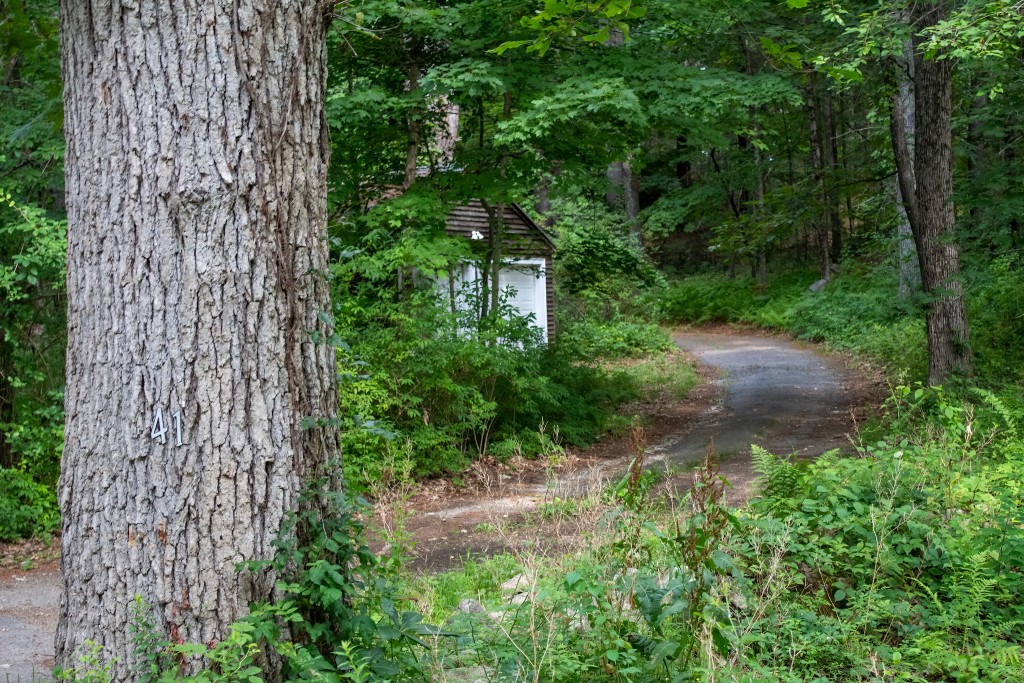
On Aug. 5, 1992, longtime resident Janet Bent died, leaving her home at 41 Ripley Lane to the First Parish Church in Weston. There was a stipulation in her will, however. If the church preferred to dispose of the property, ownership would transfer to the town of Weston for Conservation Commission use.
While the language was straightforward, Bent’s intent has long been debated because a small phrase at the end of the will states that if the property was conveyed to the town, the land was to be “retained indefinitely by said town.”
The issue is that, while the church has retained the property, 30 years have passed, and it claims, according to state law, the deed restriction has expired. The town claims regardless of the passage of time, it will always have the right of first refusal because Bent created a permanent public trust.
More than three decades after Bent’s passing, the church and the town are in Middlesex Superior Court trying to determine whether she intended to give the town a permanent right to own the property if the church were to ever sell it.
“This isn’t a situation where either the town or the church did something wrong – rather, there’s a cloud on the title that neither party caused, and a court judgment will resolve that cloud,” said Nancy Piedra, the chair of First Parish’s Standing Committee. “First Parish Church’s hope is to clarify the status of the property so that the church and the town can reach a resolution that works well for both sides going forward.”
A final pretrial conference is set for Sept. 24, but First Parish is potentially seeking a settlement with Weston, according to the Rev. Jeff Barz-Snell and Town Manager Leon Gaumond, who noted a confidential settlement proposal is currently under advisement.
In the case’s most recent development, Superior Court Judge John P. Pappas on April 6 denied the church’s motion for summary judgment, writing that there are several outstanding questions requiring the lawsuit to continue.
In particular, Pappas’ decision focused on Article Two, concerning 41 Ripley Lane, and Article Four, which divided Bent’s personal property and real estate in equal share among her relatives. While Article Two lays out specific provisions for conveying the property to the town if the church doesn’t want it, Article Four explicitly states that she imposes “no legal or equitable obligation” to follow her desires.
“The court cannot determine what Janet’s intention was,” Pappas wrote. “Therefore a genuine issue of material fact exists as to whether Janet intended to create a charitable trust in article second.”
Pappas noted it is “inconsequential” that the word “trust” does not appear in Bent’s will, and a testator’s intent is “determined by reviewing the whole instrument,” adding that “all the language in the will is to be given effect, if at all possible.”
A long-running saga
For many years, First Parish had housed staff in the modest two-bedroom, one-bathroom ranch home, but for nearly the last decade, it has rented the house to a family in town. The church pays taxes on the property and maintains the home, according to Barz-Snell.
Soon after Bent’s will was executed, Town Administrator J. Ward Carter in October 1992 notified the Conservation Commission that the community may have to consider “at some time in the future whether it is willing to accept property which includes a house,” according to a trove of documents the town shared with the Observer.
The church then sought legal advice from its counsel in 1994, with attorney Frederick Gilman opining that Bent’s will might be considered unenforceable because it was indefinite, according to the documents. If it was determined to be enforceable, he wrote, then it would expire after 30 years. He also noted the parcel’s 1952 deed was ambiguous about property lines.
Town Counsel Jeanne McKnight, in a December 1997 letter to the Conservation Commission, wrote that she disagreed with Gilman’s opinions, instead believing that Bent’s will created a charitable trust, meaning if First Parish ever wanted to dispose of the property, it would have to be conveyed to Weston free of charge.
“It is my opinion that if Ms. Bent’s will created a charitable trust, the trust includes a duty on the part of the First Parish to convey the property to the town without consideration, if the First Parish wishes to dispose of the property,” McKnight wrote.
In 2006, the Conservation Commission asked the church about the possibility of providing a trail easement on the property, to which First Parish’s Standing Committee said it would only consider the proposal if Weston gave up its interest on the land.
Finally, in 2017, the Select Board voted on a settlement offer that would have the church pay taxes on the property because it was being rented to a family and that if it were sold, profit would be split equally between the parties, according to former Select Board member Michael Harrity.
The issue of the town’s interest in the property, though, has remained unresolved. Whether it is concluded in court or through a settlement, Barz-Snell said he is sure the two parties can come up with a solution honoring Bent’s gift.
“I think we can still accomplish that and reach a conclusion in that spirit,” Barz-Snell said.
Author

Related Articles
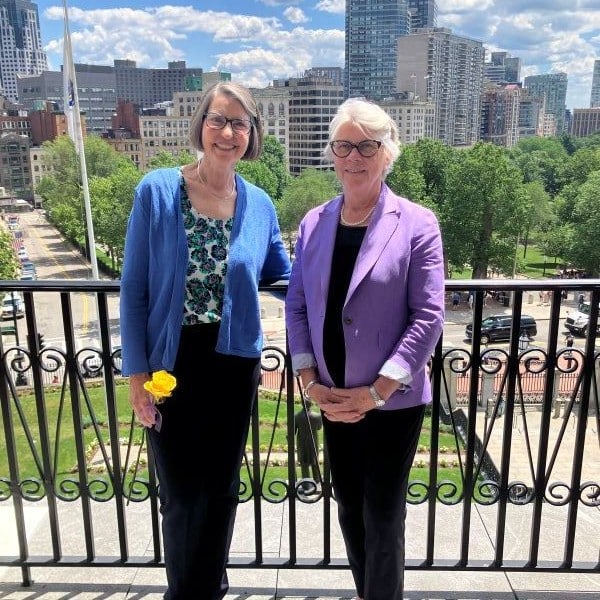
Bent honored with Commonwealth award
Laurie Bent spent more than a decade in public service, and in recognition of her achievements, was honored with the Commonwealth Heroine Award.
Green lawns driving Weston up state’s list of water users
Lawns across Weston, one of the state’s highest water users, are verdant even as the heat of late summer settles over the town.
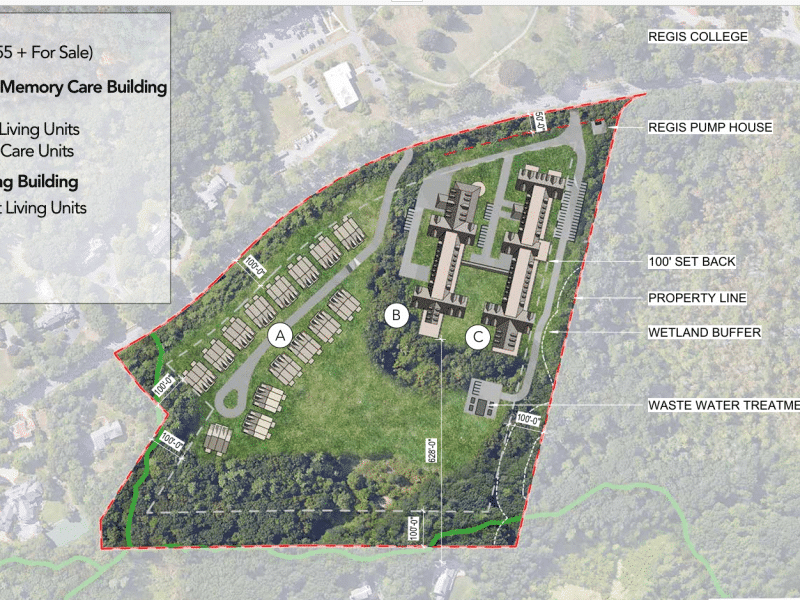
Developer proposes affordable housing options for Regis site
The potential developer of 300 Wellesley St. recently shared how the project will play into Weston’s affordable housing goals.