
Residents share thoughts for Weston’s open space
More connection to natural areas through walking or cycling paths was a major desire among residents in a townwide survey.
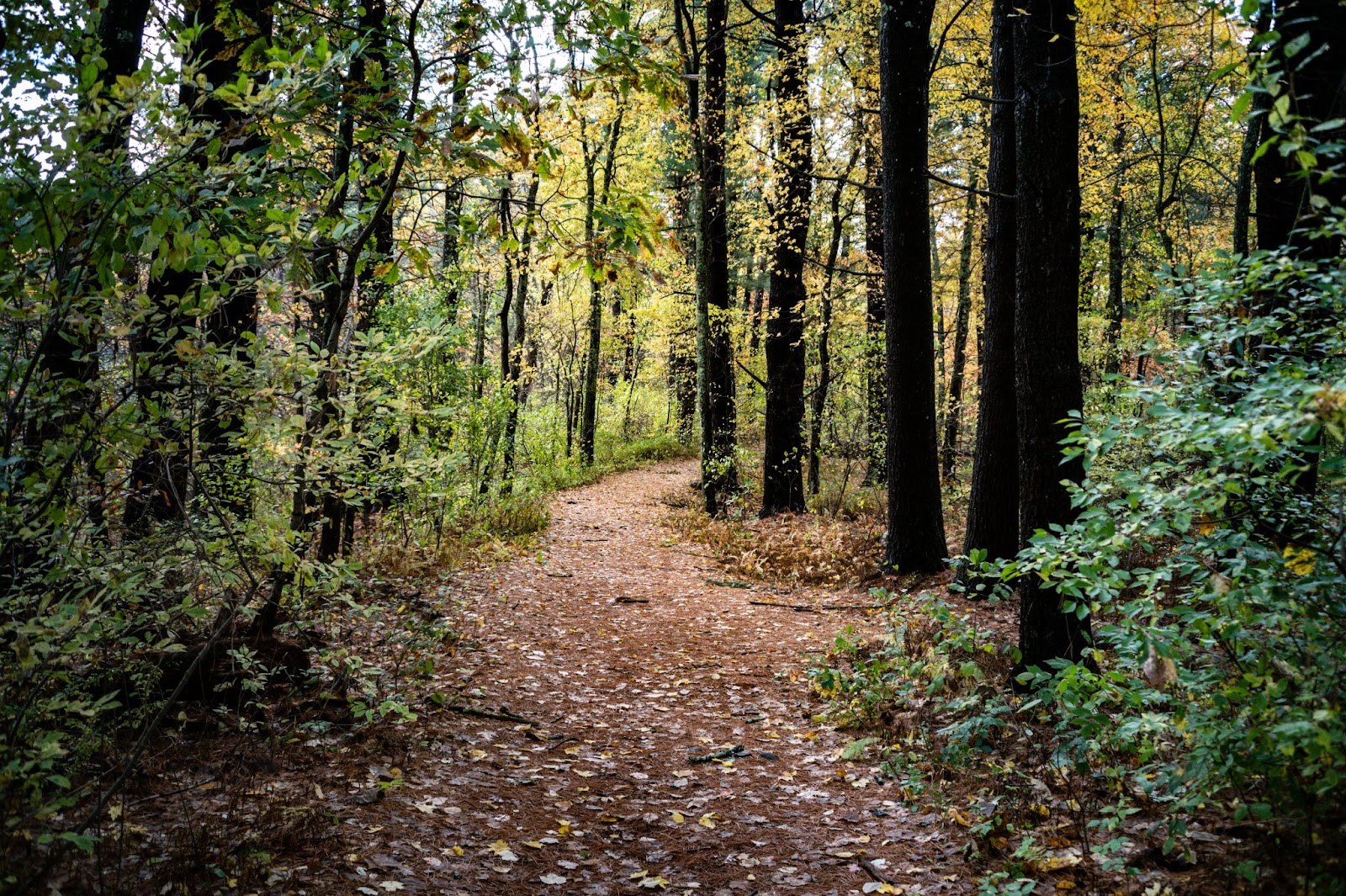
In Weston, you can’t walk more than a half mile before reaching a trailhead, a fact Kristin Barbieri says distinguishes the town from other Boston suburbs.
“You can go wander off down a trail in Weston without looking very hard, and I find that completely unique,” Barbieri said at a recent public forum, an event designed to help residents envision Weston’s open spaces over the next decade.
“I hope we continue to do that and open up more routes into our trails for everyone,” she added.
Dozens of people spoke during the public meeting on Oct. 26, imagining a town with connected parks, fields, trails and safe bike routes. Residents expressed a desire for neighborhoods with access to open spaces and winter-friendly features on the Mass Central Rail Trail, amenities that would make Weston appealing in every season.
The input, officials said, will guide the town’s Open Space and Recreation Plan (OSRP), a state-mandated road map that describes how the town will manage 2,000 acres of protected land and nearly 100 miles of trails through 2035. Massachusetts communities are required to have a plan for open spaces in order to qualify for state grants, including those that fund park improvements and conservation land acquisitions.
“For us on the Conservation Commission, the open space and recreation plan is really our strategic plan,” said Conservation Administrator Jordan McCarron.
The state’s shift to a 10-year update cycle has been better, he said, because many projects require long-term funding, consultants and coordination. The plan helps the town stay ahead of climate and maintenance challenges, McCarron said, such as invasive plants, forest pests and deteriorating trails. “We need to be able to access state funding,” he said, “and we can’t do that unless we have an updated and valid OSRP that’s been approved by the state.”
Recreation Director Chris Fitzgerald said residents’ expectations have evolved since the last plan in 2017.
“We’ve seen an increase in the variety of sports being offered in town and also the number of participants, both youth and adult sports,” he said. In response to demand, the town installed a cricket pitch at Cherry Brook Field for the Adult Cricket League of Weston last April.
If the last decade was about building and upgrading, McCarron said the next decade is about connection. In a townwide survey, residents said they rely more on cars than they’d like when accessing open space and recreation areas. Instead, they would like safer ways to walk or bike.
“This update is going to be focused fairly heavily on connectivity between our existing properties and neighborhoods, schools and athletic areas,” McCarron said.
Scattered trail easements and nerve-racking parking problems, he said, are two issues that complicate residents’ access to natural areas.
“The biggest outcome should involve just better connectivity to all of the recreational resources in town,” said Fitzgerald. “There will be more of them that you can reach without having to hop into a car.”
Many speakers at the forum pushed the idea further, challenging Weston’s leaders to protect the town from development while becoming a regional model for managing climate-related issues.
Nearly 20% of residents who took the survey said they don’t use Weston’s recreation offerings because they don’t know what’s available. Teenagers and older adults were highlighted as underserved groups. Other residents called for more children’s playgrounds, indoor recreation facilities and community events.
“If people are not utilizing the recreational programming and facilities and our open space and trails, one of the main reasons is because they just don’t know about them,” McCarron said.
Staffing issues, he said, are a challenge in the town’s Conservation Department, which manages 2,000 acres of land, more than 30 habitat meadows and nearly 100 miles of trails.
“I’m the only full-time person, and I have two part-time staff,” he said, “but together they are less than one full-time equivalent.”
McCarron said much of the hands-on work, from Stewardship Saturday projects to boardwalk repairs, is done by volunteers and the Weston Forest & Trail Association.
“We still have to rely on … goodwill in order to get the real work done of keeping our open space accessible and in good shape.”
Over the coming months, consultants and staff will update the inventory, set goals and bring the plan to boards and committees for support before submitting it to the state’s Division of Conservation Services. A final public presentation and state review are expected in early 2026, with the finished plan guiding decisions through mid-2035 or mid-2036.
Sally Yuan is a student journalist at the Boston University School of Journalism.
Related Articles
29th annual Rotary Club car show set for Sept. 26
For Richard DeVito Jr., a member of the Weston & Wayland Rotary Club, relating life experiences to the cars people drive is the essence of the organization’s biggest community event: the annual Antique and Classic Car Show.
Flock contract frozen as Police seek feedback
The national conversation about police surveillance has come to Weston.

Steps for Sotos to raise money for first-of-its-kind MGH clinic
A local family is hosting Steps for Sotos, a walk-a-thon to raise money for MGH’s Sotos Syndrome Clinic.