
Community watches sugar shack staff shift sap into sweet syrup
Land’s Sake welcomed folks into its sugar shack for a closer look at the process of making fresh maple syrup.
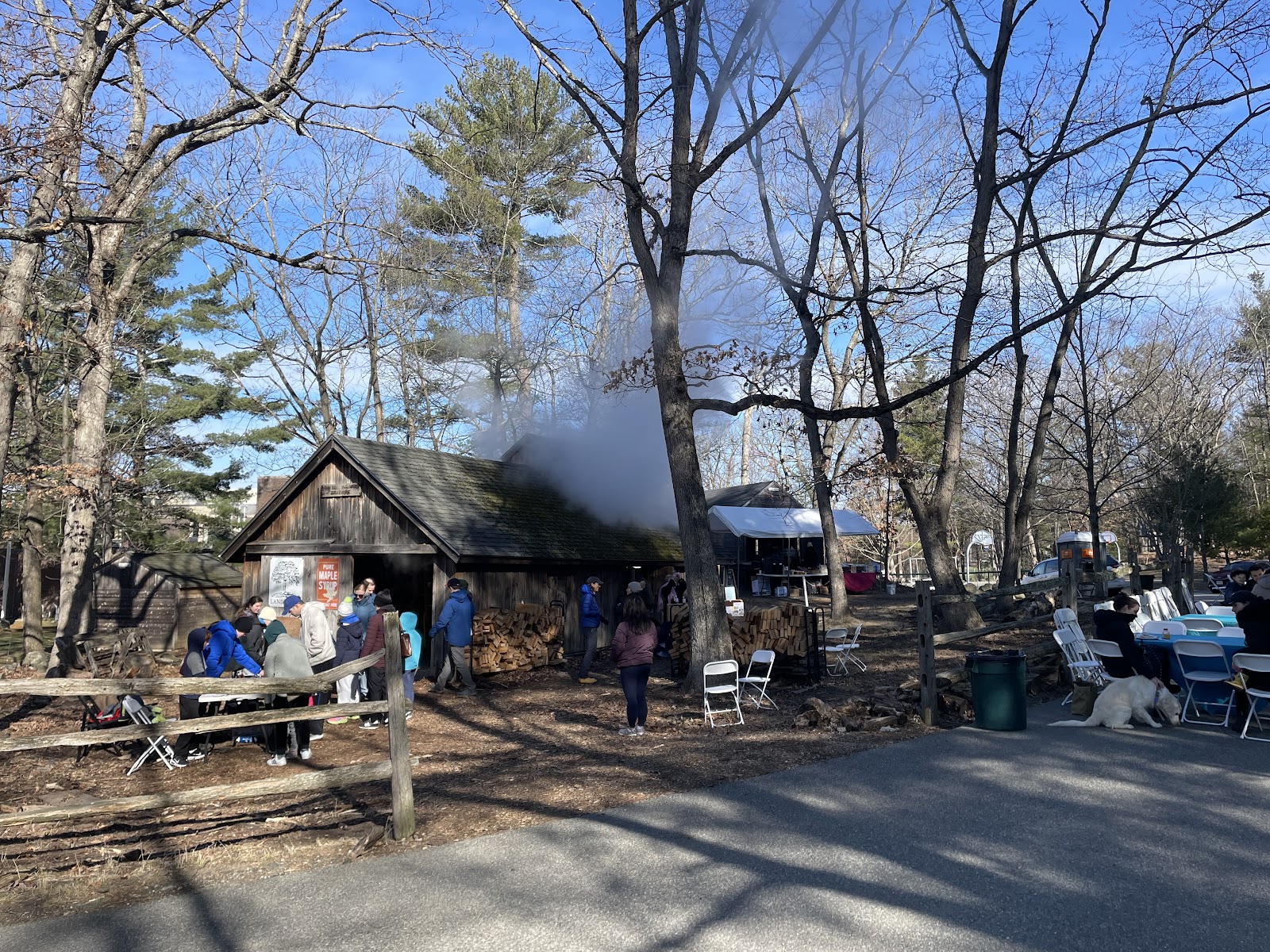
For Land’s Sake Farm Manager Brendan Murtha, the seasonal process of collecting tree sap and making it into maple syrup signifies that warmer days are ahead.
“At least for me, it’s a very hopeful time of year,” said Murtha. “It kind of brings you out of that deep winter cold, hanging out in here by the big, big fire.”
Every February, Land’s Sake staff start tapping into local trees, carrying heavy buckets of thick sap and bottling up maple syrup to be sold.
On Saturday, March 28, the farm hosted a sugaring event at its sugar shack beside Weston Middle School, allowing the community to get a close look at the process of making fresh maple syrup.
Going inside the shack provided an opportunity for attendees to learn, but also gave them a chance to escape the freezing temperatures outside.
“Like everything we do, one of our primary goals as an organization is to educate people about land access and what it takes to produce food,” said Murtha.
Unlike many large-scale commercial operations, Land’s Sake takes the traditional route, hauling buckets of sap and boiling it down over a wood-fired evaporator.
After sap is collected, it is transported to a holding tank nearby. When it’s time to make syrup, the sap is pumped into a second tank in the shack. Murtha and other employees split the wood themselves before throwing it into the furnace that heats the sap. Once the sap heats up to over 219 degrees Fahrenheit and a sugar density of 66.9 Brix, it is officially syrup. Brix is a measurement that quantifies a liquid’s sugar content.
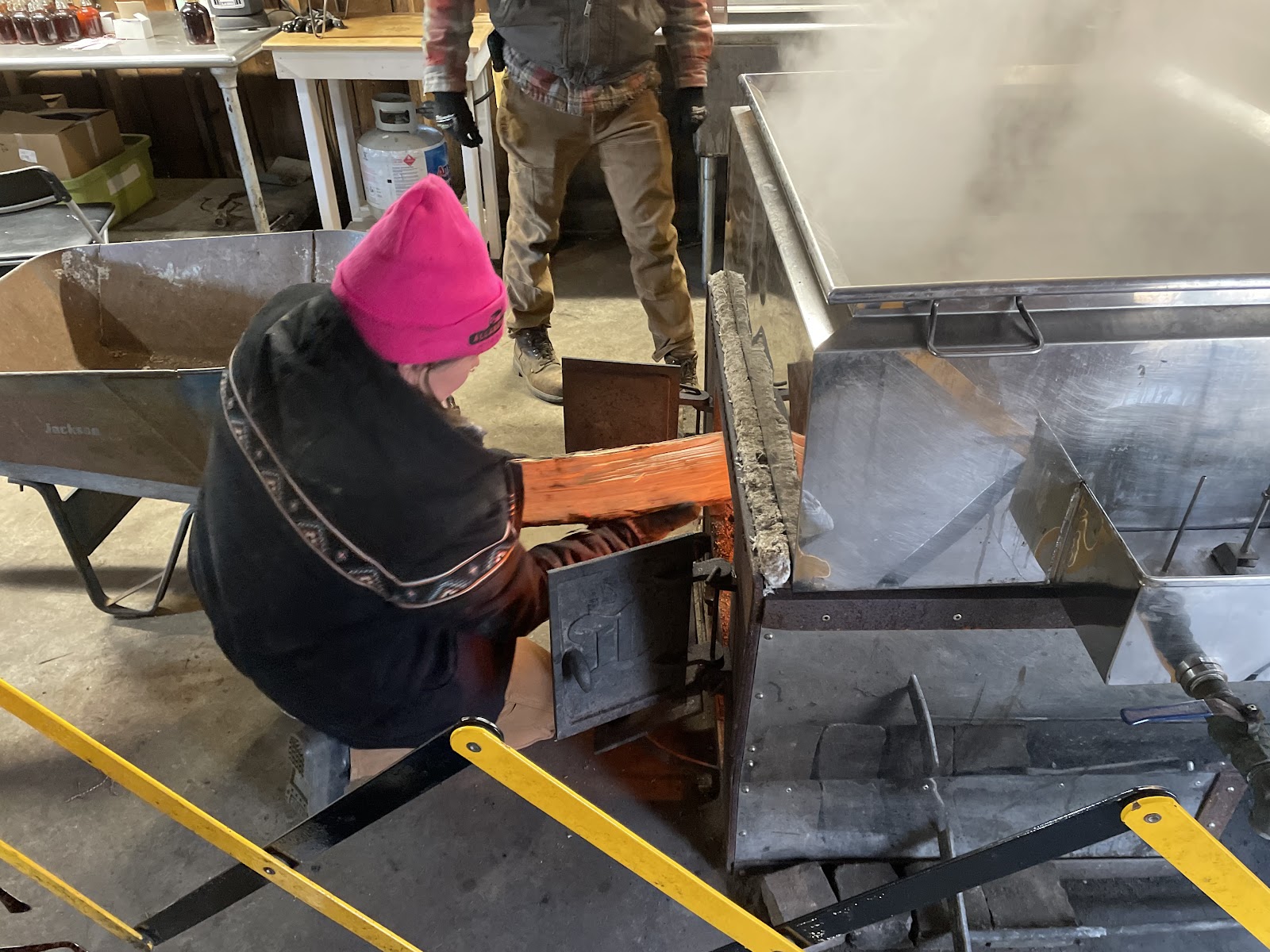
A filter sifts out any impurities, and the finished product should look as clear as can be.
This year, from mid-February through the end of March, Land’s Sake produced about 60 gallons of maple syrup. That figure changes each year, based on the temperature outside and the number of trees available for tapping. Days in the 40s and 50s and nights below freezing are preferred.
Murtha said the traditional process of syrup-making is as New England as it gets.
“It is kind of cool, in that sugar maples are native to this area,” said Murtha. “It is a truly American product from a continental context. It’s something that has been made by Indigenous people in the region for centuries if not longer.”
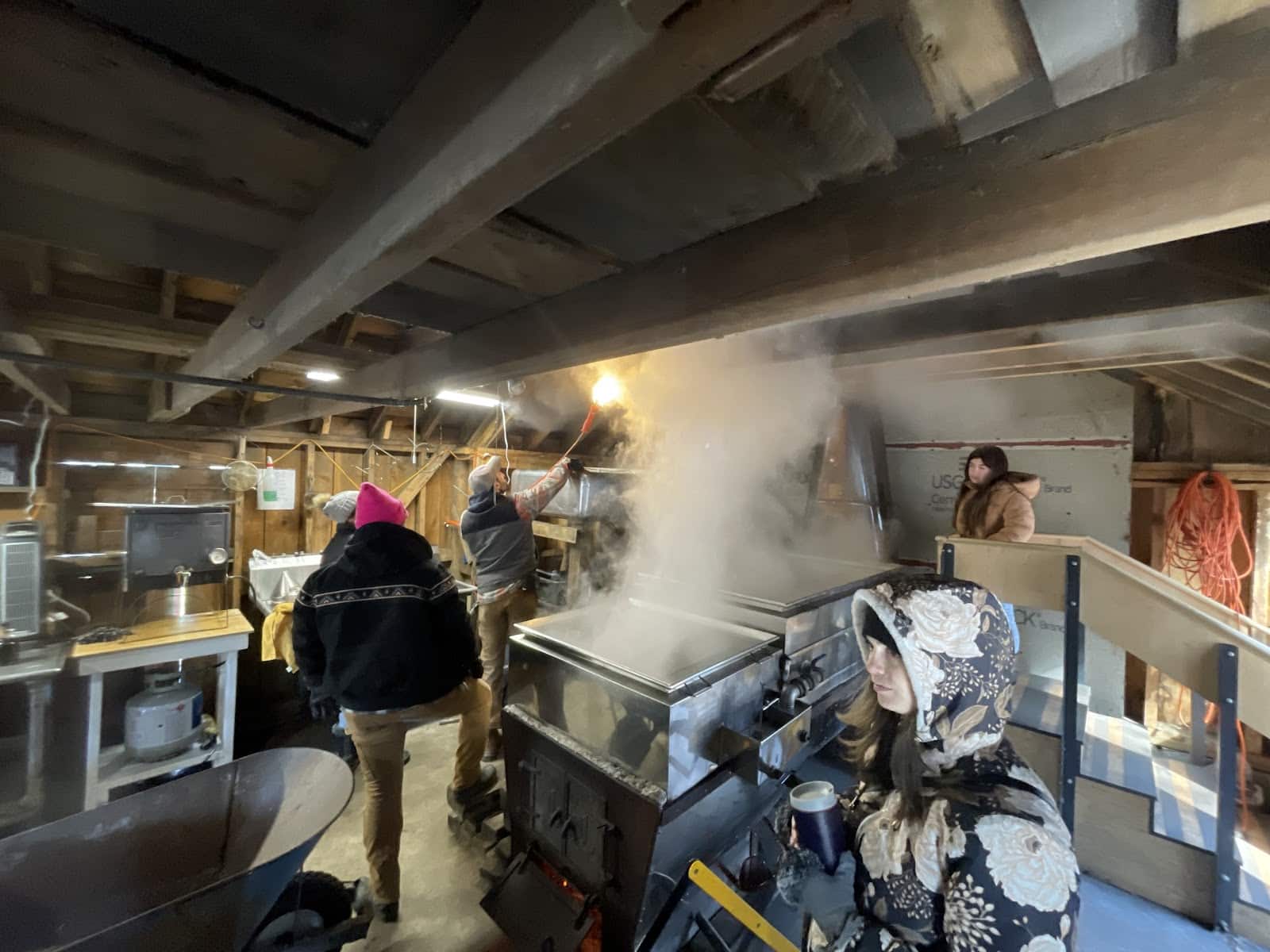
Weston’s shack has stood strong since the 1970s. The structure has been modified and expanded over the years, though much of its original frame remains. Inside, it serves as both workspace and gathering place, storing wood and syrup while housing the evaporator that transforms sap into syrup.
Attendees enjoyed pancake breakfasts and children partook in arts and crafts between trips inside the sugar shack. Thick smoke funneled out of the shack, and the sweet smell of fresh syrup filled the area.
“I think it’s a great way to bring people out and engage them with the food-making process,” said Murtha. “Almost everybody loves maple syrup, it’s delicious and it just feels very relevant to our geographical location.”
Related Articles

‘Mary Poppins’ to take flight at Weston Friendly Society
Everyone’s favorite nanny will take to the stage as “Mary Poppins, the Broadway Musical” opens April 18 at the Weston Friendly Society.

Weston robotics team gearing up for world championships
Organized Anarchy, a robotics team at Weston High School, is packing their bags to participate in the FIRST World Championship.
PHOTOS: Eggs galore at Rec Dept’s annual hunt
Families gathered on the Town Green on March 28 for the Recreation Department’s Annual Spring Egg Hunt.