Boston Globe’s Brian McGrory to speak in Weston
In celebration of its first year of publishing, the Weston Observer is hosting an evening with McGrory on Oct. 7 at First Parish Church.
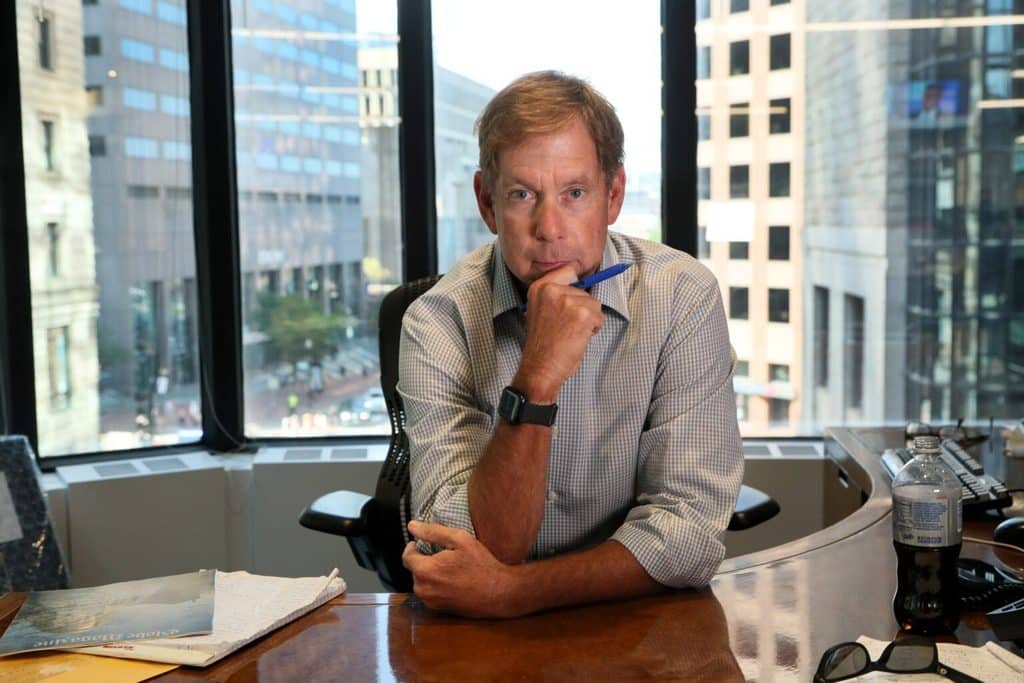
As editor of the Boston Globe, Brian McGrory oversaw production of stories that earned the paper multiple Pulitzer Prizes, including for coverage of the Boston Marathon bombing in 2014. While serving as professor and chair of the journalism program at Boston University, McGrory launched a student-driven newsroom that contributed stories to local nonprofit news organizations, including the Weston Observer. He is now back as editor of the Globe.
And now, he’s coming to Weston.
In celebration of its first year of publishing, the Weston Observer is hosting an evening with McGrory, where he will share his thoughts on the current state of local and national journalism and where he finds cause for optimism.
In advance of his talk in Weston, the Observer asked McGrory about his work with Boston University, the state’s local news ecosystem and where he is currently putting his energy to support journalism.
The following interview has been edited for length and clarity.
When it comes to journalism, what do you think about on a day-to-day basis?
“I’m honestly thinking about sustainability. Having watched the business model of the industry collapse underneath us, [I’m thinking about] how we come up with models that allow journalism to continue at the local, regional and national levels. In trying to make the Globe successful, can we create a model for others to be successful as well? How do we do [what is] possible to allow for more local and hyperlocal nonprofit, independent news organizations to do well, because it’s really hard out there.”
Tell us about your journalism students at BU. What did you tell them about the field?
“I was floored by how many kids are still interested in getting into journalism and the level of commitment they have for it, the passion they have for it and the talent that many of them have for it. I asked each of them in the first class of the semester, ‘are your parents dying that you’re a journalism major?’ Some of them said yes, and as many said no.
What I saw was kids who just wanted to follow their passion. And what I told them was the world always needs great storytellers and that hasn’t changed a lot. The business model has changed, the way we do things has changed, but we still need really great storytellers. And if you’re really good and adept at telling a story or using data to report, if you’re a great narrative writer, great breaking news writer, you will make it. We are seeing a lot of our kids still make it in the business, which has been really gratifying.”
So many folks, younger people in particular, are working remotely. What are your thoughts on that, not getting to learn from other reporters, and have the experience of being in a busy newsroom?
“Newsrooms are weird, crazy places because they are filled with journalists who are often weird and crazy and that’s all good. At the Globe, we’re in the office at least three days a week. But it worries me when I see a lot of these other smaller places where people would normally get their start, and there is no newsroom because it was given up. I learned a lot from my elders at the Globe. I got to that newsroom when I was 26 years old and I essentially never left. It’s kind of scary to think of kids who don’t have that.”
What do you think of the ecosystem of local news in Massachusetts? Is it sustainable across the state, especially in towns that don’t have strong financial resources?
“At BU I built the newsroom that serves nonprofits and independents and where we send our kids out to work and they’re doing quite well. I look at a city like New Bedford, which has probably the healthiest nonprofit news organization in the state, so that’s a great example of some really ambitious people who have solicited money from foundations and individuals to build a really strong newsroom in a place that desperately needs it. There are places obviously that have had a huge headstart – Brookline, Newton, Weston, Wellesley, because of the wealth in the communities, but I do think there is foundation money. I think there needs to be newer solutions in terms of garnering more foundation money on a local level and even a national level to these less affluent places. I also do think we need to think about consolidation. Does every community need their own nonprofit local news organization? Is there a possibility that towns could band together? Are there more collaborations that can be done? That kind of thing.”
People don’t trust the media; there’s so many attacks on journalists and their integrity. What’s to be done about that?
“I think what you’re talking about plagues national media much more than local media. If you look at studies, people will say they don’t trust big national organizations because there’s such a fissure between what they think is left and right, whether its MSNBC and Fox or CNN getting painted by the president or even the New York Times being regarded as too lefty. I think at the local level, when you’re not covering ideological issues and you’re covering things going on in town and happening to real people in real ways, I think there’s much less distrust. I think having a healthy local media ecosystem is actually going to help rebuild trust in media in general.”
Join the Weston Observer and Brian McGrory on Wednesday, Oct. 7 at 6:30 at the First Parish Church. This event is free and open to the public.
Author
Related Articles
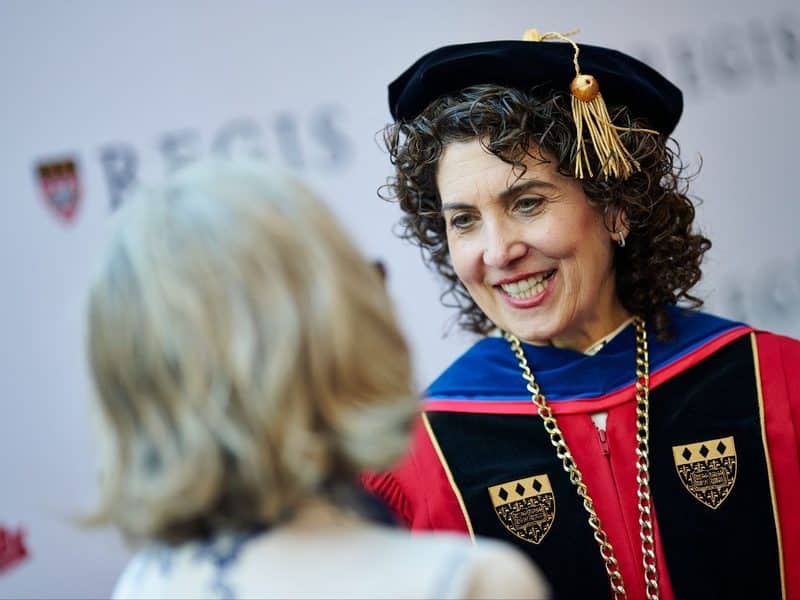
New Regis president emphasizes liberal arts
In the age of artificial intelligence, Regis College’s new president is doubling down on humanity.
Many older adults leave town to find appropriate housing
For older adults figuring out where to spend their future, the question of whether to move – and to where – can be a difficult one in Weston.
Didn’t receive a mail-in ballot? Plan ahead for November
With several reports of voters not receiving their mail-in ballots ahead of the state primary, residents are encouraged to make backup plans for November’s general election.