
Backyard Naturalist: The lord of the icterids is back in town
Have you heard an oriole yet this season? Backyard Naturalist Michael Pappone is on the lookout for this rare treat.
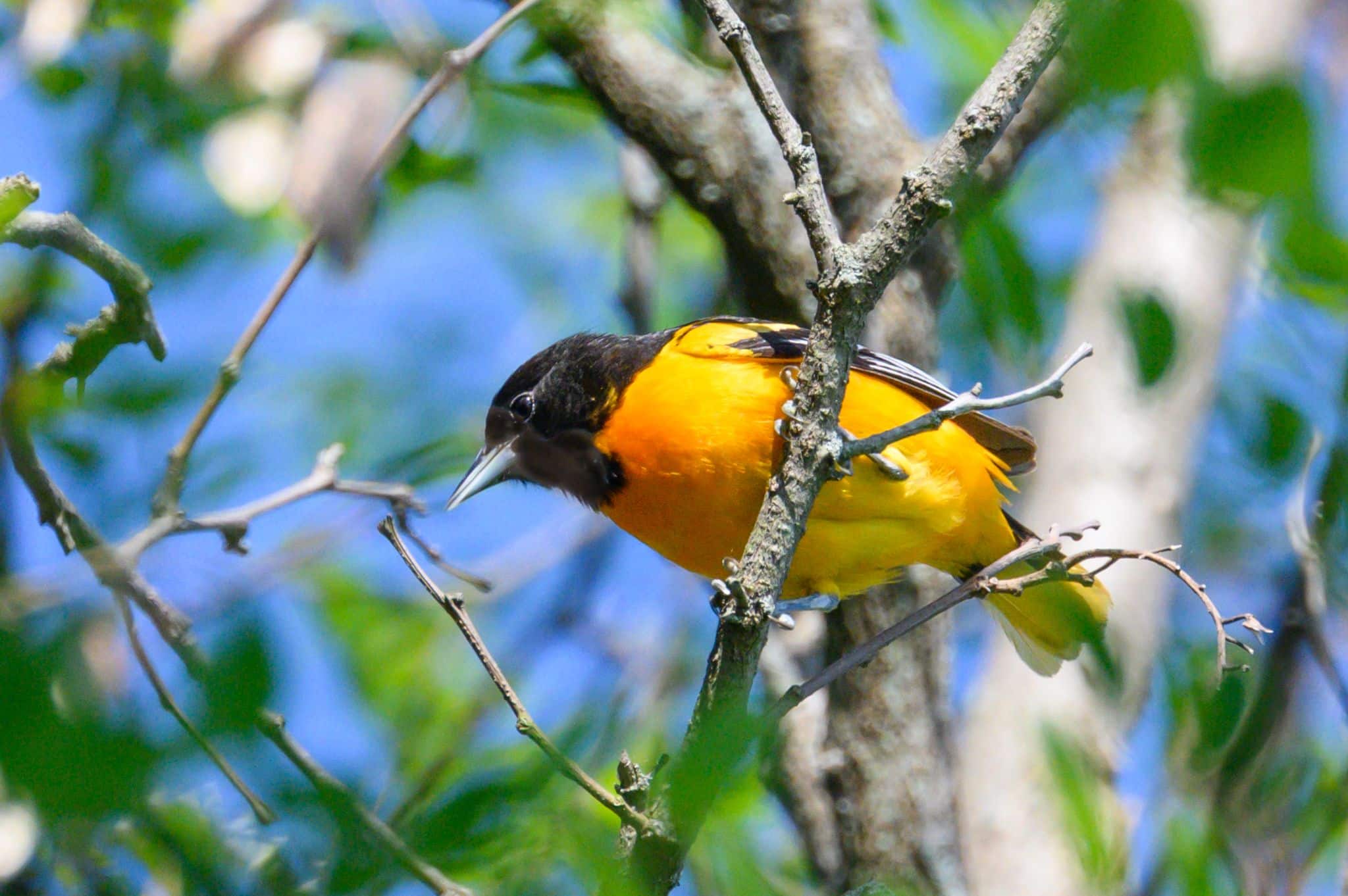
“Have you seen an oriole yet this season?” That’s the question on the lips of many bird enthusiasts this time of year. Some have heard the clear, flute-like tree-tree-tree-turee-tru broadcast from on high and recognize it as the sound of the Baltimore oriole (Icterus galbula). A few have been lucky enough to actually spot this brilliant flame of a songbird (who gets his name from the resemblance of his contrasting orange and black colors to the crest of Lord Baltimore).
It does take patience and luck to get a satisfying look at the oriole as he makes his way amongst the treetops, snatching caterpillars from the leaves. You can improve your odds by grabbing a pair of binoculars and systematically combing through the upper reaches of the branches, watching for movement and listening for song.
If you crave a close-up for an iPhone shot in your backyard, you’ll need to work harder. After years of finding orioles in abundance at Mt. Auburn Cemetery (a spring migration paradise), I would return home after each visit to a neighborhood devoid of orioles. Ah, but this year would be different: they’ve finally appeared day after day, no less–and at eye level perched on my suet feeder. That feeder had heretofore been the secret banquet room of the oriole’s swaggering icterid cousins: red-winged blackbirds and common grackles.
Other Westonites have had luck luring the birds into range with slices of fresh orange or little dishes of grape jelly. The oriole favors darker shades of food, eschewing green grapes for those of a deep purple hue. Orioles will also slurp up hummingbird food, as long as it’s served in an orange container with a good spot to perch on. They’ll get their protein from eating things like pesky tent caterpillars.
Back to those cousins: I owe them a debt of gratitude for showing the orioles the way to my suet. These fellow members of the wide-ranging icterid family reliably materialize five or six at a time from their nesting grounds in the Coburn Meadow and the nearby swamps to grab a calorie-rich bite of my suet. They’ll jockey for position on the feeder, ripping off the largest possible chunks to ferry back to their nests. Even the pugnacious jays yield to the superior size and menacing yellow eye of the grackle. The diminutive chipping sparrows are delighted to grab the crumbs that the messy icterids drop.
How can the oriole, so elegantly dressed and so sweet of voice belong to the same family as those raucous bullies? Well, in a family that contains 108 icterid cousins, there are bound to be differences in attitude towards food and language.
Of the eight species that breed in Massachusetts, all are experiencing declining numbers since 1970–especially red-winged blackbirds (47%), meadowlarks (75%), and grackles (50-70%), with orioles themselves suffering a 44% decline.
Of every 100 oriole eggs laid each season, 60 chicks fledge, 20 fledglings reach their wintering grounds, and 15 succeed in returning from their winters in the neotropics. They’ll be joining the eight survivors from the year prior to their hatching, the four 3-year olds, the two 4-year olds and the lone 5-year old, together producing the new season’s nestlings. (“What It’s Like to Be a Bird,” David SIbley, 2020).
So, when you spy that special spring oriole in your tree or along the rail trail, pause and treasure the experience, knowing what it’s taken for this bird to ‘be there for you.’
Author