
Growth is coming. Is Weston ready?
With one housing project nearing completion, another under Planning Board review and two major developments under appeal in court, the town is facing a surge of housing projects in the coming years.
More cars on Route 20. More students in classrooms. More calls for emergency services. More people.
With one housing project nearing completion, another under Planning Board review and two major developments under appeal in court, the town is facing a surge of housing projects in the coming years.
How is Weston preparing?
If these and other, smaller developments in the pipeline come to fruition, the town’s permanent housing units could rise from 3,999 to nearly 5,000 by the end of the decade, according to projections in the town’s draft Housing Production Plan. Assuming at least two people occupy every new unit, Weston’s population could increase by almost 2,000, or a 17% increase from the U.S. Census Bureau’s 2025 estimate of 11,729 residents.
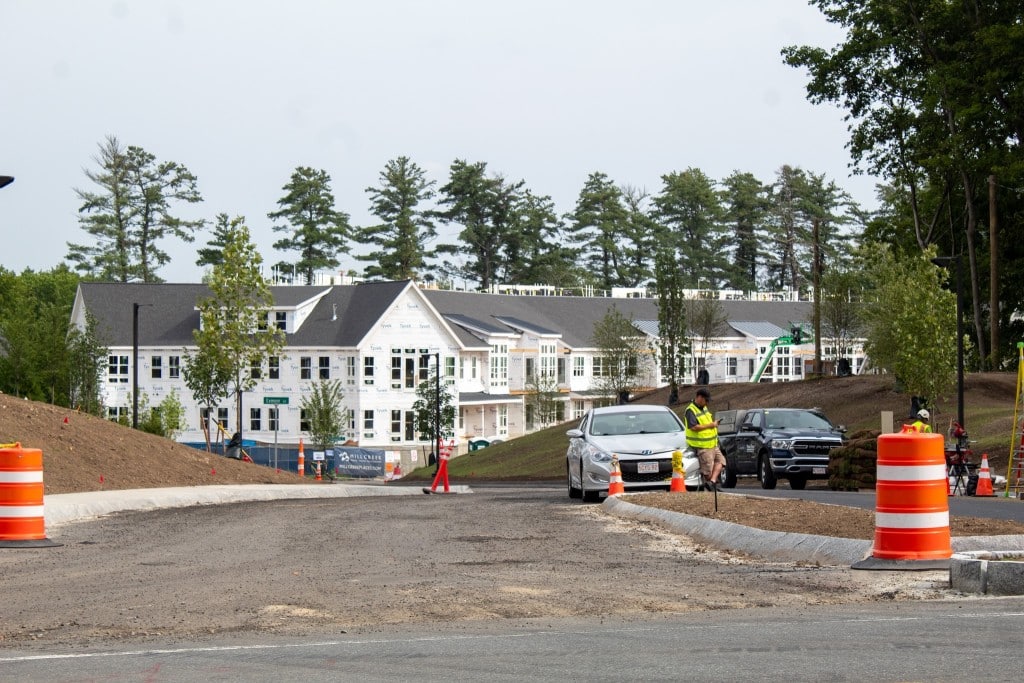
Even if every project in the pipeline is not completed, change is coming to Weston. Modera Weston, a 172-unit development at 751 Boston Post Road, will be completed in 2027. The Planning Board is currently reviewing BXP’s 280-unit multifamily housing proposal at 133 Boston Post Road, which will likely be followed by a second 100-townhome development phase in the future.
Ongoing litigation surrounding two major Chapter 40B projects – the 180-unit “Weston Whopper” at 518 South Ave. and a 150-unit development at 104 Boston Post Road – could allow further development. Both cases are in the state Appeals Court.
While Weston is set to undergo its biggest growth spurt in recent years, town officials are not sounding the alarm. Instead, it’s all about planning, with the benefit of knowing what is coming due to the long project development timelines.
At Weston Public Schools, for example, staff already conduct annual enrollment projections, so planning for potential students slots easily into that existing work.
“We’ve closely followed the developments as they’re coming in,” School Committee Chair Daina Selvig said. “None of us have a crystal ball, but we are forecasting to the best of our ability.”
More people naturally means more children. A recent calculation conducted by Dave Coelho, the school district’s director of finance, estimated enrollment could increase by an additional 100 students if every project is completed by 2032.
If those potential students are scattered across each grade level, Selvig said impacts will likely be minimal. If 25 families with fifth grade students move to Weston, new staff will need to be hired and more classroom space will be needed.
Staff can be hired quickly in a pinch, but classroom space takes time and money to develop – and portable classrooms are an unattractive option, Selvig said. The town’s impending growth comes at what Selvig called a fortunate time because the School Committee and community are currently considering renovations or new construction to the secondary campus. Special Town Meeting, on Monday, will decide if the town will appropriate $2.75 million to fund a feasibility study.
“We’re in a fortunate position right now that we have the opportunity to embark on and use the feasibility study and the resources of the [Massachusetts School Building Authority], assuming the town supports the feasibility funding, to take into account future enrollment,” she said. “We’re ahead of the curve. We can build for the future, rather than just put Band-Aids on what we have.”
Incoming students would put the school in a unique position. While Weston is facing growth, schools around the state – particularly in western Massachusetts – and the nation are experiencing declining enrollment. With a larger student population almost guaranteed, Selvig said the town has a chance to reinforce its schools, which are Weston’s most treasured resource.
“Schools are the heart of our communities,” Selvig said. “We have the opportunity to build a bigger heart.”
Alongside school enrollment, traffic is also expected to increase once people move into new housing. In a community with limited public transportation options, more people in town typically equals more cars on the road, according to Traffic and Sidewalk Committee Chair Richard Flynn.
“Any growth that Weston is going to have is going to increase traffic,” Flynn said. “Any increase in the neighboring towns, particularly in the towns to the west of us, are going to increase traffic.”
For most residents, traffic on Weston’s state routes is the major concern. Route 20, in particular, is often clogged during the morning and afternoon rush hours. Both major developments in progress, Modera Weston and BXP’s project at 133 Boston Post Road, anticipate adding cars to the already-busy state road, according to traffic studies submitted to the town.
Their impacts, however, will vary because of the project locations.
“My guess is that people who live at 133 [Boston Post Road] will probably be jumping on the highway, which is right next door. But 751 Boston Post Road, that will certainly put more vehicles on the road for sure,” Town Manager Leon Gaumond said.
These projects are also coming at a time when the Massachusetts Department of Transportation is undertaking several changes to Route 20’s intersections. Construction on a traffic light at Boston Post Road and Wellesley Street will begin soon. There are also early proposals to transform the intersection of the state road and Highland Street.
Flynn said he is going to push his committee to develop a unified transportation plan to address traffic concerns holistically.
“Once we get beyond the current agenda of things, which is heavily focused on Route 30, then we’re going to start focusing on this,” Flynn said.
If traffic issues develop, Flynn said the committee can undertake temporary mitigation measures, such as banning left turns at Route 20 and Highland Street, as any major project has a “long ramp-up period.”
Other departments expect things to change slowly, if at all. Gaumond said general government services at Town Hall likely won’t experience any disruptions, except the town clerk’s office, which might see more work managing new residents’ vital records, like birth certificates.
While the Fire Department expects more residents to result in more calls for service, Fire Chief Justin Woodside said his team is always analyzing data to see if a change is needed.
If the department finds it cannot handle its call load and is instead relying on mutual aid, then that is a sign more staffing is needed. At this point, though, he is not concerned with the growth coming to Weston.
“We’re an organization that responds based on need for whatever that is,” Woodside said. “We track trends and we attempt our best guess for what the future holds based on what’s coming down the pipeline.”
Author

Related Articles

Leaf blowers to be passed over, school study on deck for Special Town Meeting
A proposed ban on gas-powered leaf blowers, which stirred up debate in Select Board meetings and around town, was on the warrant, but the bylaw’s proponent requested it be passed over.
BXP begins site plan review for 133 Boston Post Road
Following a site walk with the Planning Board last month, Boston Properties (BXP) officially kicked off its site plan approval process on Nov. 4 for a proposed multifamily development at 133 Boston Post Road, the former Stony Brook quarry located just west of the I-95 interchange.

State approves Open Space and Recreation plan
Weston’s conservation land and recreational facilities aren’t just enjoyed by residents. They’ve got the state’s sign off, too.