
Green lawns driving Weston up state’s list of water users
Lawns across Weston, one of the state’s highest water users, are verdant even as the heat of late summer settles over the town.
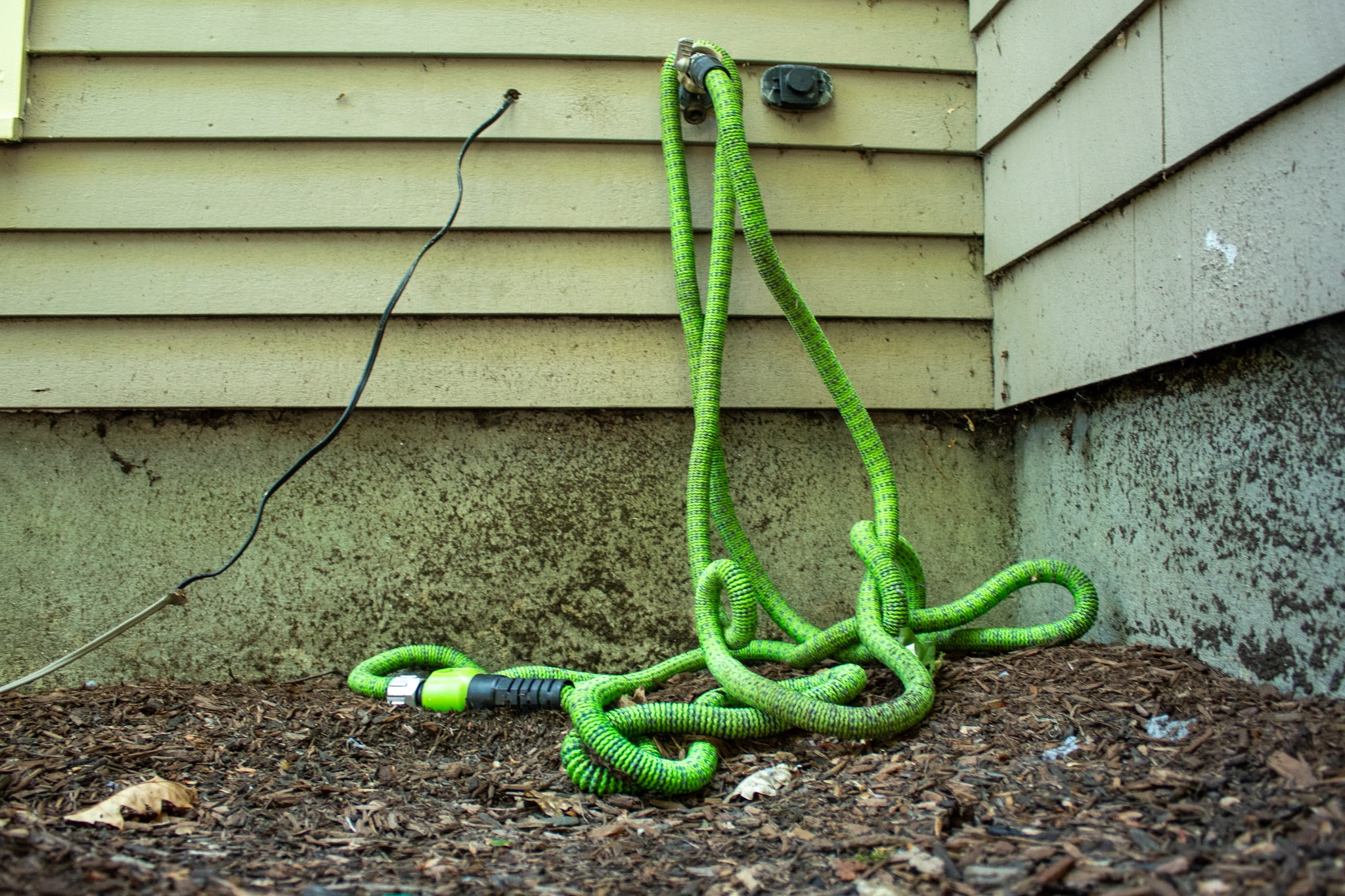
Lawns across Weston are verdant even as the heat of late summer settles over the town. Keeping the grass green takes millions of gallons of water.
The town has been in the top four towns for daily residential water usage per capita for the past seven years, according to the Massachusetts Department of Environmental Protection (MassDEP). Department of Public Works Water Division Superintendent David Fava said the reason for this is simple: watering lawns.
“It’s all irrigation,” Fava said. “In the winter, we go through maybe a million gallons a day. Once the sprinklers are turned on, it goes up to three and a half, 4 million.”
MassDEP keeps track of annual residential water usage from public water suppliers. Residential Gallons per Capita Day (RGPCD) is calculated by dividing the total residential use within a particular public water system – in Weston’s case, the Weston Water Division – by the number of residents served. Residential use includes showering, washing clothes and, as Fava pointed out, irrigation. The statistics do not include municipal use or private businesses, such as golf courses.
In 2025, Weston residents averaged the state’s highest water usage at 107 gallons per capita per day, compared to the state standard of 65 gallons. Previous years have been even higher. In 2020, during the Covid pandemic, Weston was the highest user with a RGPCD of 139 gallons, and in 2022 the number hit 115. According to Fava and Weston Department of Public Works Director Richard Sullivan, water usage tends to increase if there is a dry period or a heatwave.
Weston gets its water from the Massachusetts Water Resources Authority (MWRA), a public entity that provides water and sewage services to more than 60 communities in the Boston metropolitan area. MWRA Executive Director Stephen Estes-Smargiassi said the fact that Weston’s water use per person is higher than other communities comes down to the town’s nature.
“If you imagine a typical community, you might have a downtown area with a high-density residential area or a business district that makes a dense core,” he said. “People [in Weston] have bigger lawns so they have more opportunities to use water…It’s got a lot of big lawns and it’s a wealthy community, so people are probably more comfortable paying for that water bill.”
There has not been a water usage emergency in Weston since 2016, according to Sullivan and Fava. That summer, in part due to a drought and intense heat, around 5 million gallons of water were pumped in a day. The water tanks could not keep up with the demand. At that time, the Select Board declared a watering ban, according to the pair.
Although there has not been an emergency in 10 years, Sullivan is keeping an eye on water use. The majority of Middlesex County was recently upgraded to a critical drought warning, according to the state.
“We watch it. There’s concern in July and August, but there’s not enough to trigger action,” he said.
New water tanks, Sullivan added, which are currently in the design phase, could ease concern because of the increased storage capacity. He said the increased storage could prevent a water emergency and also would help ensure that there is enough water to fight a fire even at peak use times.
“That was the prompt with the new tanks,” Sullivan said. “There’s not enough storage right now, but with the new tanks, that’ll help…to have enough water for fire protection.”
Fava said changes in technology have made it easier for residents to control irrigation on their property.
“When I first started, you’d go out on a rainy day, you’d see sprinklers going,” Fava said. “Now with the rain sensors, they don’t go on. All that technology is good and it’s just going to get better.”
Across MWRA communities, water usage has gone down since the 1980s, in part because of technological advances, according to Estes-Smargiassi. Indoors, appliances such as dishwashers have become more efficient. He also pointed to changes in federal and state laws, including updated plumbing codes.
“That’s been true for pretty much every community,” he said. “Their water use is lower now because people are more efficient.”
The overall decrease in water usage has helped the MWRA to keep the Quabbin and Wachusett Reservoirs full despite the current drought. Both are around 80% full, according to Estes-Smargiassi.
Although the water supply is adequate, Estes-Smargiassi still encourages residents to conserve water however they can.
“We tend to preach year-round conservation because we want people to be thinking about how they use this water inside and outside. A dripping faucet inside might waste as much water as it takes to water all your plants,” he said. “If you water your lawn or your gardens, you’re getting a benefit.”
When it comes to irrigation, Estes-Smargiassi suggested watering at cooler times of the day because less water will evaporate. He also said that lawns do not need to be watered every day to stay green.
For Weston residents looking to conserve, the town runs a rain barrel program with the Great American Rain Barrel Company to provide barrels to residents interested in preserving water. Every year, residents are able to order rain barrels to pick up at the Department of Public Works from April to May. Assistant Town Engineer Richard Sweeney, who manages the program, said using collected rain water for irrigation can save money and protect from overwatering.
“It’s good water conservation…especially for irrigation,” he said. “There’s so much irrigation in town, it impacts the groundwater table…it’ll use water before it gets to the ground.”
The groundwater table is the area of ground that is saturated by water. According to Sweeney, when the table is higher, yards are more vulnerable to flooding.
Efforts to curb residential water use are up to the individual. Sustainability Committee Chair Nick Christman said the town has resources on more environmentally-friendly landscaping on its website.
“Our water usage per capita in Weston is quite high. It definitely aligns thematically with sustainability in Weston, but there hasn’t been a major project aligned with it,” Christman said. “The good news about that is that, while it’s hard to change, the ways to change it are pretty straightforward,” Christman said. “There are hosts of information on more sustainable landscaping.”
Estes-Smargiassi encouraged Weston residents to conserve water where they can to ensure there is enough for the larger community and environment.
“Leaving the water in the reservoir means it’s available not for a rainy day, but for a dry day,” Estes-Smargiassi said. “That’s a good thing.”
Author

Related Articles

29th annual Rotary Club car show set for Sept. 26
For Richard DeVito Jr., a member of the Weston & Wayland Rotary Club, relating life experiences to the cars people drive is the essence of the organization’s biggest community event: the annual Antique and Classic Car Show.
Flock contract frozen as Police seek feedback
The national conversation about police surveillance has come to Weston.

Steps for Sotos to raise money for first-of-its-kind MGH clinic
A local family is hosting Steps for Sotos, a walk-a-thon to raise money for MGH’s Sotos Syndrome Clinic.