
Backyard Naturalist: It’s not a cat and it doesn’t fish!
In this week’s Backyard Naturalist column, fisher cats (which are not actually felines) are Michael Pappone’s focus.
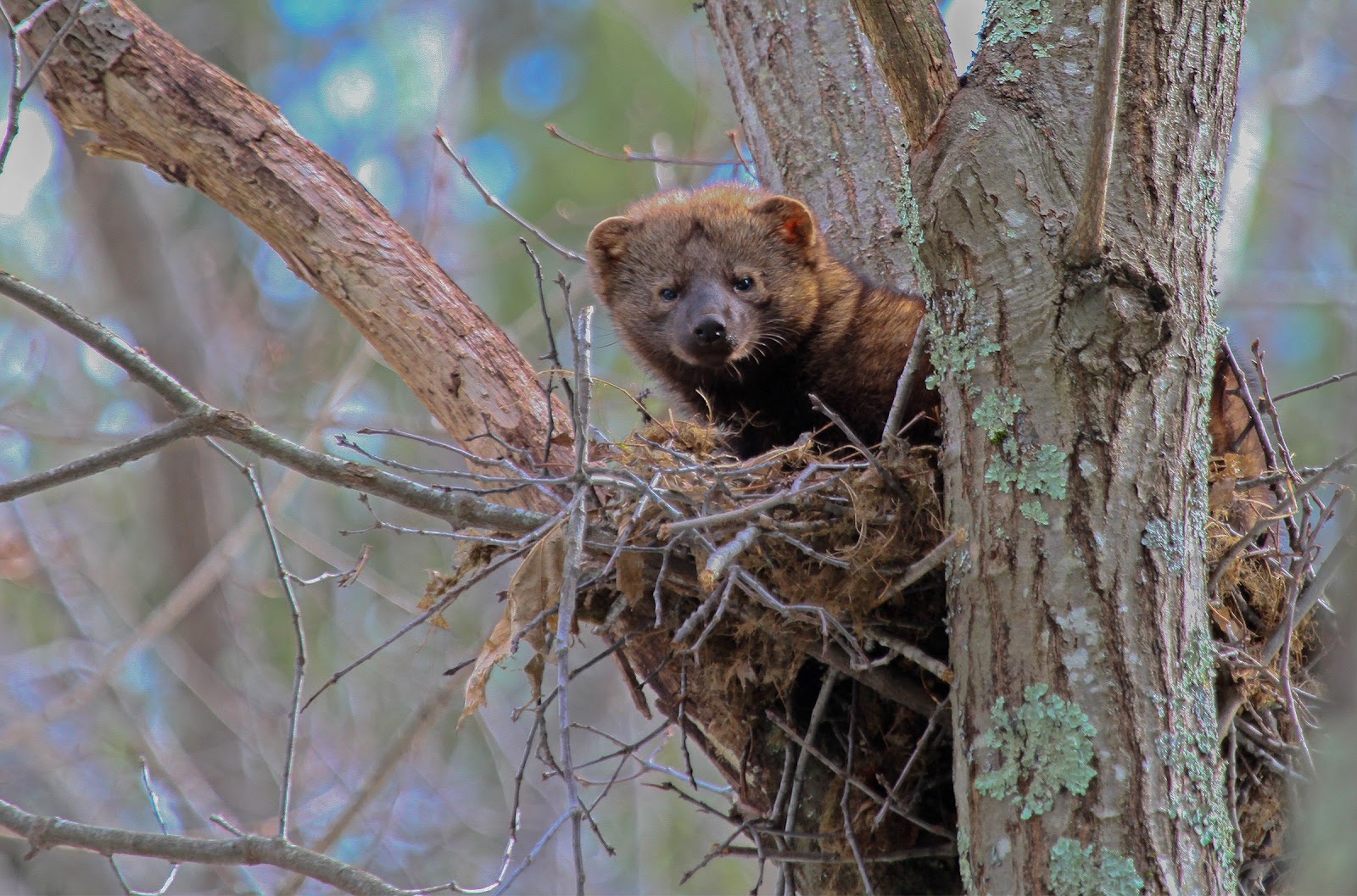
Those of us who poke around along Weston’s more than 100 miles of trails know that we stand very little chance of encountering any of the five members of the weasel family that share our environment. Our river otter, mink, ermine, long-tailed weasel and – last but not least, fisher cat – are each mysterious, shy and secretive hunters seldom heard or seen by us mere mortals.
They might as well all be chanting the same mantra: “Just because you cannot see us, does not mean we are not here!”
But if you do happen to spy a short-legged, 10- to 20-pound animal moving along like a child’s slinky toy, clad in rich, dark brown fur and floating a long, fluffy tail behind it, you may have joined the lucky few who have witnessed Martes pennanti on the move. If luck is really on your side, maybe he’ll demonstrate his formidable tree-climbing skills, including his unique ability to descend tree trunks as well as he rockets up them.
While sightings of this big weasel do not abound, myths surrounding it are a constant. First, it’s a weasel –not a cat at all. Second, “fisher” comes from a French word, “fiche” – which means the “pelt of a polecat.”
And its reputation for prodigious vocalizations, often described as a death shriek or scream; well, there is almost no evidence that their voices are raised in terrifying cries. Those witnessing those outbursts are most likely hearing a fox or two conversing nearby.
Not unlike the fox, the fisher is a generalist predator that enjoys balancing its diet of prey with side dishes of insects, nuts, berries and mushrooms. Its preferred main course menu is rich with the likes of rabbit, squirrel, chipmunk, mice, voles and even raccoon.
The fisher is renowned as the prickly porcupine’s only regular predator. While your neighborhood coyote would drool at the thought of savoring porcupine meat, only the lightning-swift, cunning fisher can maneuver around all those needle-sharp quills and grab the prey head on. Once in the fisher’s grip, the porcupine’s time is about up – even if it takes the fisher a half-hour of bites and attacks to finish the job. Fierce out of all proportion to its size, the fisher has been known –when necessary– to get the better of wild turkey, raccoon, fox, otter, bobcat and even small deer. Note to pet and poultry owners: fishers are opportunistic.
The fisher can expect to live a half dozen years. During the petite female’s life span, she is either pregnant or nursing nearly every day of her adult life. She’ll mate at one year of age in the spring, following a brief encounter with a male, who’ll bound off and resume his solitary lifestyle. The blastocyst they’ve created during that spring fling union does not actually get implanted for multiple months. After a 50-day gestation period, one to four kits are born in the spring, just in time for good weather and better survival chances.
Fishers are on the rebound from their virtual extirpation during the heyday of trapping, logging and the clearing of the woods for agricultural use. Their predators are few: coyotes, bobcats, great horned owls and eagles would be their local threats. And automobile wheels, as the fishers traverse their 5-10 square mile ranges (rather large for a species its size).
Watch for them in your nearby woods during these winter months, when this usually crepuscular critter is more likely to spend time foraging in the daytime hours.
Author

Related Articles
Backyard Naturalist: Keep an eye out for bald eagles feeding in Weston
While they’re not actually bald at all, Backyard Naturalist Michael Pappone loves our national bird.
History Corner: George Washington really did sleep here!
George Washington once spent some time in Weston.