Weston Gives Back: Resident builds nonprofit to treat hygiene-product insecurity
Community service has always been a big part of Jeff Feingold’s life, and it’s a legacy he has tried to pass on to his children.
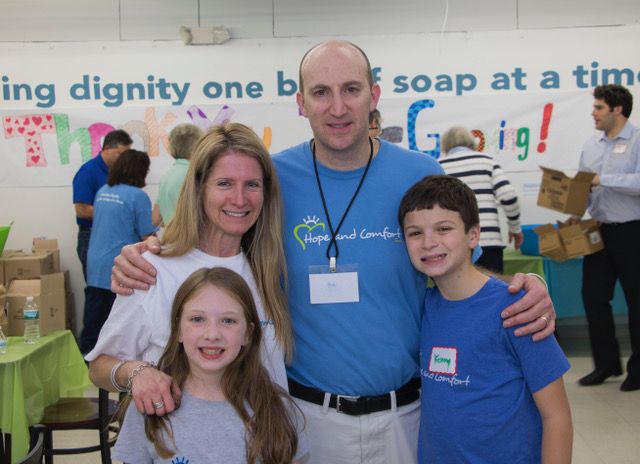
Community service has always been a big part of Jeff Feingold’s life, and it’s a legacy he has tried to pass on to his children. In fact, he met his wife Loren in 1995, at a camp for children with cancer, where they were both volunteer counselors.
So, when he discovered many people can’t afford basic hygiene products, the Weston resident created a nonprofit to address those needs.
It all started in 2010, when Feingold and his wife realized their children, then 2 and 4, had more than enough toys. As their birthdays approached, they asked people to bring donations in lieu of gifts. In addition to food, clothing and books, they received basic hygiene products that they gave to Cradles to Crayons, an organization that provides clothing, shoes and school supplies to young children living in homeless or low-income situations.
When a social worker mentioned how rare hygiene products were and how great the need was, Feingold rolled up his sleeves and, in 2011, founded Hope & Comfort, (renamed in 2024 Hope & Comfort Hygiene Hub) “to teach [his children] how lucky they are and to give back.”
Working from his Weston garage, he created a website and, with help from his kids, distributed five hygiene items – deodorant, soap, shampoo, toothpaste and toothbrushes – to local nonprofits across the country. He purchased most items himself.
The need was so great, he soon narrowed his focus to Massachusetts nonprofits. Food banks and food pantries typically don’t provide basic hygiene products, and they can’t be purchased with food stamps, he said.
When he outgrew the garage, a friend loaned him a space in Newton. Later, he leased a warehouse in Needham.
Read more Weston Gives Back stories: Club hosts drive to aid pet owners impacted by food insecurity, Weston student aims for 1,000 donations for local soup kitchen, St. Vincent de Paul provides food aid in difficult times, Emergency aid available to residents through Merriam Fund.
Growth is not the goal
Today, Hope & Comfort Hygiene Hub has grown to include a main sorting facility, a satellite warehouse, an office with five full-time staff led by a CEO, five part-time staff members and consultants and a $2 million operating budget. Last year, they distributed 5 million products, but not nearly enough to meet the need.
Feingold said Hope & Comfort is likely the largest organization wholly dedicated to providing hygiene and menstrual products, but the goal is to go out of business.
“As much as I love Hope & Comfort, I wish the need didn’t exist,” he said.
Hope & Comfort Hygiene Hub is modeled after The Greater Boston Food Bank, the largest hunger-relief program in New England. Rather than giving products to clients, the nonprofit distributes hygiene products to 500 other nonprofits – ranging from schools and colleges to domestic violence shelters and food pantries. Each week a waiting list of more than 300 nonprofits in Massachusetts reaches out for help.
In Massachusetts, nearly 2 million adults are food insecure, according to The Greater Boston Food Bank.
“Unfortunately, if you’re food insecure, you are hygiene insecure,” Feingold said.
Hope & Comfort helps about 500,000 people a year, Feingold said, but they do not have the resources to give people enough products for the entire year.
“So, there is a long way to go [to do] what we want to do, which is to eliminate hygiene insecurity to make sure that any child or adult has access on a regular basis to high-quality, dignified products to feel safe, clean and confident,” Feingold said.
Remaining solvent
While many nonprofits struggle to remain afloat, Hope & Comfort has about 10 months of cash reserves, which is unusual for a medium-size nonprofit, Feingold said. They also have an endowment of more than $1 million.
Weston residents have also stepped up in a big way – donating money, time and expertise, and hosting Hope & Comfort birthday parties, school drives and fundraisers.
“It’s been a collective journey built on the generosity and compassion of others,” Feingold said.
But with so many nonprofits vying for the same dollars, raising money is still a challenge.
“I used to think it got easier as you get larger, but the bills and expenses get larger,” he said, noting that this year’s budget is $2.5 million or $50,000 a week.
Staff salaries, rental fees for warehouses in Needham and Bridgewater, technology, and hygiene products make up the bulk of expenses. Only half of the products they give away are donated; they purchase the remainder from wholesalers.
“Hygiene insecurity is a massive unmet need; it is a basic need,” Feingold said. “Everyone should be entitled to wake up in the morning, brush their teeth, put deodorant on, have menstrual products … so they can go throughout the day … and be comfortable, confident and healthy so they can be their best self.”
How to help
To donate to Hope & Comfort Hygiene Hub or to volunteer, visit hopeandcomfort.org.
Editor’s note: Through the end of the year, the Weston Observer will be profiling Weston aid organizations and people who are focused on assisting those in need of food and support this holiday season.
Related Articles
‘Mary Poppins’ to take flight at Weston Friendly Society
Everyone’s favorite nanny will take to the stage as “Mary Poppins, the Broadway Musical” opens April 18 at the Weston Friendly Society.
Community watches sugar shack staff shift sap into sweet syrup
Land’s Sake welcomed folks into its sugar shack for a closer look at the process of making fresh maple syrup.
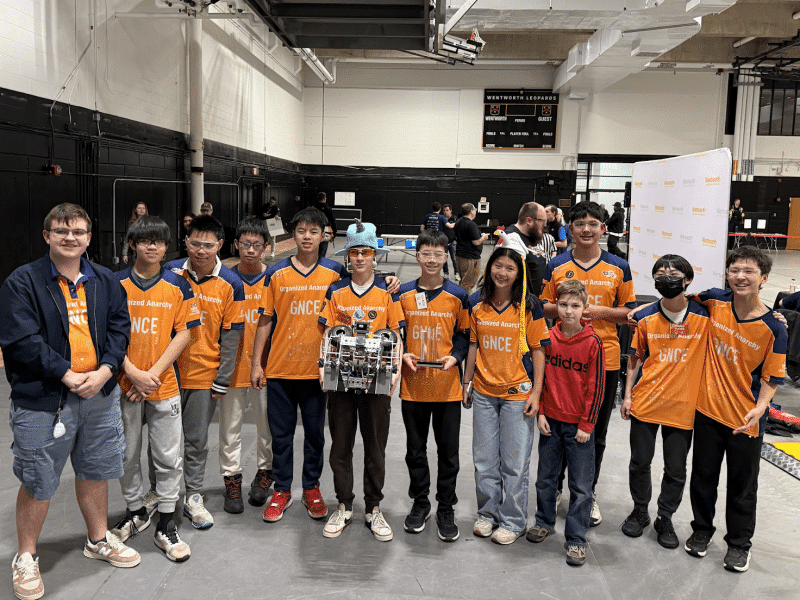
Weston robotics team gearing up for world championships
Organized Anarchy, a robotics team at Weston High School, is packing their bags to participate in the FIRST World Championship.