
Backyard Naturalist: Here come the snowbirds–autumn is full upon us
Weston affords us so many wonderful autumnal looks, but for Michael Pappone, the dark-eyed juncos are the real highlight.
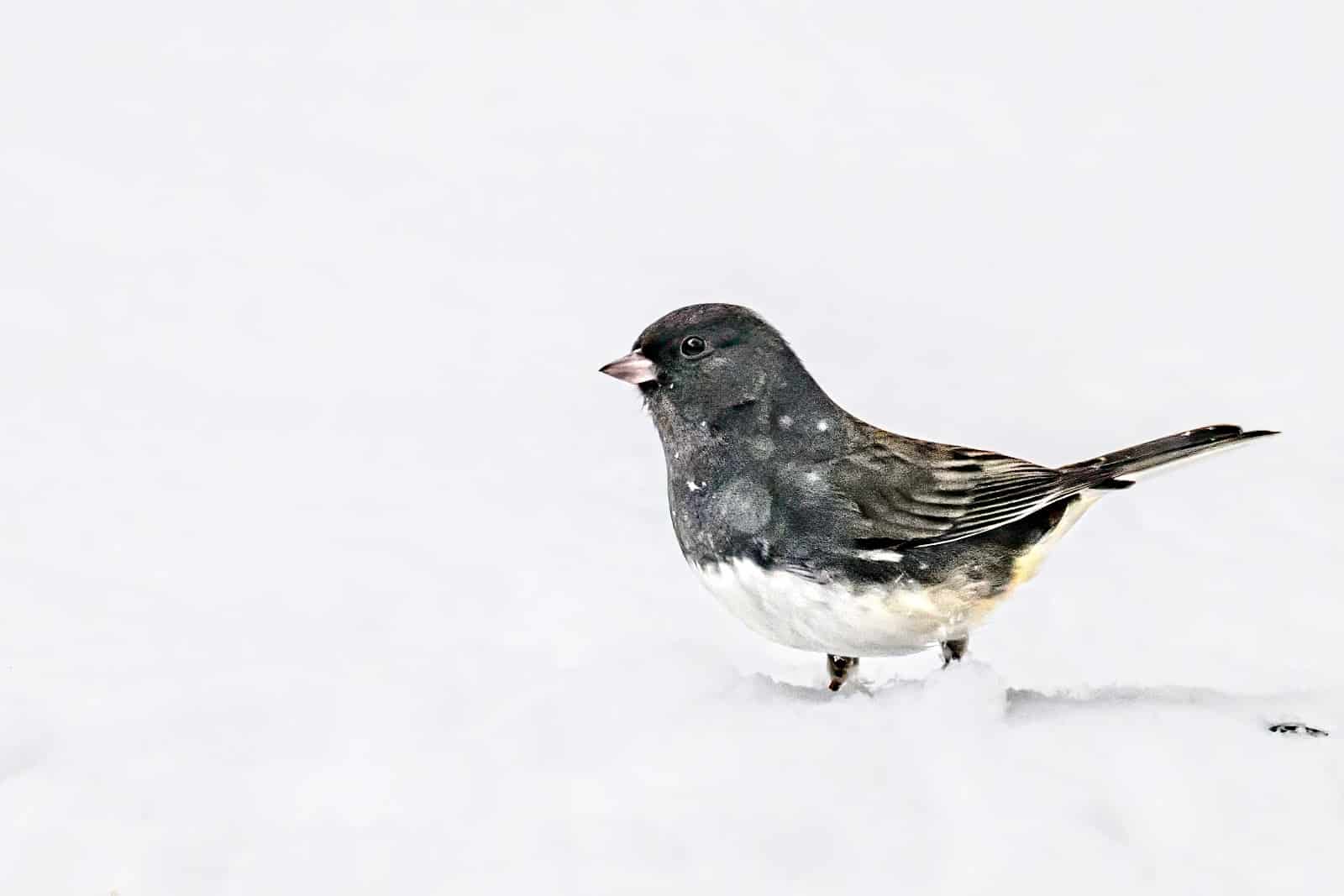
Weston affords us so many wonderful autumnal looks – our muted gardens, the turning leaves, the yellow school buses. But what seals the deal for me is when the dark-eyed juncos show up.
The first glimpse of this gregarious species in late September is like witnessing a Lilliputian swarm of paparazzi snapping a few quick flash photos before absconding with their images into the shrubbery. But of course, it’s only those diagnostic white tail feathers they’re showing off as they fly off in retreat from your approach.
Here’s a North American songbird that I used to be able to count as five separate species in the various states I visited over its coast-to-coast geographic range. Alas, the “lumpers” in birdnerd-world have decided, with DNA evidence to prove it, that my life list needs to be trimmed by four species. Maybe the ‘splitters’ in the ornithological firmament will restore the juncos to their former multi-species glory one day? Never mind, their absolute total numbers remain impressive with an estimated population that equates to two or three individuals for each man, woman, girl and boy in America.
That said, our little two-toned Junco hyemalis is virtually invisible to us from May to September, preferring more northerly regions and higher elevations for its breeding grounds. But when the young have fledged and the boreal insect population has been devoured, they flock down to our environs. You’ll find the snowbird feeding on the ground under your feeders, hopping about and scratching at the snow-covered ground, hunting for millet and hulled sunflower seeds, typically in the company of our year-round neighbors, the northern cardinals and the visiting white-throated sparrows.
Watch carefully and you may observe the little flock of gray fluffballs skirmishing amongst themselves. That’s owing to the distinctly hierarchical organization of the species, with adult males at the top of the pecking order, followed by younger males, then adult females and finally the younger females. Not surprisingly, the females have figured out a solution to the problem of competing with the males for every meal: Opt for a sex-segregated migration path! Leave a little earlier, and fly a little farther south. Leave the males to themselves and with a shorter flight back to the breeding grounds where they can fight amongst themselves for prime spring nesting sites.
The birds you see foraging in your yard or along that path in the winter woods will likely as not include the very same individuals that you met last week – or even last year, as dark-eyed juncos have a reputation for not only site-fidelity (returning to the same place each year), but once they’ve arrived, confining their activities to about 10 nearby acres.
Get a good look at them this winter. They will have fluffed up, having added 30% more feathers, equipping them to burrow beneath the snow. There they can grab the seeds they need to carry them through the season. By April’s end, most will have left us, along with the white-throated sparrows, to return to the northern forests. And if you listen closely, you’ll hear their “tic-tic” calls as they feed. Listen again in spring as they tune up for their full-blown mating songs, a long trilled note that even my Merlin bird-song identifier app has a hard time distinguishing from the songs of the returning chipping sparrows and pine warblers.
But hey, that’s what binoculars are for, right?
Author

Related Articles
Backyard Naturalist: Keep an eye out for bald eagles feeding in Weston
While they’re not actually bald at all, Backyard Naturalist Michael Pappone loves our national bird.
History Corner: George Washington really did sleep here!
George Washington once spent some time in Weston.