
Backyard naturalist: Endowed with the skills of a multi-medalist
The Eastern gray squirrel has athletic talents equal of anyone medaling in Milan-Cortina.
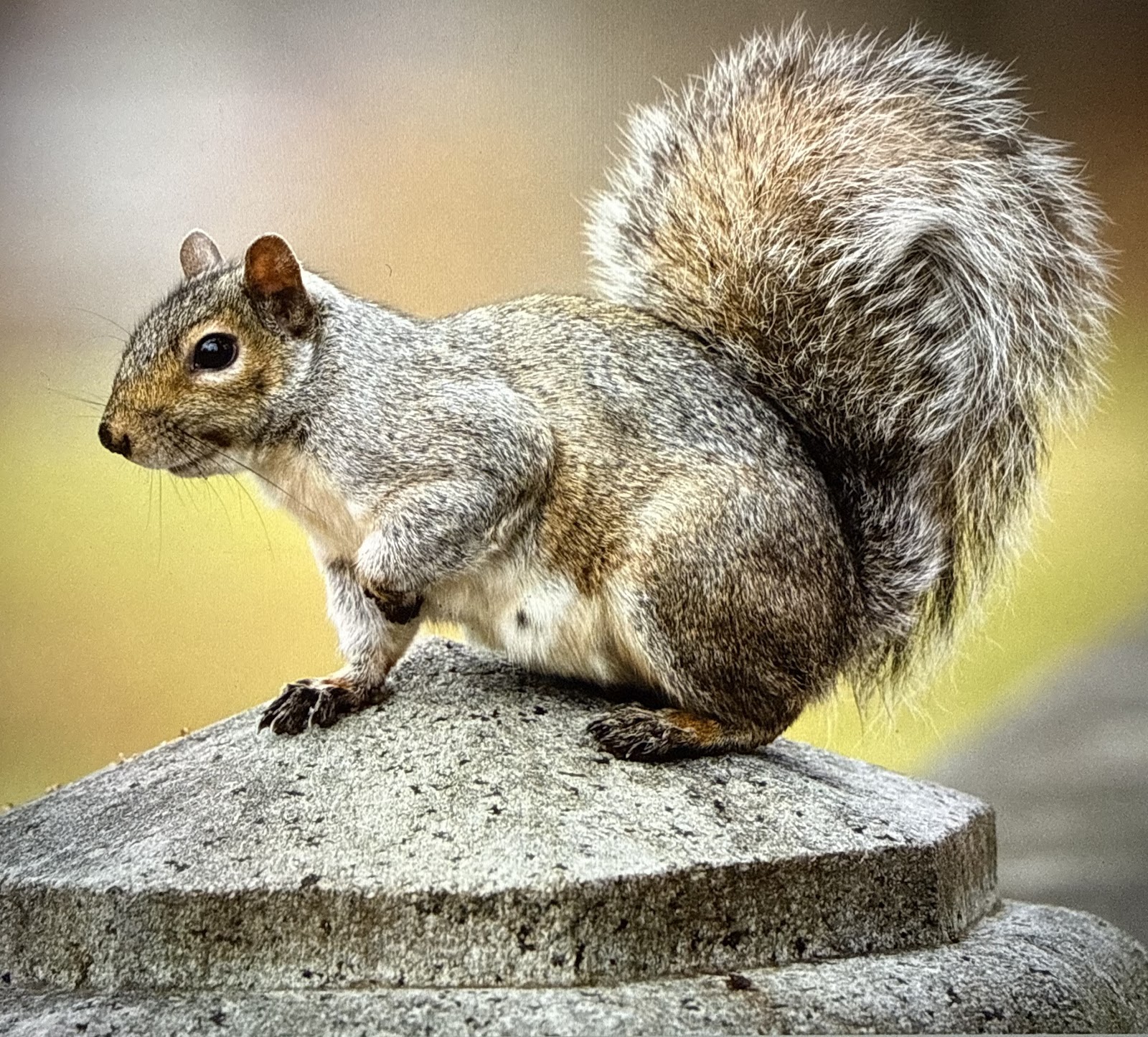
The 2026 Winter Olympics have run their thrilling course, and I’m ready for the highlight reels. As soon as those have flickered out, my attention will return to the perennial local athletes that are the equal of anyone medaling on the Milan-Cortina circuit: the Eastern gray squirrel (Sciurus carolinensis).
Now here’s a competitor that rises to every athletic challenge and never, ever fails to stick its landing. Whether you’re trying to squirrel-proof your bird feeders, exclude squirrels from your dwellings, or wean them off your prized garden plants, you should not be surprised if they successfully shift to a plan B or C. Sometimes, it seems like they foil you just for fun. Have you ever made eye contact with this grizzled furry creature right after it’s outwitted you and stolen all the sunflower seeds from the feeder? If that isn’t the look of smug defiance, I don’t know what to call it!
How do they do that?
Start with a fluffy nearly footlong tail, and stick it on a body about as long. Now you’ve got a critter that can leap through the treetops, bridging distances 10 times its own length, or leap straight up five vertical feet. Graft onto this creature the ability to rotate its hind feet 180 degrees to zip down trees headfirst like a mogul skier, and give them the speed of a sprinter – 20 mph – and there’s your multi-medal Olympic threat. With 18,000 years of experience navigating the hardwood forests of eastern North America, they are likely to prove themselves your better when it comes to living their best life in your back yard or in your house.
How is it that these magnificent athletes charm some folks and positively revolt others? Well, as the Carrie Bradshaw character from the “Sex in the City” series points out: Squirrels – “they’re just rats with better outfits.” For the counterpoint, take a stroll through Harvard Yard or the Boston Public Garden on any fair weather day, and you’ll soon lose count of the tourists crouched low, coaxing these creatures ever closer so they can share that special selfie with their social media friends.
Like so many of our wildlife neighbors, this species possesses attributes that fall on either side of our anthropocentric balance sheet. On the one hand, they seem to live to wreak havoc with our attics, feeders, breeding birds’ nests and car-engine wiring. They also spread diseases and host parasites (so keep your distance). On the other hand, as scatter-hoarders, they and the thousands of caches they make each season result in the planting of countless new trees – since even the squirrel’s legendary spatial memory and sense of smell cannot guarantee that they’ll retrieve every acorn they’ve buried. Finally, squirrels are a key species favored on the menus of a host of the charismatic apex predators that play such an important role in nature’s food chain. After the squirrels have gorged on your birdseed, forest nuts (like acorns), berries, tree buds, flowers and tree bark, they make a tasty entree for owls, hawks, weasels, foxes, bobcats and coyotes. If you’re really curious, you could try out one of the many squirrel stew recipes available on the internet.
Meanwhile, I’m content to let them perform their Olympic flings of hilarious fancy, while I mentally assign them scores on the form and creativity of their routines.
For a “This American Life” episode on squirrels, visit here: youtube.com/watch?v=npxaMe1Bh2o.
“Laugh as much as you breathe and love as long as you can.” Ralph Waldo Emerson (1803-1882)
Author
Related Articles

Join Muslim neighbors and celebrate Ramadan
Habib Rahman and Nora Khalil share how folks can celebrate Ramadan with their neighbors.

Backyard Naturalist: Small but mighty, that’s our Weston chickadee
What weighs less than a couple of pocket-change quarters, is present in virtually all of Weston’s backyards and is the state bird?

History Corner: Honoring the Noble Train of Artillery of Gen. Henry Knox
Weston Historical Society President Pam Fox highlights the 250th anniversary of Henry Knox passing through Weston.