Local aid groups respond to anxiety over food access
Organizations in Weston and surrounding towns are focused on meeting the needs of anxious residents.
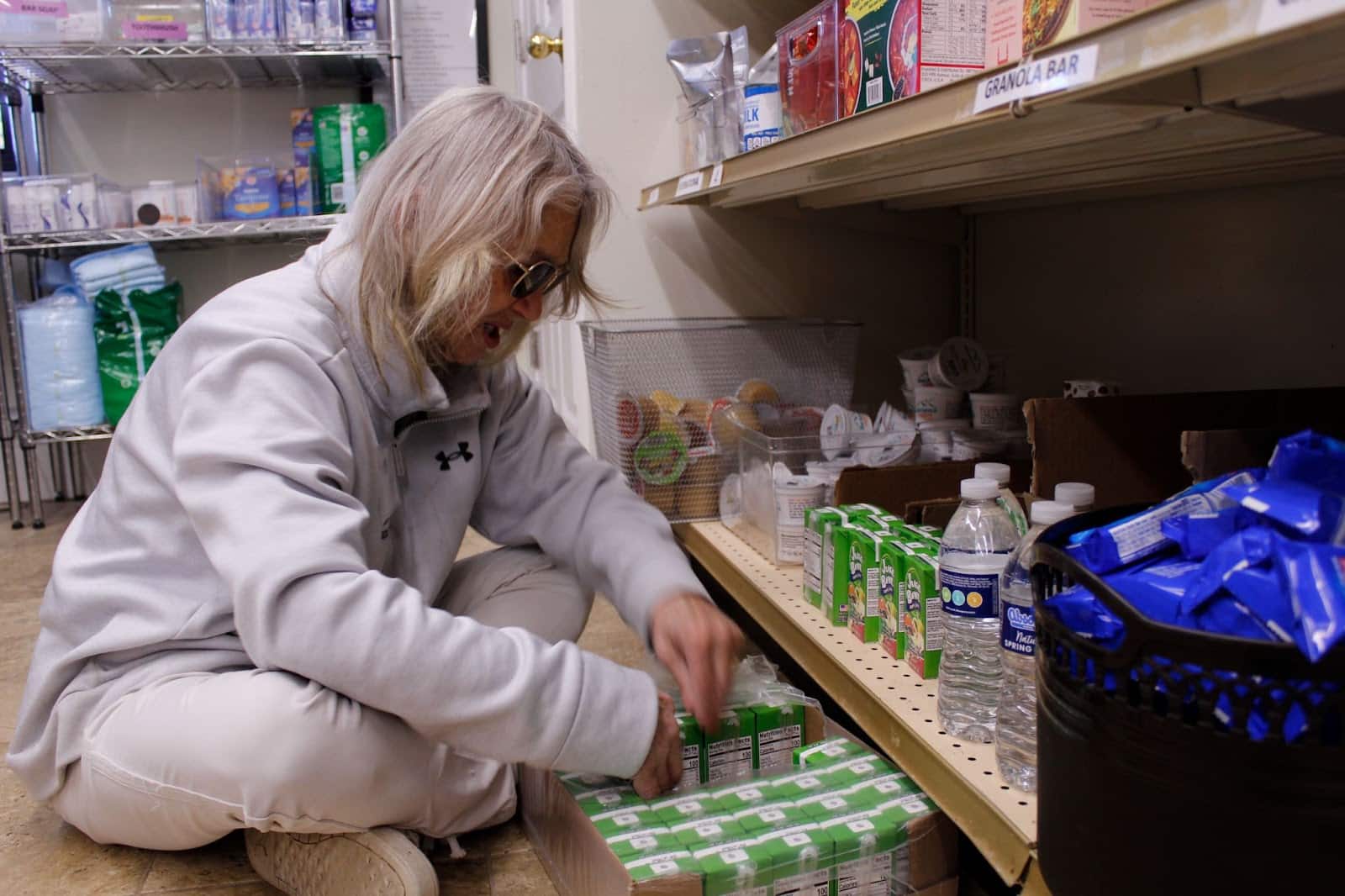
Organizations in Weston and surrounding towns are focused on meeting the needs of anxious residents as uncertainty over federal assistance, job layoffs and the economy puts pressure on grocery budgets.
Even before the federal government shutdown began on Oct. 1, local aid organizations were responding to a growing demand for food assistance. Stephanie Keane, executive director of Weston’s Council on Aging (COA), said the organization has spent more in the past three months to stock the council’s pantry than it did in the entire past fiscal year.
“Our need has increased three times and that’s prior to SNAP benefits being cut,” Keane said, referring to the federal Supplemental Nutrition Assistance Program that provides benefits to low-income families to supplement their food budgets.
As of the Weston Observer’s print deadline, the future of SNAP benefits continues to be in flux. Last week, two federal judges ruled that the government must continue to fund the program. Earlier this week, the White House said it will comply with the court order but that recipients would receive only partial benefits.
As of September, 165 Weston residents were receiving SNAP benefits.
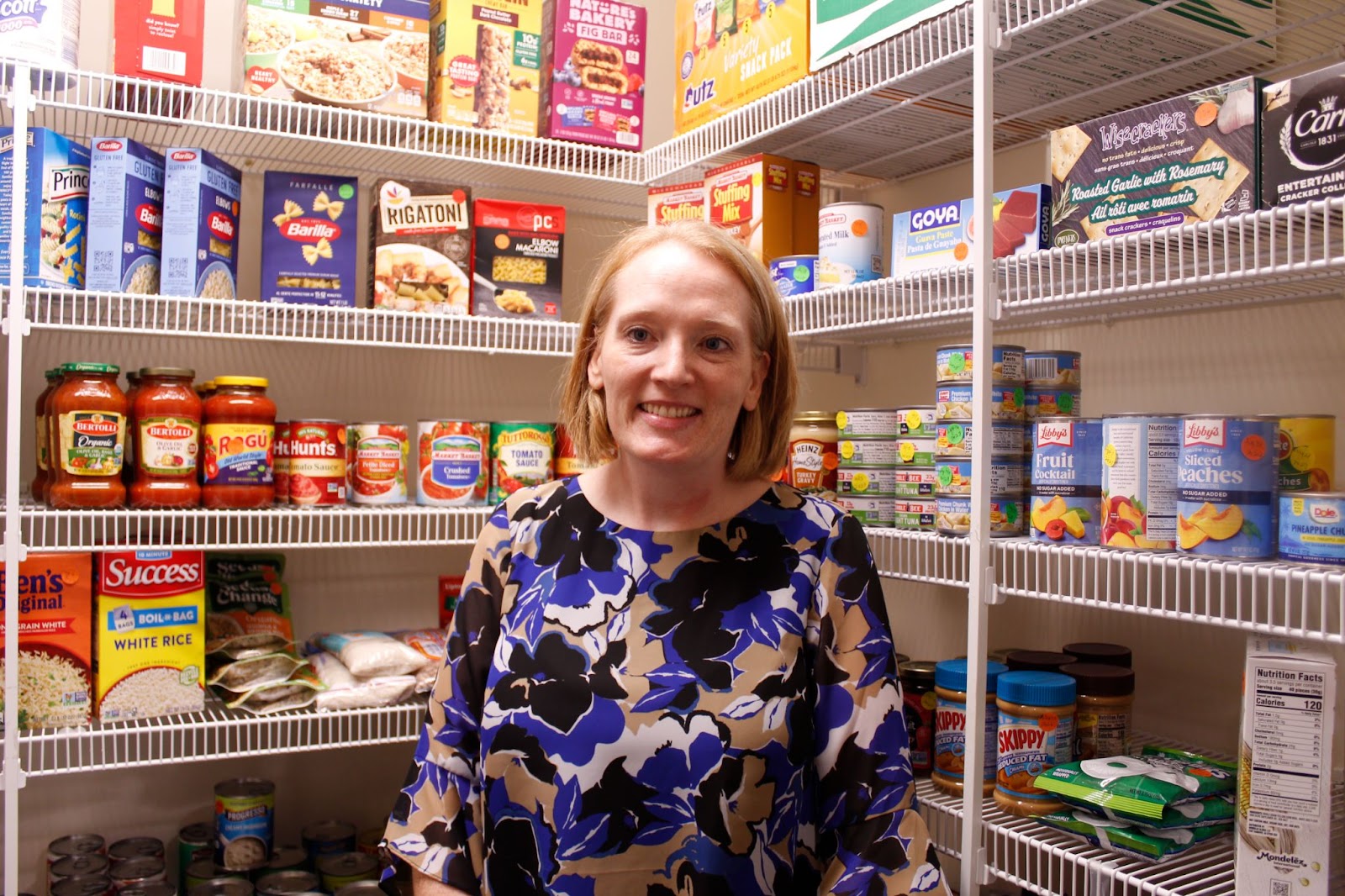
The COA’s food pantry, located in the back of the COA offices, is available to residents and non-residents of any age. It has a selection of dry goods and other supplies not covered by SNAP, including soap and toilet paper. Keane said although the COA does not keep track of who – or how many people – use the pantry, the frequency with which supplies have to be restocked shows the need had already increased before the lapse in SNAP benefits.
“I anticipate even with the government opening up, there’s still going to be a great need because there have been other cuts to SNAP, not just a lapse,” Keane said.
In July, the federal One Big Beautiful Bill Act was passed, which included changes to SNAP eligibility. Additionally, Keane said the overall state of the economy is contributing to the increased need for food assistance whether or not people are part of the program.
“If they can use a food pantry, that’s money that can go towards another bill,” she said.
State Sen. Michael Barrett echoed Keane’s statement, saying that funding lapses – for SNAP and other programs, such as Head Start – are exacerbating growing financial struggles in Massachusetts.
“There’s no question that groceries are becoming more expensive,” he said. “There isn’t one crisis. There’s a cascade. We are facing serious problems that are adding to pre-existing challenges.”
In Weston, Land’s Sake Farm has also been helping meet the needs of people in Weston and beyond. Hunger relief has been part of the farm’s mission since its inception in 1980, according to executive director Pam Hess. The farm provides fresh produce to food assistance organizations throughout the region. Hess said that aid groups have been preparing for increased need for months.
“Even in the spring, there were already fears of what was going to happen with SNAP and unemployment, so the expectation was this year there was going to be an increase,” Hess said. “We started getting requests in the spring from new organizations.”
As the fall harvest is underway, she said the farm is trying to support as many organizations as possible.
“We don’t know what’s going to happen, but we have a lot of harvest and we are looking to see where we can help in the local community because there’s so much increased uncertainty,” she said.
One of the organizations that receives produce from Land’s Sake is the Society of St. Vincent de Paul Lincoln and Weston. Karen Boyce, a volunteer who helps run the food pantry in Lincoln, said she has received an increase in messages from people in need.
“People are taking more because I think they’re afraid of what’s coming,” she said on a recent Saturday as clients filled their shopping baskets in the pantry.
Cuts to the United States Department of Agriculture (USDA) earlier this year have made it harder for food banks to supply food, according to Boyce. The USDA provides food to the Greater Boston Food Bank, where pantries like St. Vincent’s can buy food at a reduced price. Protein-heavy foods from the USDA, including chicken and beef, were of great value because they are nutritionally important and expensive. When the USDA gives less food to the Food Bank, the pantry has to buy products from local grocery stores, which are around triple the cost.
“That has been sharply cut back, so we are not able to get access to that food. That hurts us,” Boyce said.
Still, the pantry is working to meet the needs of its clients. Last week, it unloaded an order for 5,000 pounds of food from the Greater Boston Food Bank, the biggest order by weight in the pantry’s history. The Society of St. Vincent de Paul supplies clients with dry goods, meat, dairy, vegetables and non-food supplies, and also helps people with dietary restrictions get the food they need. It is open to people who live, work or have children in school in Lincoln and Weston.
Of the 131 households registered with St. Vincent’s, 18 are located in Weston and 13 have household members working in town.
“The common philosophy is that if you live in Lincoln or Weston, you don’t need help, and that kills us because that’s frankly not right,” Boyce said.
She said when people donate dry goods, it allows the pantry to spend its money on more expensive items and provide a wider number of options. Last month, Weston High School held a cereal drive for the pantry. Boyce says she hopes to see more food drives out of Weston.
“If we can have them [donate] that to us, then we can use the money we have to buy the chicken, the fish, the hamburger, the milk. That’s the expensive food,” she said. “If we get the money to buy the protein and the local farms to donate the produce, we’re in great shape.”
Barrett said Tuesday that the state is moving to help meet the need, but SNAP is such a comprehensive program, it is unable to fill the gap. According to Barrett, $45,000 that had been previously impounded will be going to the Greater Boston Food Bank.
Rep. Alice Peisch pointed to a lawsuit filed by Massachusetts, alongside 24 other states, which led to the ruling that benefits must continue through the shutdown, as evidence of the state’s response. She also highlighted Gov. Maura Healey’s authorization of an additional $4 million for local food banks through the end of the month.
“The situation remains uncertain, as the crisis continues to evolve day by day. More than one million residents across the Commonwealth rely on SNAP benefits to put food on the table and for many, that assistance is becoming increasingly precarious,” Peisch said in a statement.
As the federal situation unfolds, Boyce says that St. Vincent de Paul is ready to continue providing food and other forms of assistance to the people who need it.
“We anticipated it. The political environment set us up to recognize that there is going to be a need so we adjusted early,” Boyce said.
Keane said she is hopeful that if the need continues to increase, that the community will help their neighbors.
“We’re in Weston. We have very supportive people,” she said.
Author

Related Articles
After special election, what comes next?
Will the expanded Select Board galvanize resident participation in town government?

Judge denies motion to remand ‘Weston Whopper’ decision
A judge has denied a motion asking the state Housing Appeals Committee to reconsider its stance on the “Weston Whopper.”

Voters approve Select Board expansion
Voters approved the expansion of Weston’s Select Board to five members, which will occur in May at the annual town election.