
Dog falls through the ice: Make sure it doesn’t happen to you
The Weston Fire Department is offering ice safety tips following a dog rescue in a frozen pond last week.
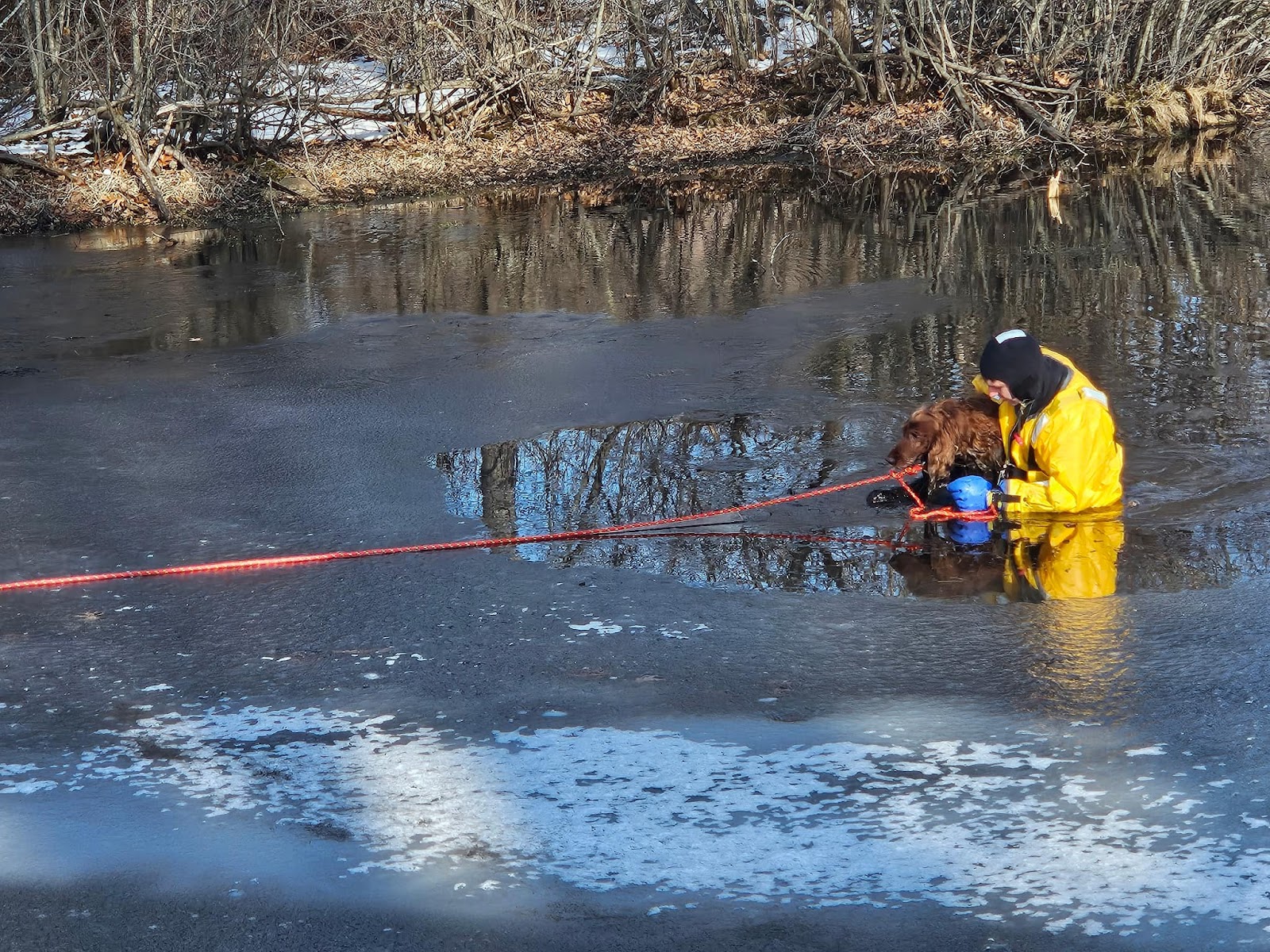
The Weston Fire Department is offering ice safety tips following the rescue of Rowan, a 7-year-old Irish setter who fell into a frozen pond last week.
Firefighters were called to Pinebrook Country Club in the early afternoon of Jan. 23 after a report that a dog had fallen through the ice. Firefighter Tim Giblin donned an ice-rescue suit and helped pull Rowan out of the water. She was then reunited with her owner.
If a pet wanders out onto ice, Fire Chief Justin Woodside urged residents to stay on solid ground because it can be a dangerous situation. Instead, he said, folks should call 911 and the Fire Department will respond to assist. While waiting for first responders, residents should keep visual contact with the pet and encourage them to move toward the edge of the water.
“Ice can fail suddenly and without warning, and cold water shock can overwhelm even strong swimmers within seconds,” Woodside said. “As hard as it is, do not go onto the ice after your pet. Many ice rescues turn into human rescues when owners attempt to help and also fall through.”
Even when ice looks solid, Woodside said it is still “extremely dangerous,” as it can be weakened by moving water, springs, drains, vegetation and temperature changes.
Woodside shared the following safety tips for anyone who falls into icy water:
- Try not to panic; control your breathing and yell for help.
- Turn toward the direction where you came from, as this is where the ice was strong enough to support you.
- Place your arms on the ice and kick your legs to help slide horizontally onto the ice.
- Once out, do not stand up. Roll or crawl away from the hole until you reach solid ground.
- Seek medical attention immediately, even if you feel OK – hypothermia can worsen after rescue.
If you witness someone fall into icy water, Woodside said call 911 immediately, avoid going onto the ice and, from a safe distance, reach or throw something long (like a stick, scarf or rope) to the person and instruct them to kick out of the water.
Other safety tips include keeping children and pets away from ice at all times, dressing in layers and carrying a charged phone when out in colder weather, according to Woodside. Additionally, if you fish or recreate outdoors in the winter, use designated, professionally managed ice areas only, if they are available, and wear flotation gear.
“No activity on frozen water is worth the risk,” Woodside said. “If someone or a pet goes through the ice, call 911 immediately and let trained responders handle the rescue. Staying off the ice is the safest decision every time.”
Author

Related Articles

29th annual Rotary Club car show set for Sept. 26
For Richard DeVito Jr., a member of the Weston & Wayland Rotary Club, relating life experiences to the cars people drive is the essence of the organization’s biggest community event: the annual Antique and Classic Car Show.

Flock contract frozen as Police seek feedback
The national conversation about police surveillance has come to Weston.

Steps for Sotos to raise money for first-of-its-kind MGH clinic
A local family is hosting Steps for Sotos, a walk-a-thon to raise money for MGH’s Sotos Syndrome Clinic.